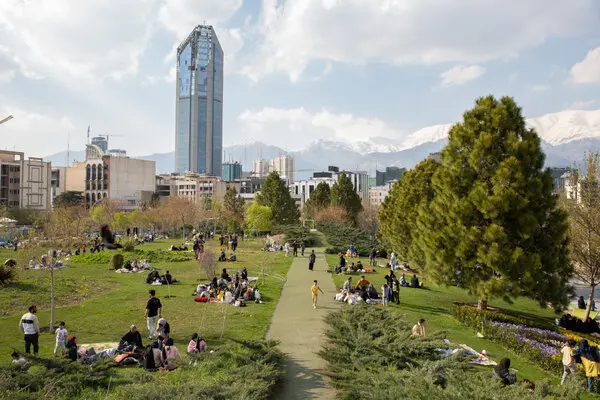
Iranians gathered in the capital city of Tehran on Thursday to celebrate the 'Sizdeh Bedar' festival, an annual tradition that marks the end of the Nowruz holiday, which celebrates the beginning of the Iranian New Year. This year, the celebration took place under difficult circumstances, as the country has suffered from the repercussions of war and economic pressures.
Many families and teenagers congregated near the 'Tabiat' Bridge, which connects two large parks, and the nearby 'Milad' Park in northern Tehran. Despite the festive atmosphere, there were clear signs of conflict, with some damage visible on building facades due to Israeli airstrikes from the previous year.
Event Details
During the celebration, people enjoyed sitting in the parks, taking photos, playing football, and snacking. This gathering served as a respite from the daily horrors caused by airstrikes, a struggling economy, and ongoing government repression.
This event is an opportunity for Iranians to connect with nature and celebrate life, despite the harsh conditions they face. Images circulated on social media showcased an atmosphere of joy and fun, as participants tried to forget their daily worries.
Background & Context
Historically, the 'Sizdeh Bedar' festival is part of Iranian cultural heritage, celebrated on the thirteenth day of Farvardin, which is the last day of the Nowruz holiday. The origins of this tradition date back to ancient times, where spending this day in nature was believed to bring good luck.
However, this year's celebration comes at a sensitive time, as Iran faces multiple crises including economic sanctions, rising unemployment rates, and a deteriorating standard of living. These conditions have made the celebration more than just a cultural occasion; it has become a symbol of resilience and hope in the face of challenges.
Impact & Consequences
These celebrations demonstrate how people can find joy in the smallest things even during the darkest times. The gathering of families and youth in parks reflects their desire to cling to life and celebrate their culture, despite the pressures they face.
These events also highlight the challenges the Iranian government faces in managing crises. While people seek to enjoy their lives, economic and political pressures persist, raising questions about the future of the country.
Regional Significance
These events hold particular significance for the Arab region, as they reflect ongoing tensions in the Middle East. Conflicts in Iran and their impact on regional stability could lead to broader repercussions, especially amid tensions between Iran and Israel.
Moreover, popular celebrations in Iran may inspire other peoples in the region to hold onto their cultures and traditions, despite difficult circumstances. The ability to celebrate life amidst crises showcases the strength of the human spirit and its capacity to overcome difficulties.
In conclusion, the celebration of 'Sizdeh Bedar' by Iranians under current circumstances illustrates how people can find hope and joy in the smallest things. Despite significant challenges, the hope for a better tomorrow remains what unites them.