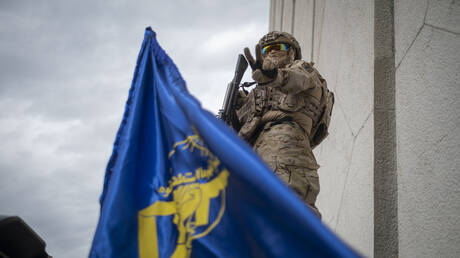
Iran's Revolutionary Guard intelligence has asserted that American generals have lost control on the battlefield, indicating that politicians in Washington can no longer make decisive decisions. This statement comes amid rising global tensions in various regions, raising questions about the effectiveness of the US strategy in handling international crises.
These remarks serve as a sharp assessment of the military and political situation in the United States, reflecting Iran's concerns over current US policies and their impact on regional security. Additionally, these statements also reflect a lack of confidence in the US administration's ability to manage crises effectively, which could affect international relations in general.
Details of the Event
In an official statement, the Revolutionary Guard intelligence reported that generals in Washington are no longer able to control the course of events, weakening their position in facing military challenges. This statement comes at a sensitive time, as tensions escalate in regions such as the Middle East and Eastern Europe, complicating the international landscape.
These remarks are part of Iran's strategy to assert its military strength and ability to confront external pressures. They also reflect Tehran's desire to exploit any potential weakness in US leadership to enhance its position in regional and international negotiations.
Background & Context
Historically, relations between Iran and the United States have been tense, witnessing multiple crises since the Islamic Revolution in 1979. These tensions particularly escalated after the US withdrawal from the Iranian nuclear deal in 2018, leading to severe economic sanctions on Tehran.
In recent years, Iranian military activities in the region have increased, including its support for militias in Iraq, Syria, and Lebanon. This has raised concerns in Washington that Iran may exploit any weakness in US leadership to enhance its influence in the region.
Impact & Consequences
The recent statements from the Revolutionary Guard intelligence could escalate tensions between Iran and the United States, as Washington may feel compelled to take more severe actions to confront Iranian challenges. This could lead to increased military tensions in the region, threatening regional stability.
Moreover, these statements may affect US relations with its allies in the region, as some allies may feel a lack of confidence in the US's ability to protect their interests. This situation could prompt some countries to reassess their security and military strategies.
Regional Significance
The Iranian statements serve as a warning to Arab countries, potentially leading to increased tensions in the region. Many Arab nations are concerned about Iran's growing influence, and these remarks could enhance Arab cooperation to face common challenges.
Additionally, the situation in Iraq, Syria, and Lebanon may be directly affected by these statements, as Iran may seek to bolster its influence in these countries amid any potential weakness in US leadership.
In conclusion, the recent statements from Iran's Revolutionary Guard intelligence highlight the importance of monitoring developments in US-Iran relations and their impact on regional security. Understanding these dynamics may help Arab countries make more effective strategic decisions in facing future challenges.