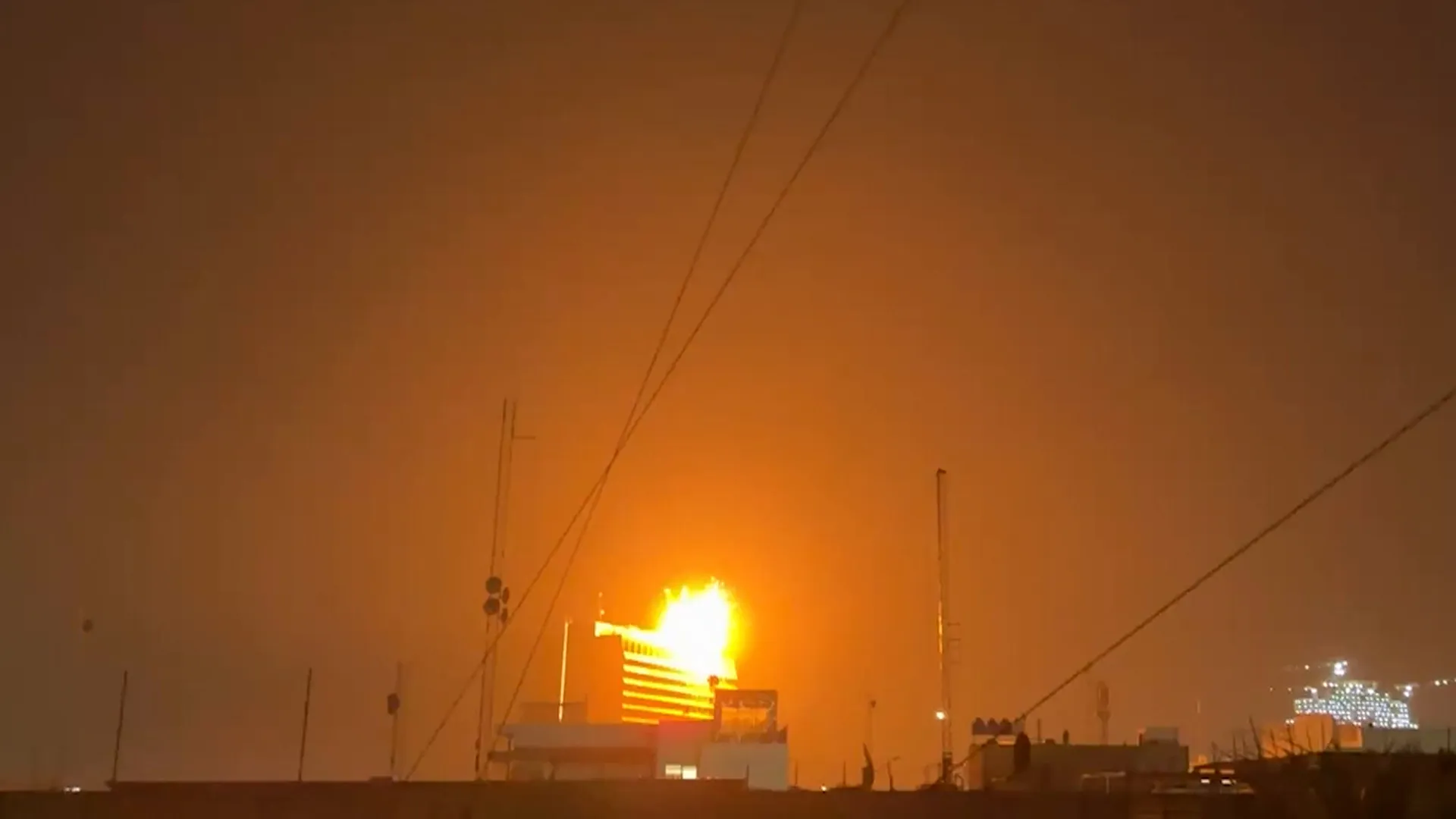
Tensions are escalating in Iraq as attacks on armed factions increase, raising questions about the government's ability to regain control. Daily oil losses have surpassed a quarter of a billion dollars, complicating the economic and political landscape.
The Iraqi neutrality has not lasted long against the flames of war ignited between the United States and Israel on one side, and Iran on the other. Iraq has quickly turned into a battleground for settling scores between conflicting parties, witnessing repeated attacks targeting official security and military sites, in addition to the sites of armed factions.
Details of the Incident
A report prepared by Al Jazeera correspondent Omar Al-Haj indicated that Iraq is suffering from daily military and economic depletion, contributing to an increasingly tense internal situation with each new airstrike. The Popular Mobilization Forces have been targeted since the early days of the war, suffering more than 80 fatalities and 150 injuries among their members, including prominent leaders, prompting Iraqi officials to raise their voices in protest against what they described as an outright assault on military and security institutions that are an integral part of the state's security system.
Under the weight of this increasing pressure, Iraqi Prime Minister Mohammed Shia' al-Sudani announced that his country has the right to respond to the attacks it faces, regardless of their sources. This shift in official rhetoric reflects a notable change in the government's position, which had previously leaned towards caution and balance.
Background & Context
In contrast, the Iraqi armed factions did not remain passive. They attacked the U.S. embassy in Baghdad and all foreign bases across the country from the early hours, extending their operations to target hotels in the Kurdistan region of Iraq, claiming the presence of individuals they describe as American and Israeli agents. These operations resulted in casualties among French forces, prompting NATO to temporarily withdraw its mission from Iraq, while the United States began to withdraw from the logistical support base in Baghdad.
On the economic front, Iraq's daily losses exceeded a quarter of a billion dollars due to the halt of its oil exports. The exchange rate has experienced significant fluctuations, basic commodity prices have risen, and air traffic has come to a complete standstill, illustrating the depth of the crisis faced by a country that was not an official party to the war.
Impact & Consequences
Recent official statements indicate that the Iraqi government is growing impatient with the armed factions' monopolization of decisions regarding peace and war and shaping relations with neighboring countries. This situation raises a fundamental question: Will Iraq risk engaging in an internal confrontation with these factions to preserve its regional relationships that it has sought to mend for over thirty years? Or will the fragility of internal balances force it once again into silence and endurance?
Analysts believe that the growing chaos makes controlling both official and unofficial positions a challenging task, and the actual outcomes are contingent on circumstances, changes, and the duration of the war. Iraq, which has long suffered from external interventions and internal conflicts, finds itself at a crossroads that could affect its political and economic future.
Regional Significance
Events in Iraq directly impact regional stability, as any escalation could reflect on neighboring countries, particularly Iran and the Gulf states. Additionally, the internal division in Iraq may open the door to new external interventions, further complicating the situation in the region.
In conclusion, it appears that Iraq is facing significant challenges that require it to make decisive decisions that may determine its fate in the near future. Under these complex circumstances, the most important question remains: Will Iraq be able to regain its sovereignty and stability, or will it continue in the cycle of internal and external conflicts?