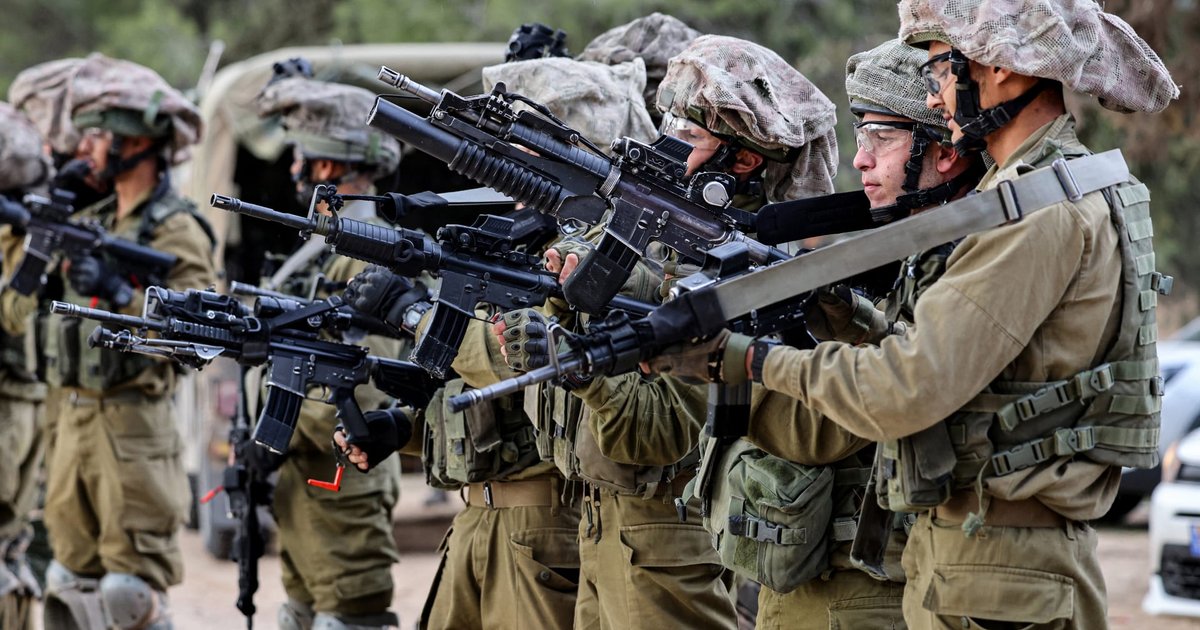
Iraq is entering a new phase of military escalation, as the country is threatened with becoming an independent war zone after the killing of seven Iraqi soldiers in an airstrike targeting a military site in Anbar province. This escalation follows the Iraqi government's authorization of the Popular Mobilization Forces (PMF) to respond to any military aggression, raising concerns about potential security and economic collapse in the country.
On Wednesday morning, the Iraqi Ministry of Defense reported that seven soldiers were killed and thirteen injured as a result of an airstrike on the Al-Habbaniyah military clinic. The official statement from the ministry described the attack as "criminal," indicating that it represents a blatant violation of international laws prohibiting attacks on medical facilities.
Details of the Incident
The attack on the Al-Habbaniyah clinic was not an isolated incident, as it came just 24 hours after another strike targeted the same site, resulting in the deaths of 15 members of the PMF. These attacks indicate a systematic strategy aimed at crippling the logistical and medical capabilities of the Iraqi armed forces in the western areas adjacent to the Syrian and Jordanian borders.
In light of these circumstances, the Iraqi National Security Council made a pivotal decision to authorize the PMF and other security agencies to operate under the principle of "the right to respond and self-defense." This authorization grants the PMF, which is considered part of the Iraqi security system, legal cover to respond to any aggressions.
Background & Context
Analyses suggest that Iraq has become an arena for indirect confrontation within a broader conflict, where the interests of multiple parties overlap. Military expert Brigadier General Elias Hanna explains that Iraq is experiencing a state of "Iraq fighting Iraq," where sovereign institutions have become legitimate targets in the eyes of the conflicting parties.
These dynamics are based on an Iranian strategy aimed at expanding instability in the region, with Iraq being considered the "main gateway" for this strategy due to its long shared border with Iran. The Iraqi situation closely resembles the Lebanese model, where the logic of the state conflicts with that of armed factions.
Impact & Consequences
The repercussions of this escalation extend beyond security dimensions, as forecasts indicate that the continuation of the conflict could lead to imminent economic collapse. Targeting vital oil fields such as Majnoon, Rumaila, and Kirkuk reflects a strategy aimed at crippling the state's financial capacity, which could have negative repercussions on the Iraqi economy.
Moreover, the rise in assassinations and mutual shelling reflects Iraq's transformation into a genuine battlefield, placing the current government in a precarious position as it struggles to control the armed factions that have declared their full engagement against American interests.
Regional Significance
Concerns are growing that the escalation of conditions in Iraq may have negative effects on stability in the Arab region. Increasing tensions could open the door for new external interventions, complicating the security landscape in the Middle East.
In conclusion, it appears that Iraq has moved beyond the stage of "mediation" to become a real battleground, raising questions about how the Iraqi government can prevent the country from turning into an independent war zone.