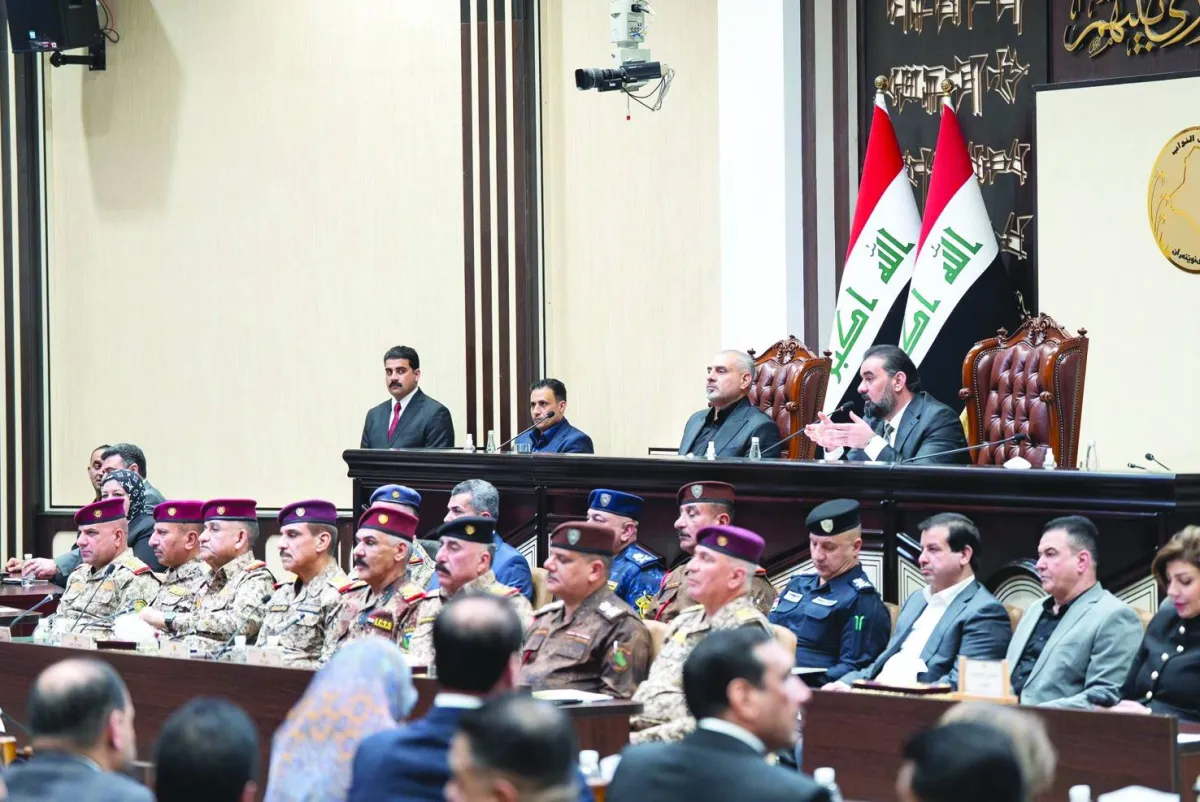
A total of 220 Iraqi lawmakers have submitted a request for a parliamentary session next Monday to elect a new president, in a move aimed at completing the requirements for government formation. Despite this initiative, the political atmosphere appears discouraging, raising doubts about the possibility of resolving this long-standing issue, which has been pending for over five months.
In an official letter addressed to the presidency of the parliament, the lawmakers confirmed that they represent two-thirds of the parliament's members necessary to pass the presidential election. They pointed out that the ongoing vacancy in this position disrupts the constitutional requirements and negatively impacts the functioning of the authorities. The signatories emphasized the need to include the presidential election on the session's agenda and to take the necessary measures to ensure its convening at the scheduled time.
Details of the Event
Many political sources discuss the council's failure to pass the presidential election process, considering the opposition from significant forces and parties in parliament, such as the State of Law Coalition led by Nouri al-Maliki, and the Kurdistan Democratic Party led by Masoud Barzani. In this context, the First Deputy Speaker of the House, Adnan Fihhan al-Dulaimi, announced the presidency's efforts to hold a meeting with political bloc leaders to discuss setting a date for the presidential election session.
Al-Dulaimi noted that the critical circumstances facing the region, particularly Iraq, impose on political forces the responsibility to support the step of the presidency and members of parliament, prioritizing the country's interests above all else. However, the matter remains contingent on the decisions made by political bloc leaders before heading to the parliament.
Background & Context
Despite discussions about the possibility of electing Nizar Amidi from the National Union Party for the presidency, sources close to the State of Law believe that "nothing is certain at this point." The source indicates that "the move by some lawmakers aims at showcasing concern, but the reality suggests that passing the presidential election during this period is unlikely."
Reports regarding the anticipated session are conflicting, both in terms of the blocs and political forces that will participate and those that will abstain from attending. It is expected that the participating blocs will include the bloc led by caretaker Prime Minister Mohammed Shia' al-Sudani, which consists of 45 lawmakers, along with the Progress, Kurdistan National Union, and Sadiqoon blocs, representing a total of 137 lawmakers, which is significantly less than the two-thirds required to elect a president.
Impact & Consequences
Concerns are growing that failure to reach a political consensus on electing a president could exacerbate the political and economic situations in Iraq. The country has suffered from recurring crises in recent years, increasing internal instability. Additionally, the continued vacancy in the presidency may negatively affect citizens' trust in state institutions.
In this atmosphere, security tensions are escalating along the Iraqi-Syrian border, where new drone attacks are being recorded. This comes at a time when Baghdad and Washington are seeking to enhance security coordination and prevent the country from slipping into a broader regional conflict, reflecting the complexities of the security and political situation in Iraq.
Regional Significance
The repercussions of the situation in Iraq extend beyond national borders, as political and security instability in Iraq impacts the regional neighborhood. The regional war between the United States and Israel on one side and Iran on the other complicates the scene, making it essential for Iraqi political forces to reach agreements that ensure the country's stability.
In conclusion, the situation in Iraq remains suspended between hope for forming a new government and the political and security challenges facing the country. Completing constitutional requirements represents a vital step toward restoring trust in the political process, but this requires genuine consensus among the various political forces.