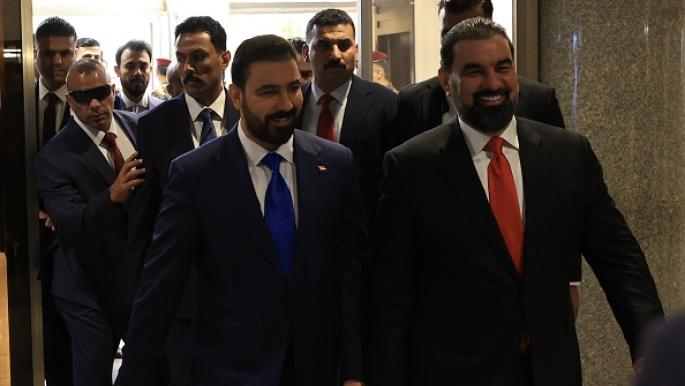
On Thursday, the Iraqi Parliament voted in favor of Prime Minister Ali Al-Zaydi's government, making Al-Zaydi the head of the ninth government formed in Iraq since the U.S. invasion in 2003. This move comes at a critical time as the new government aims to tackle the security and economic challenges facing the country.
The Al-Zaydi government received the confidence of the Parliament in a session that saw the absence of representation from armed factions, indicating a shift in the political dynamics in Iraq. This decision may pave the way for a more consensual government, but it also raises questions about how to deal with the armed factions that have played a prominent role in Iraqi politics.
Details of the Vote
The Al-Zaydi government garnered support from 200 out of 329 members, reflecting broad backing from major political blocs. The new government is represented by a group of ministers chosen based on competence and experience, in an effort to overcome the political divisions that plagued previous administrations.
This government is formed under challenging economic conditions, facing significant issues related to unemployment and poverty, in addition to ongoing security crises. In his speech following the vote of confidence, Al-Zaydi emphasized the importance of collective work and cooperation among all parties to achieve stability and development.
Background & Context
Since the U.S. invasion of Iraq in 2003, the country has witnessed a series of governments that have struggled to achieve stability. Armed factions have played a crucial role in Iraqi politics, making it difficult to form stable governments. However, the absence of representation from these factions in the new government may signal a change in political strategy.
Historically, armed factions have been an integral part of the political landscape, contributing to the formation of previous governments. Yet, with increasing calls for reform, there seems to be a desire to reduce the influence of these factions within the government.
Impact & Consequences
This step is expected to significantly affect the political landscape in Iraq. The absence of armed factions may lead to reduced political tensions, but it could also provoke reactions from those factions who may feel marginalized. This situation could reflect on the security and stability of the country.
The new government will also face substantial challenges in the economic sector, as it needs to implement urgent reforms to improve the deteriorating economic situation. The success of the government in this area will be a critical factor in building trust among citizens.
Regional Significance
The formation of a new government in Iraq without representation from armed factions may have wide-ranging implications for the Arab region. Iraq is considered a pivotal point in the Middle East, and any political changes there could affect relations between neighboring countries.
If the new government succeeds in achieving stability, it could serve as a model for other countries facing internal conflicts. However, failure to do so may exacerbate crises in the region.
In conclusion, granting confidence to Al-Zaydi's government represents an important step in Iraq's journey toward stability, but challenges remain. It will be essential to monitor how the government addresses the armed factions and tackles economic and social issues.