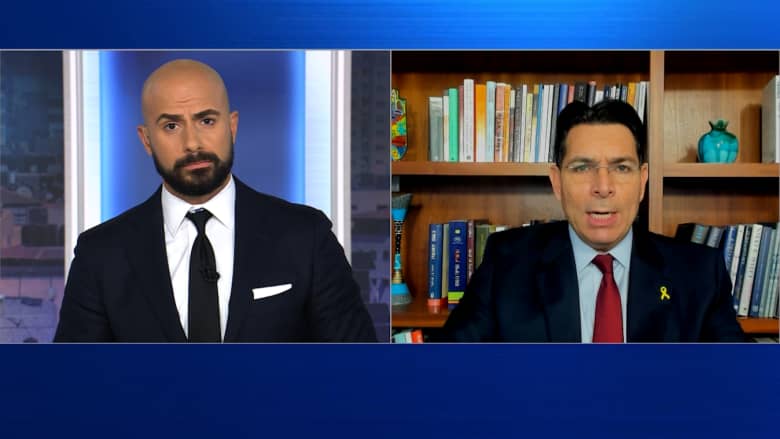
In a striking statement before the United Nations Security Council, Danny Danon, Israel's representative to the UN, confirmed that Iran possesses ballistic missiles with a range of approximately 4000 kilometers. This announcement was made during a brief pause before the regular meeting dedicated to Middle Eastern issues, including the Palestinian cause, on Tuesday.
Danon added that these missiles could reach Diego Garcia, indicating potential threats to both regional and international security. These remarks come at a sensitive time as tensions in the region escalate due to Iranian military activities.
Details of the Statement
During his speech, Danon emphasized that Iran has not only developed its nuclear program but has also enhanced its missile capabilities. These statements arise amid growing concerns over Iran's military activities, which Israel perceives as a direct threat to its national security.
Danon also pointed out that Iranian missiles could pose a threat not only to Israel but also to neighboring countries and to American forces stationed in the region. These comments reflect Israel's increasing anxiety regarding Iran's military program and its intentions.
Background & Context
Historically, Israel has considered itself the only nuclear power in the Middle East, having never acknowledged its possession of nuclear weapons. In contrast, Iran has been striving for years to develop its nuclear program, raising international concerns and leading to economic sanctions against it.
In recent years, relations between Iran and Israel have seen a significant escalation, with both sides exchanging accusations regarding military activities and espionage. This escalation occurs amid political tensions in the region, which include the Israeli-Palestinian conflict and crises in countries like Syria and Lebanon.
Impact & Consequences
Danon's statements could heighten tensions between Iran and Israel and may prompt the international community to reconsider its policies towards Iran. Additionally, these remarks could impact ongoing nuclear negotiations, as major powers seek to reach an agreement that limits Iranian nuclear activities.
The escalation in rhetoric between the two sides may also lead to increased military preparations, which could negatively affect regional security. If Iran continues to develop its military capabilities, Israel may be compelled to take preventive measures, raising the likelihood of armed conflict in the region.
Regional Significance
These statements serve as a warning to Arab countries, as any escalation in the conflict between Iran and Israel could directly affect security and stability in the region. Arab nations facing internal crises may find themselves in a difficult position should a new conflict arise.
Moreover, rising tensions could influence relations between Arab states and Iran, with some countries potentially adopting harsher stances towards Iran, while others may seek to de-escalate. Ultimately, regional security remains hostage to political and military developments in the area.
In conclusion, Danny Danon's remarks reflect Israel's growing concern over Iranian military activities and highlight the ongoing tensions in the Middle East. Under these circumstances, hope remains for peaceful solutions that enhance stability and security in the region.