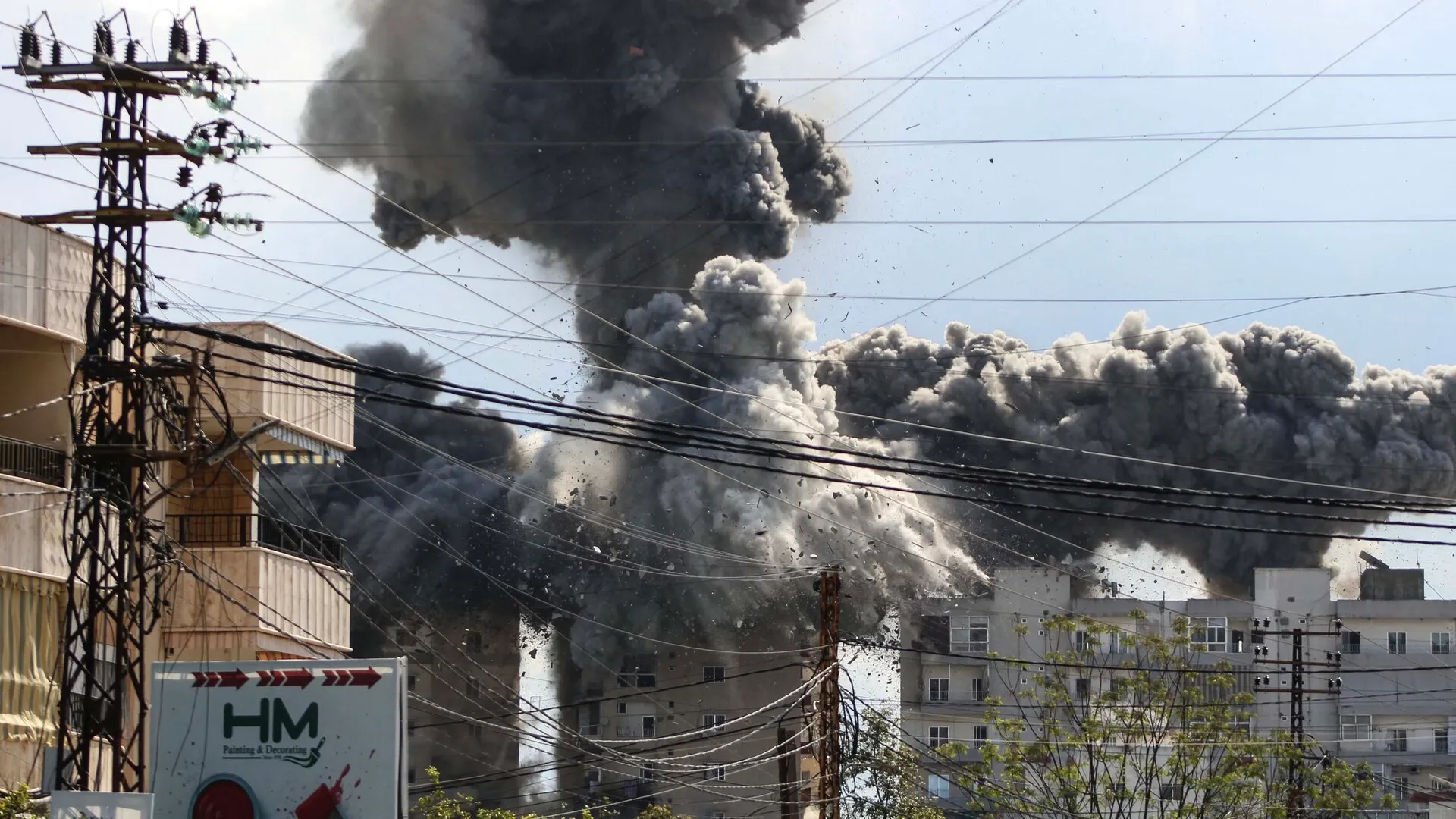
Despite U.S. President Donald Trump's announcement of a ceasefire between the United States and Iran, the Lebanese front continues to witness increased military activity from the Israeli occupation forces. This escalation comes at a time when Hezbollah prefers to hold back from taking a clear stance.
Following Trump's announcement of a two-week suspension of attacks on Iran, the Israeli army declared its intention to continue military operations against Hezbollah in Lebanon, indicating the end of a wave of airstrikes launched against Iran.
Details of the Event
While Lebanon has not received any official details regarding the ceasefire agreement, Al Jazeera's bureau chief in Lebanon, Mazen Ibrahim, confirmed that the presidency and government have not been informed about this agreement. Nevertheless, the Pakistani formulation suggests that Lebanon is included in the agreement.
The intensification of Israeli military operations against Lebanon since the announcement of the truce raises questions about whether the Lebanese front will remain active as it did after the support war in 2024. Lebanese citizens believe that this escalation is part of Israel's attempts to pressure the Lebanese government to engage in negotiations, despite the lack of leverage in these pressures.
Background & Context
Historically, relations between Lebanon and Israel have been marked by ongoing tensions, especially following repeated wars. Hezbollah, which is considered a major force in Lebanon, has been in conflict with Israel for years, making the Lebanese front one of the most volatile regions in the Middle East.
On March 2, Hezbollah engaged in a confrontation with Israel, asserting that it was a response to Israeli aggressions and a retaliation for the assassination of leader Ali Khamenei. These events place Lebanon in a sensitive position, as officials fear that Lebanon may be left alone to face upcoming challenges.
Impact & Consequences
The Israeli escalation could exacerbate the situation in Lebanon, increasing pressure on the Lebanese government and its people. There are concerns that the issue of Lebanon may be used as a tool in negotiations between the United States and Iran, placing Lebanon in a vulnerable position.
Moreover, questions arise regarding the extent of U.S. intervention to curb Israeli aggression against Lebanon amid these new developments. These dynamics could significantly impact stability in the region as a whole.
Regional Significance
The impact of events in Lebanon may extend to neighboring Arab countries, as any escalation could lead to security and economic repercussions. Arab nations are closely monitoring the situation, as any escalation in Lebanon could affect regional stability.
In conclusion, the situation in Lebanon remains tense, with ongoing Israeli escalation and a lack of a clear stance from Hezbollah. These dynamics could influence the future of Lebanon and the region as a whole.