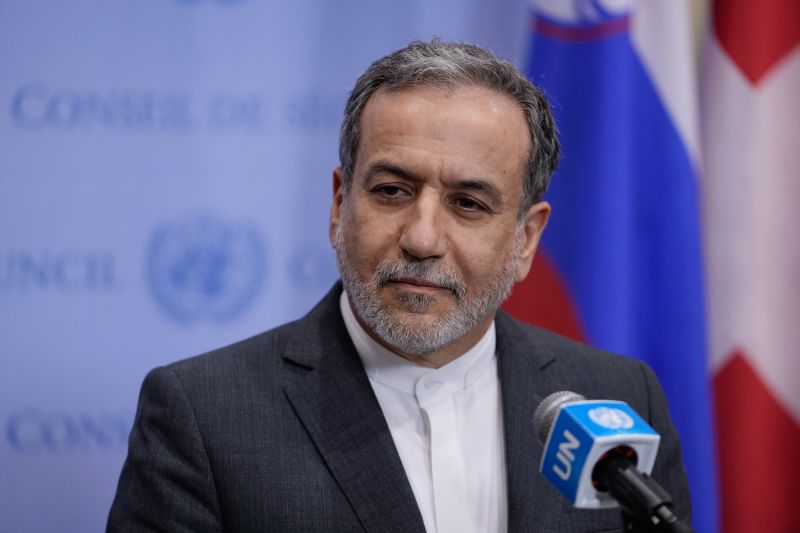
In a surprising move, media reports have revealed that Israel has deleted the names of Abbas Araghchi, the Iranian Deputy Foreign Minister, and Mohammad Baqer Qalibaf, the Iranian Parliament Speaker, from its targeted assassination list. This decision comes at a time when tensions between Iran and Israel are escalating, raising questions about the motivations behind this choice.
This action is seen as part of a broader Israeli strategy aimed at de-escalating tensions in the region, especially given the increasing friction between Tehran and Tel Aviv. Some analysts suggest that Israel may be seeking to avoid military responses that could lead to an escalation of conflict.
Details of the Event
This information emerges during a sensitive period, as Israel had previously compiled a list of prominent Iranian figures as potential targets for assassination, in its efforts to curb Iranian influence in the region. However, the decision to exclude Araghchi and Qalibaf may indicate a shift in Israeli strategy, as it appears that Tel Aviv is trying to avoid any escalation that could lead to a full-scale military conflict.
Abbas Araghchi is a key figure in Iranian foreign policy, having played a prominent role in nuclear negotiations with world powers. Meanwhile, Mohammad Baqer Qalibaf is an influential figure in the Iranian parliament, which increases their significance in any future dialogue regarding regional issues.
Context and Background
Over the past years, relations between Iran and Israel have seen increasing tensions, with Tel Aviv accusing Tehran of supporting armed groups in the region, including Hezbollah in Lebanon. Additionally, the Iranian nuclear program has been a major point of contention between the two sides, prompting Israel to take preemptive actions against key Iranian figures.
In recent years, Israel has carried out several assassination operations against Iranian figures, provoking strong reactions from Tehran. However, the decision to exclude Araghchi and Qalibaf may reflect Israel's desire to avoid further escalation in their already strained relations.
Implications and Effects
This decision could have significant implications for Israeli-Iranian relations, as it may be seen as a sign of Israel's willingness to ease tensions. It could also be interpreted as an attempt by Tel Aviv to avoid any military responses that could escalate the conflict.
On the other hand, this decision may strengthen Iran's position in future negotiations regarding its nuclear program, as it could be viewed as a sign of weakened Israeli pressures. Furthermore, this decision might encourage Iran to bolster its influence in the region, potentially complicating the security situation in the Middle East.
Impact on the Arab Region
The Iranian-Israeli relationship is a key focal point in regional politics, affecting many Arab countries. Amid ongoing tensions, any escalation between the two sides could have negative repercussions for security and stability in the region.
This decision may also provide Arab nations with an opportunity to reassess their strategies towards Iran, as it could be seen as a sign of changing regional dynamics. At the same time, it may bolster the position of countries seeking rapprochement with Iran, further complicating the political landscape in the region.
In conclusion, the question remains whether this step will lead to a de-escalation of tensions or further complicate relations between Iran and Israel. Developments in the coming days will be crucial in determining the course of events in the region.