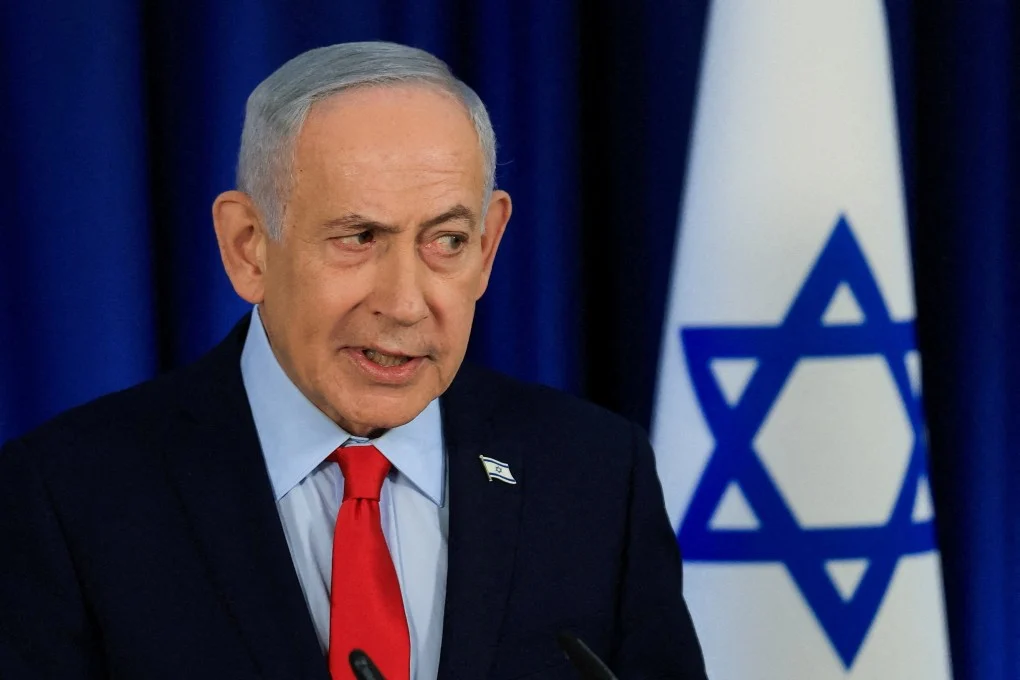
Israeli Prime Minister Benjamin Netanyahu announced on Sunday Israel's intention to expand its invasion of southern Lebanon in a provocative step aimed at addressing the threats posed by Hezbollah, which is supported by Iran. During a visit to northern Israel, Netanyahu emphasized that his country is determined to fundamentally change the situation in the north, noting that Hezbollah still possesses the capability to launch rockets into Israeli territory.
Netanyahu's statements came at a time when tensions between Israel and Hezbollah are escalating, as Israeli forces continue their military operations in the region. He considered the expansion of the 'security strip' in Lebanon a necessary step to ensure Israel's security and stability in the face of increasing threats.
Details of the Announcement
During his visit to northern Israel, Netanyahu pointed out that Hezbollah still retains military capabilities, necessitating strict measures to ensure that Israel's security is not threatened. He confirmed that military operations would continue until the specified objectives are achieved, which include reducing Hezbollah's military capabilities.
The Israeli move comes amid rising tensions in the region, with increased reciprocal attacks between the two sides in recent weeks. Israeli military reports have detected suspicious movements by Hezbollah, prompting the Israeli government to decide to expand the scope of its military operations.
Background & Context
Historically, the Lebanese-Israeli border has witnessed ongoing tensions, with Hezbollah being one of the most prominent armed factions in Lebanon. Israel and Hezbollah have fought several wars in the past, the most notable being the 2006 war. Since then, Hezbollah has maintained its military capabilities, leading Israel to consider it a constant threat to its security.
In recent years, Hezbollah's military activities have increased, particularly following growing Iranian support, raising Israeli fears of a potential new conflict. Israel has repeatedly attempted to diminish Hezbollah's influence through military operations and targeting its military sites.
Impact & Consequences
The expansion of Israeli military operations in southern Lebanon could lead to greater escalation of tensions between Israel and Hezbollah, threatening stability in the region. This move may also affect Israel's relations with neighboring Arab countries, especially amid calls for de-escalation and dialogue.
Many observers believe that military escalation could drag the region into a broader conflict, with regional and international powers potentially intervening in the dispute, complicating the security situation in the Middle East. Furthermore, any escalation could impact the humanitarian situation in Lebanon, which is already suffering from severe economic and political crises.
Regional Significance
These developments come at a sensitive time for the Arab region, where many countries are facing internal and external crises. The escalation of the conflict between Israel and Hezbollah could affect peace and stability efforts in the region, especially given unresolved issues such as the Palestinian cause.
Moreover, any military escalation could lead to an influx of refugees into neighboring countries, increasing pressure on Arab governments already facing economic and social challenges. Therefore, the situation in Lebanon and Israel requires international and Arab attention to ensure that conditions do not worsen.