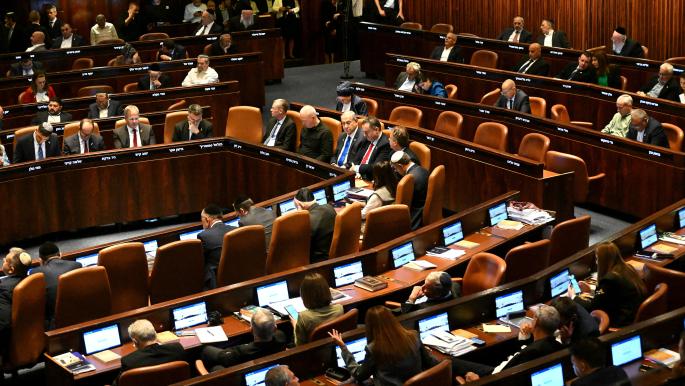
As the voting date for the state budget approaches, Israel's political arena is on high alert. This budget is a crucial test for Prime Minister Benjamin Netanyahu's coalition, as passing it is considered essential for remaining in power. At this sensitive time for Israel, where wars are intensifying on multiple fronts, pressure is mounting on the current government.
With rising pressures from various parties, both internationally and domestically, questions arise over whether the coalition will succeed in passing the budget, or if early elections will be the only viable option.
Event Details
Netanyahu's coalition faces multiple challenges in a politically complex landscape. Several parties within the coalition have called for the urgent need to pass the budget as a means to enhance stability and the ability to confront military and economic challenges. In this context, some observers indicate that failure to pass the budget could lead to the collapse of the current government and prompt early elections, thereby exacerbating the polarization and political division in the country.
The financial planning is tied to the current government's approaches in dealing with complex security crises, particularly the escalation in relations with both Iran and Lebanon. This is evident in the allocation of military and security resources, which requires coherent political support to address these challenges.
Context and Background
Over the past months, the security situation in the region has deteriorated, with tensions with Iran reaching unprecedented levels, prompting Israel to adopt tougher stances. Simultaneously, military movements along the border with Lebanon are raising suspicions, making it imperative to manage issues on various fronts effectively.
This security and economic complexity reflects Israel's increasing international isolation, with pressures mounting on the government to provide effective solutions to urgent issues, including the Jerusalem file and the Palestinian conflict.
Implications and Effects
If the government fails to pass the budget, it may open the door for new political conflicts and could increase the gap between different parties looking toward early elections. In this case, the premiership will have far-reaching implications for Israeli politics, thus heightening instability.
This situation could directly impact military decisions made by the state, as every financial crisis usually requires cuts to military budgets, which may have repercussions on internal and external security.
Impact on the Arab Region
The potential outcomes of this situation relate directly to regional security and stability, as early elections or a budget failure could lead to the emergence of new forces in the Israeli political arena. This could influence potential peace talks and dealings with Arab nations and the Palestinians.
Moreover, the increasing tensions may help expand the impressions of hostility between Israel and its neighbors, hindering prospects for peace and stability in the region while rejecting negotiation opportunities.
In conclusion, the Israeli scene remains open to all possibilities and requires careful monitoring of the rapidly unfolding events in the coming weeks.