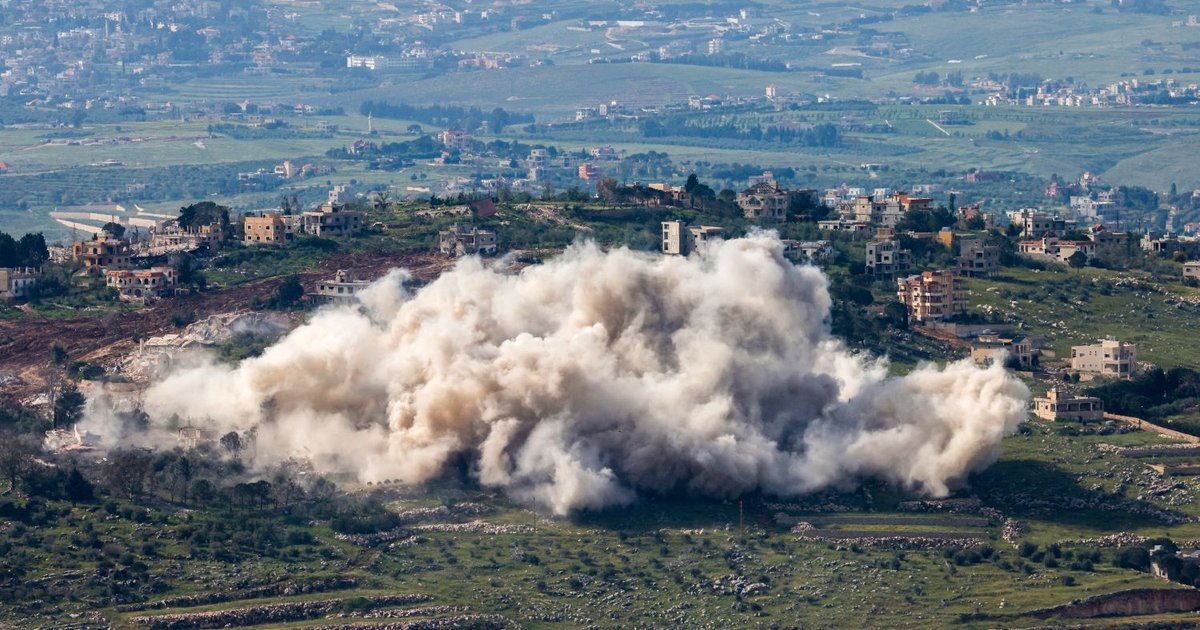
In an unprecedented move, Israeli forces issued an urgent warning on Tuesday to residents of more than ten towns in southern Lebanon, calling for immediate evacuation to the north, indicating a potential imminent attack. This warning is part of what Israel describes as Hezbollah's violation of the ceasefire agreement reached on April 16.
Despite the signing and extension of the ceasefire agreement last week, Israel continued to bombard southern Lebanon with artillery and airstrikes, raising concerns among local residents and prompting them to take swift action to leave their areas.
Details of the Evacuation Order
Reports indicate that the Israeli warning came after rising tensions between Israel and Hezbollah, with military sources confirming that the situation along the Lebanese-Israeli border has become more dangerous. Several towns in southern Lebanon have been designated as danger zones, prompting the Israeli army to take proactive measures to protect civilians.
This escalation occurs as the international community seeks to calm the situation in the region, where previous ceasefire agreements have been reached, but those efforts appear to have failed to achieve the desired stability.
Background & Context
Historically, the Lebanese-Israeli border has witnessed numerous armed conflicts, with Hezbollah being a major force in Lebanon having fought several wars against Israel since 2000. The ongoing tensions have exacerbated the humanitarian situation in the region, where residents suffer from the effects of the continuous conflict.
The current escalation could lead to severe consequences for regional security, potentially causing mass displacement of populations and increasing humanitarian burdens in Lebanon. The continued Israeli bombardment may worsen the already dire economic and social conditions in the country, which is grappling with multiple crises.
Impact & Consequences
The current escalation may have serious implications for regional security, as it could lead to mass displacement of populations and increase humanitarian burdens in Lebanon. Furthermore, the ongoing Israeli bombardment could exacerbate the economic and social conditions in the country, which is already suffering from multiple crises.
As the situation develops, the international community is closely monitoring the events, with concerns about the potential for a wider conflict that could destabilize the region further.
Regional Significance
This situation is a clear indicator of rising tensions in the Middle East, which could significantly impact regional stability. The potential for conflict escalation poses risks not only to Lebanon but also to neighboring countries, highlighting the fragile state of peace in the region.
In conclusion, the urgent evacuation order and the ongoing military actions underscore the precarious nature of the situation in southern Lebanon, necessitating immediate attention from both local and international stakeholders to prevent further deterioration.