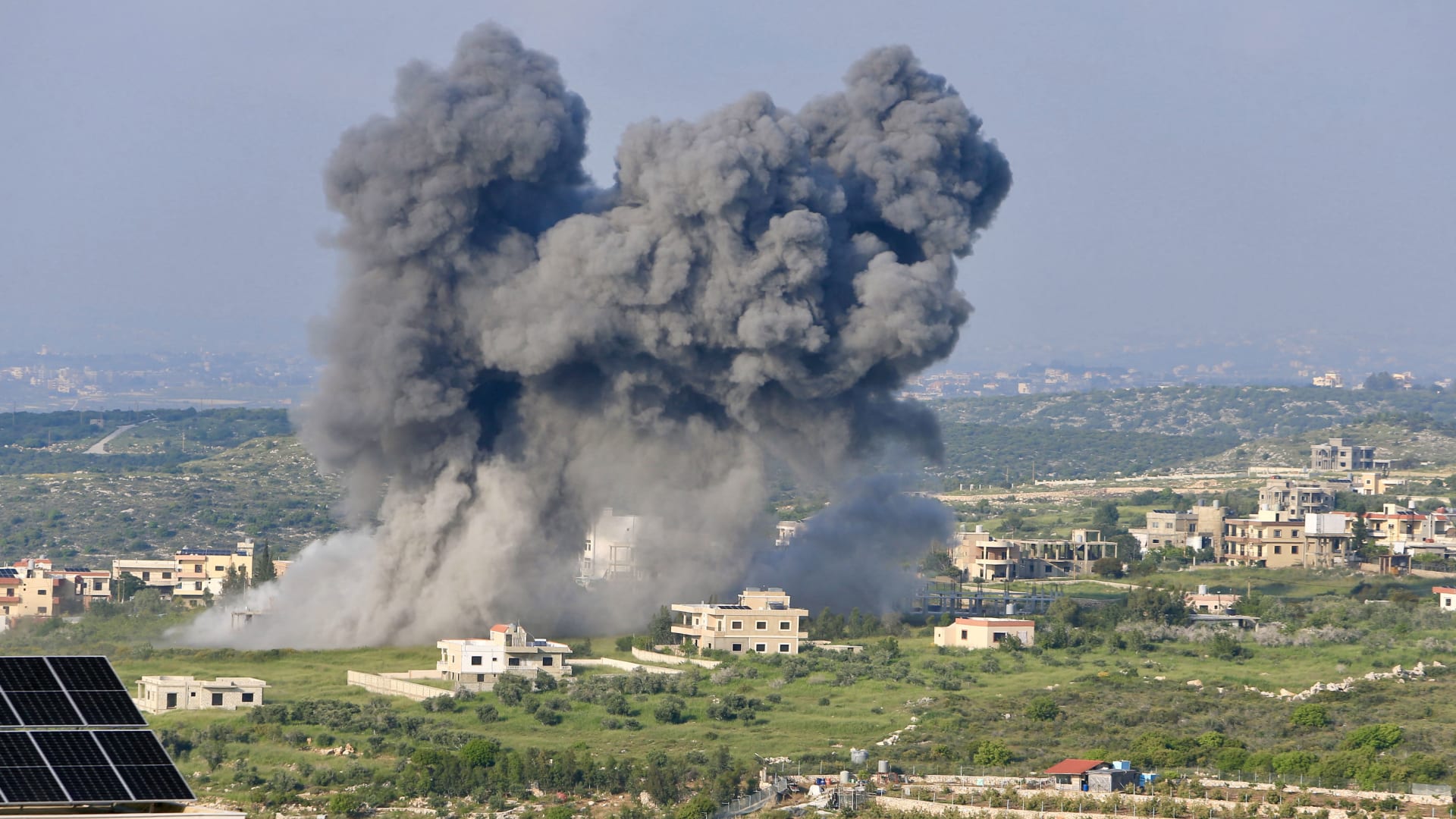
In a new military escalation, the Israeli army continued its airstrikes on southern Lebanon on Wednesday, targeting the towns of Toulin and Hanin. In response, Hezbollah announced it had carried out 11 attacks using over 100 rockets against Israeli army gatherings and vehicles, as well as settlements and military barracks in northern Israel.
According to Al Jazeera's correspondent, the Israeli airstrikes also targeted the southern suburbs of Beirut, where Israeli fighters flew at low altitude over the Lebanese capital and the Lebanese coast. The Israeli forces issued warnings to residents of some neighborhoods in the southern suburbs, urging them to evacuate.
Details of the Incident
The Lebanese Ministry of Health reported that 9 people were killed and 47 others were injured as a result of the Israeli airstrikes that targeted several areas in the south. In a swift reaction, Hezbollah reported carrying out rocket attacks targeting Israeli occupation sites in Naqoura and Qouzah, confirming direct hits on Israeli forces.
Hezbollah also indicated that it targeted a Merkava tank with a guided missile in the town of Qouzah, resulting in direct damage to the tank. When a military helicopter attempted to land to evacuate the injured, it was targeted by the party's air defense missile, forcing it to retreat.
Background & Context
The Lebanese-Israeli border has witnessed increasing escalation since the beginning of March, with Lebanon facing ongoing Israeli aggression that has resulted in the deaths of 1,072 people and injuries to 2,966 others, in addition to the displacement of over 1 million people, according to Lebanese authorities. Israel began its aggression by launching airstrikes on the southern suburbs of Beirut and areas in the south and east, followed by limited ground incursions.
At the same time, Hezbollah's response to the Israeli assaults has included attacks on military sites in northern Israel, reflecting the rising tensions in the region despite the ceasefire agreement reached in November 2024.
Impact & Consequences
Concerns are growing over a larger escalation in the conflict between Israel and Hezbollah, with reports indicating that Hezbollah has launched at least 30 rockets at Israel since Wednesday morning, with several of these rockets being intercepted. The Israeli home front announced the activation of sirens in Western Galilee after detecting rockets from Lebanon.
On the other hand, the Israeli army confirmed that it had eliminated elements of Hezbollah and destroyed weapon depots in southern Lebanon, further heightening military tensions in the region. This escalation comes amid the ongoing US-Israeli war against Iran, which has expanded to include Lebanon, as Washington and Tel Aviv have been conducting continuous aggression against Iran since February 28.
Regional Significance
This military escalation between Israel and Hezbollah poses a threat to security and stability in the Arab region, as the situation in Lebanon reflects on neighboring countries and exacerbates regional tensions. Additionally, the military escalation could lead to severe humanitarian consequences for civilians in Lebanon, who are already suffering from the effects of the ongoing conflict.
In conclusion, the situation in Lebanon remains tense, with military operations continuing from both sides, raising fears of a larger escalation that could impact regional security.