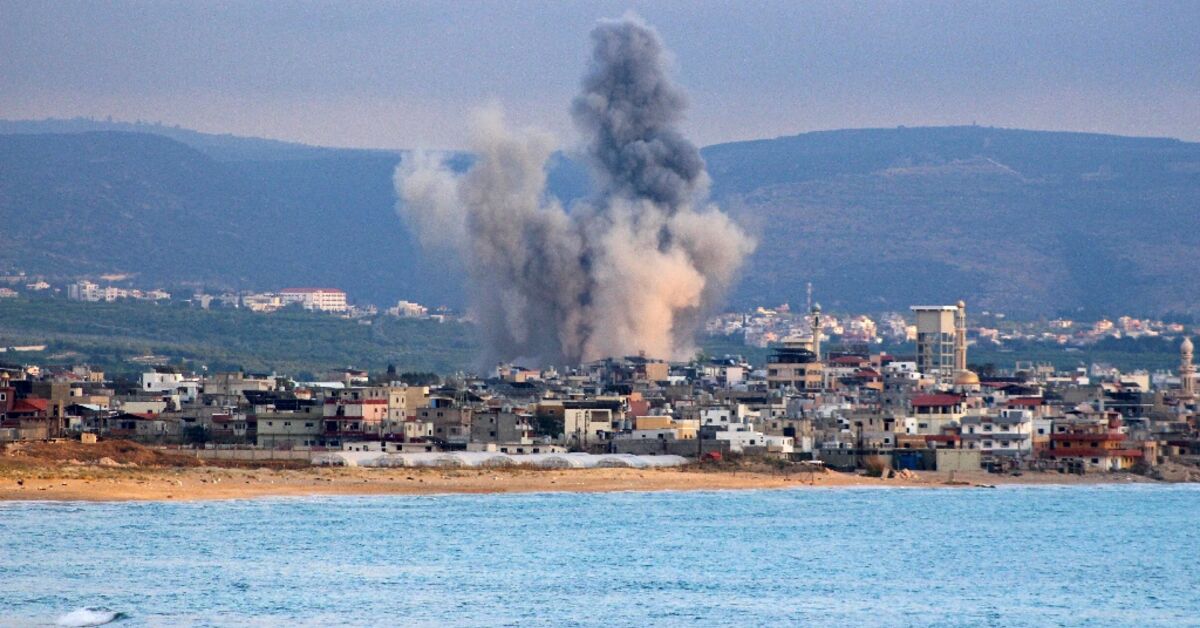
On Thursday, Israeli forces began executing new airstrikes on Hezbollah positions in the city of Tyre, after issuing warnings to local residents about the necessity of evacuation. This escalation follows Israel's announcement that all areas south of the Zahrani River are designated as "combat zones," raising significant concerns about an intensifying conflict in the region.
The day prior, Israel warned Tyre's residents against remaining in the city, indicating that military operations are aimed at Hezbollah's Iranian-backed infrastructure. This escalation occurs at a highly sensitive time, as tensions between Israel and Hezbollah rise, threatening to ignite a broader conflict in the area.
Details of the Event
Reports indicate that Israeli airstrikes targeted strategic Hezbollah sites, including weapon depots and command centers. Images circulated on social media showed plumes of smoke rising from the targeted locations, reflecting the intensity of the attacks. Civilian casualties have also been reported, raising concerns about the humanitarian impact of these military operations.
These airstrikes come at a critical moment, as the region experiences increasing tensions among various armed factions. Israeli officials have confirmed that the aim of these operations is to undermine Hezbollah's capacity to carry out any attacks against Israel, especially amid rising threats from Iran.
Background & Context
Historically, southern Lebanon has been the scene of numerous armed conflicts, particularly between Israel and Hezbollah. Since the 2006 outbreak of the Second Lebanon War, there have been periods of relative calm, but tensions have never fully dissipated. Hezbollah, regarded as one of the prominent armed factions in Lebanon, enjoys substantial support from Iran, further complicating the security situation in the region.
In recent years, relations between Israel and Hezbollah have escalated significantly, with both sides exchanging accusations of preparing for military operations. Additionally, the situation in neighboring Syria, where Iranian forces are present, adds complexity to the security landscape in the region.
Impact & Consequences
Analysts suggest that the recent escalation could lead to a greater intensification of the conflict between Israel and Hezbollah, potentially dragging the region into a full-scale war. This escalation could also affect stability in Lebanon, which is already grappling with severe economic and political crises.
Moreover, Israeli military operations may provoke reactions from other armed factions in the region, increasing the likelihood of new confrontations. Should the airstrikes continue, we may witness further escalation in military operations, endangering civilian lives and exacerbating their suffering.
Regional Significance
This escalation is part of a series of events affecting stability in the Arab region. The conflict between Israel and Hezbollah has repercussions for neighboring countries, including Syria and Palestine. Furthermore, the escalation may impact relations between Arab nations and Israel, particularly in light of recent normalization attempts.
In conclusion, the military escalation in southern Lebanon poses a significant challenge to regional security and reflects the ongoing tensions between armed factions and the Israeli state. It is crucial to closely monitor developments, as any escalation could lead to catastrophic humanitarian and political outcomes in the region.