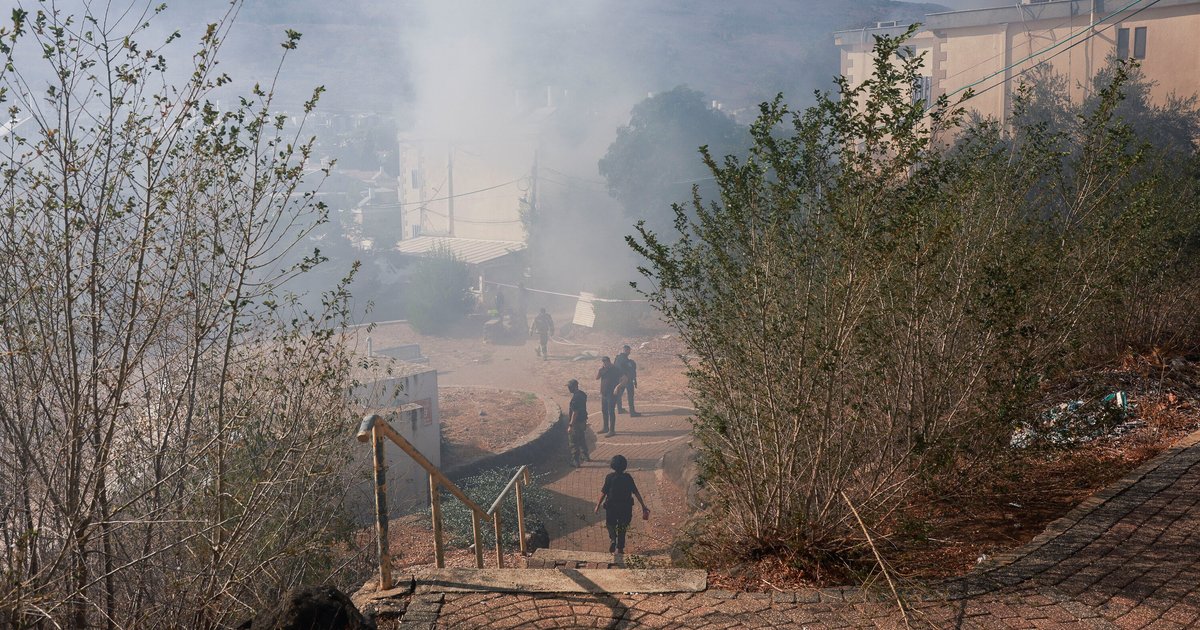
On Saturday, April 25, Israel announced that it would launch strong attacks on Hezbollah targets, heightening tensions in southern Lebanon. This announcement comes at a sensitive time, as a U.S.-brokered ceasefire was recently extended for three weeks, yet remains extremely fragile.
The Lebanese news agency reported that Israeli airstrikes resulted in the deaths of four people in southern Lebanon, while Israeli forces confirmed that Hezbollah had fired rockets towards Israeli territory, complicating the already tense security situation. The Israeli government has instructed the military to carry out strong attacks on Hezbollah targets, without providing additional details regarding those targets.
Details of the Incident
Israeli forces reported that they targeted Hezbollah rocket launchers at three different sites in southern Lebanon overnight, in addition to targeting Hezbollah fighters in separate airstrikes. Israel also targeted facilities used by Hezbollah's elite forces known as the Radwan Forces. However, it remains unclear whether the fatalities reported by the Lebanese agency were linked to these airstrikes.
Later in the day, Israeli forces confirmed that they intercepted a suspicious aerial target in the occupied area, reporting that Hezbollah had launched two rockets towards northern Israel, one of which was intercepted. There were no reports of injuries on the Israeli side.
Background & Context
Historically, relations between Israel and Hezbollah have seen repeated escalations, with Hezbollah being an Iran-backed group that fought Israel in 2006. Since then, clashes between the two sides have persisted, particularly in border areas. The current ceasefire, which was recently extended, came after rounds of violence but has not been sufficient to fully halt tensions.
The current ceasefire serves as a real test for U.S. diplomatic efforts in the region, as the United States seeks to achieve greater stability in Lebanon. However, recent Israeli statements suggest that the situation may be heading towards further escalation.
Impact & Consequences
Israeli attacks on Hezbollah could lead to significant escalation in the conflict, potentially dragging the region into further violence. Any escalation in hostilities may impact the humanitarian situation in Lebanon, which is already suffering from severe economic and social crises.
Moreover, the escalation between Israel and Hezbollah could affect regional relations, especially with powers like Iran that support Hezbollah. Other countries may likely intervene in the conflict, complicating the situation further.
Regional Significance
The current events in Lebanon are part of a larger picture of tensions in the Arab region, where fears of escalating armed conflicts are on the rise. Any escalation between Israel and Hezbollah could affect regional security and heighten tensions between Arab states and Israel.
In conclusion, the situation in Lebanon remains complex, with overlapping regional and international interests. Recent events indicate that the region may be on the brink of a new escalation, necessitating close monitoring by the international community.