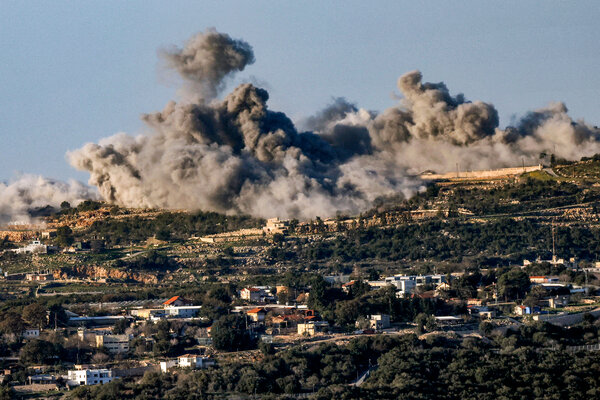
Israeli forces have resumed their bombardment of several cities in the Bent Jbeil area, continuing military operations despite the announcement of a ceasefire. Israel justified its escalation by claiming that Hezbollah violated the agreement, leading to heightened tensions in the region. These attacks have resulted in the deaths of at least 40 people, mostly civilians, according to data from the Lebanese Ministry of Health.
These developments come at a sensitive time, as there were hopes that the ceasefire would help calm the tense situation between Israel and Hezbollah. However, the military escalation appears to reflect the ongoing instability in the region and highlights the significant challenges facing peace efforts.
Details of the Incident
In recent days, Israeli forces have targeted several areas in southern Lebanon, raising international concern over the rising violence. Reports indicate that the bombardment has targeted residential areas, resulting in civilian casualties. These incidents are part of a series of clashes that have occurred along the Lebanese-Israeli border in recent years.
It is noteworthy that the recent escalation follows a period of relative calm, during which diplomatic efforts were underway to find peaceful solutions to the conflict. Nevertheless, the continuation of Israeli attacks suggests that the situation may worsen, threatening the stability of the entire region.
Background & Context
Historically, the Lebanese-Israeli border has experienced ongoing tensions, with several wars and conflicts occurring between the two parties. The dispute dates back decades, as Israel occupied parts of Lebanon in the 1980s, leading to the emergence of Hezbollah as a resistance force. Since then, clashes between the two sides have persisted, rendering the situation in the region fragile.
In recent years, several countries, including the United States and France, have attempted to mediate peace talks between Israel and Hezbollah. However, these efforts often face significant obstacles, making it difficult to achieve lasting stability.
Impact & Consequences
The current military escalation has serious implications for regional security. The continuation of bombardments could exacerbate the humanitarian situation in Lebanon, where many residents are suffering from a lack of basic resources. Additionally, the escalation may affect relations between Arab states and Israel, potentially leading to increased tensions in the region.
Moreover, the rising number of civilian casualties could provoke strong international reactions, prompting the global community to take action to curb the violence. This may increase pressure on Israel to halt its attacks or at least comply with international laws regarding the protection of civilians in armed conflicts.
Regional Significance
The situation in Lebanon represents a part of a larger picture concerning security in the Arab region. The tensions between Israel and Hezbollah affect relations between Arab states and Israel and may lead to increased polarization among regional powers. Furthermore, the ongoing violence could hinder peace efforts in other areas, such as Palestine and Syria.
Ultimately, the current situation in Lebanon requires urgent attention from the international community, as the military escalation threatens not only Lebanon's stability but also extends its impact to all countries in the region. It is essential that international and local efforts combine to achieve peace and stability and that the root causes of the conflict are addressed.