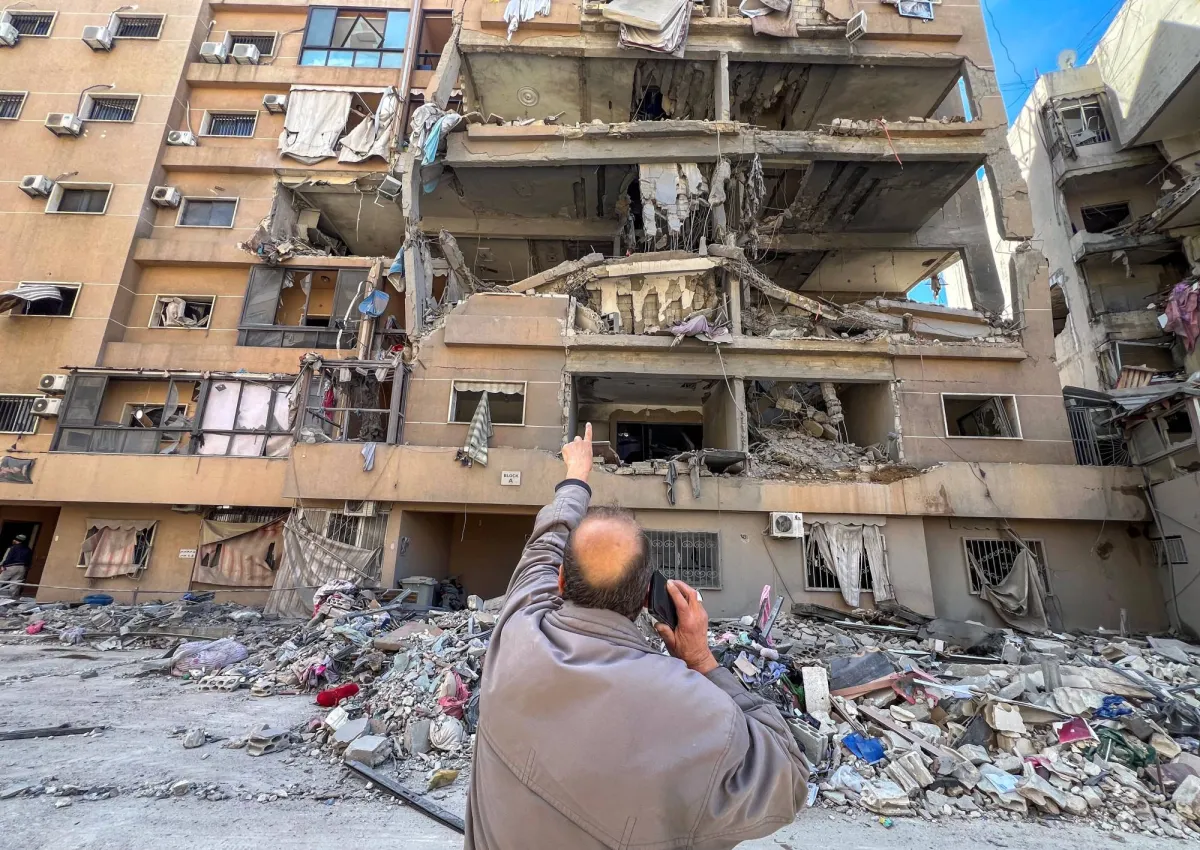
The war in Lebanon continues as Israeli attacks escalate, targeting infrastructure and residential areas, exacerbating the suffering of the Lebanese people and hindering reconstruction efforts. Reports indicate that Israel is following a systematic destruction policy, where its targets extend beyond destroying Hezbollah sites to encompass entire residential neighborhoods, worsening the displacement crisis and complicating the possibility of returning home.
The situation in Lebanon is heading towards a 'scorched earth' scenario, where Israeli military operations are no longer limited to specific military targets but include complete destruction of infrastructure. This trend aims to pressure Hezbollah on one hand and the Lebanese state and its institutions on the other, further complicating the humanitarian situation.
Details of the Event
Former Lebanese Minister Nasser Yassin confirmed that there is a significant similarity in the destruction strategy between the current war and the previous one, as buildings and facilities alleged to belong to Hezbollah are being targeted. He noted that the target bank appears to be similar, with buildings destroyed in the previous war being targeted again. He also added that pressures on the official Lebanese government are increasing, compounding the challenges faced by the Lebanese government.
In the absence of any indicators of external funding sources for reconstruction, it seems that Lebanon will face its fate alone. Yassin pointed out that Lebanon received a limited loan from the World Bank after the previous war, which is insufficient to meet the current reconstruction needs.
Background & Context
Historically, Lebanon has suffered from successive wars that have led to widespread destruction. The last war that occurred in 2024 left severe impacts on infrastructure, with the direct cost of Israeli aggression estimated at around $14 billion. As the number of destroyed housing units increases, Lebanon faces even greater challenges amid the current war.
Reports indicate that the number of housing units damaged in the current war may reach 4,500 units in the south and 1,600 units in the southern suburbs of Beirut. These figures reflect the scale of destruction that exceeds what the country experienced in previous wars, making reconstruction efforts more difficult.
Impact & Consequences
The burdens on Lebanon are increasing, as it suffers from a severe shortage of resources necessary for reconstruction. Countries that previously provided support are preoccupied with their internal crises, leaving Lebanon in a very difficult position. Additionally, the absence of political and economic reforms complicates the situation, as successive governments have not shown seriousness in implementing the required reforms.
Reports predict that the humanitarian situation in Lebanon will worsen, as residents continue to suffer from ongoing displacement and the inability to return to their homes. This situation threatens social and economic stability in the country, which could lead to exacerbated humanitarian crises.
Regional Significance
The repercussions of the war in Lebanon extend beyond its borders, affecting regional stability. The situation in Lebanon may encourage rising tensions in the region, complicating relations between Arab countries. Furthermore, the continuation of the war could exacerbate humanitarian crises in neighboring countries, necessitating an urgent response from the international community.
In conclusion, Lebanon appears to be facing severe challenges amid the current war, as economic and humanitarian burdens increase. It is essential that international efforts are combined to support Lebanon in confronting these crises and ensuring reconstruction and stability in the country.