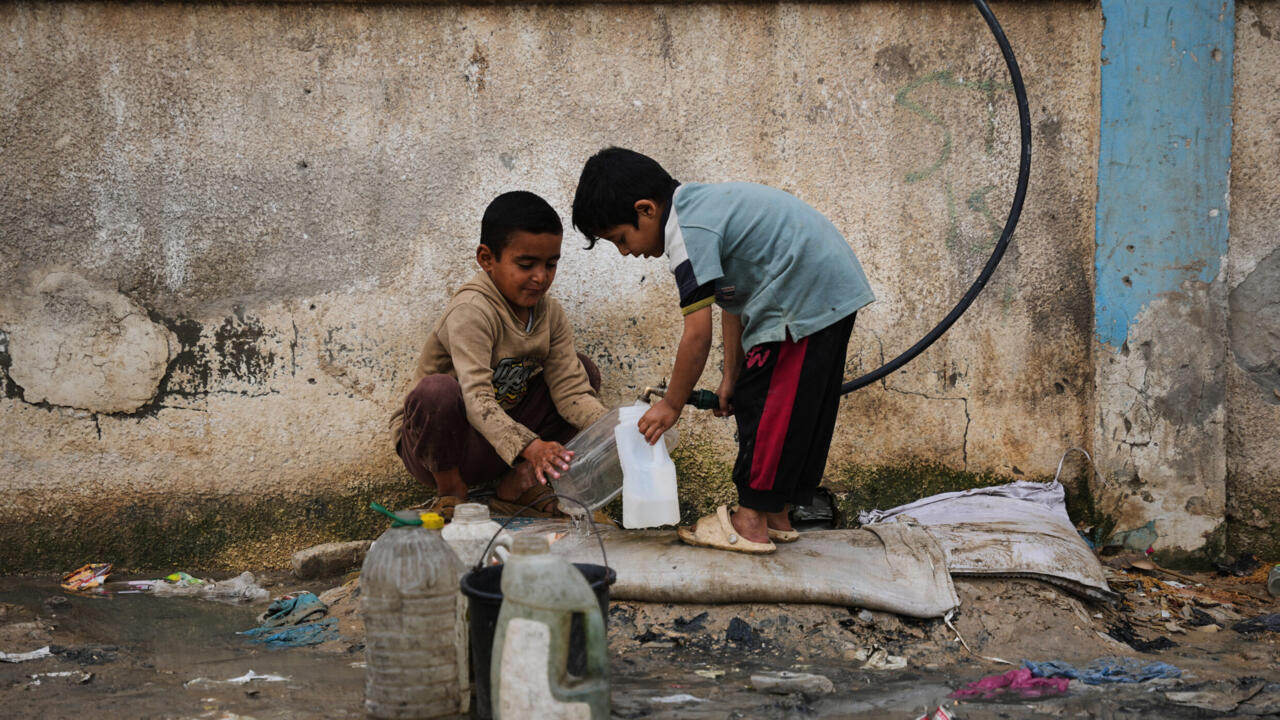
Doctors Without Borders has released a report titled "Water as a Weapon," confirming that Israel intentionally denies the people of the Gaza Strip access to necessary water for survival. The organization stated that this action is part of a campaign of collective punishment against Palestinians, warning that the widespread destruction of water infrastructure and obstruction of access are integral to the genocide being carried out by Israel in the region.
The organization also noted that the "engineered scarcity" of water occurs alongside the "killing of civilians and destruction of health facilities and homes," exacerbating the deteriorating humanitarian conditions in Gaza.
Details of the Situation
The report is based on testimonies and data collected by the organization between 2024 and 2025, warning that the conditions faced by Palestinian residents in Gaza have become devastating and inhumane. Claire San Filippo, the organization's emergency director, emphasized that Israeli authorities are fully aware that life cannot continue without water; nevertheless, they persist in destroying water infrastructure and preventing the entry of necessary supplies.
Despite a ceasefire that came into effect in October of last year, the region continues to experience daily violence, with Israeli forces and Hamas exchanging accusations of violating the truce. The report indicated that Israel has destroyed or damaged approximately 90% of the water and sanitation infrastructure in Gaza, further increasing the suffering of the population.
Background & Context
Historically, Gaza has suffered from recurring water crises, but the current situation has significantly worsened due to the ongoing conflict. Water desalination plants, wells, and pipelines have been destroyed, making access to clean water nearly impossible. The organization documented incidents where water trucks and wells were subjected to gunfire or destruction, complicating relief efforts.
Last month, Doctors Without Borders managed to provide over 5.3 million liters of water daily, meeting the minimum needs of more than 407,000 people, which is about one-fifth of the population of the region. However, one-third of the organization's requests for vital water and sanitation supplies were either rejected or went unanswered.
Impact & Consequences
Doctors Without Borders warns that the deprivation of water, combined with catastrophic living conditions and severe overcrowding, creates an ideal environment for the spread of diseases. This situation could lead to epidemics, further straining the already crumbling healthcare system in Gaza.
The organization also called on Israel to immediately restore water supplies to Gaza residents at the required levels and urged its allies to use their influence to pressure Israel to stop obstructing humanitarian aid access.
Regional Significance
This situation in Gaza poses a significant challenge to humanitarian efforts in the region, reflecting the humanitarian dimensions of the Israeli-Palestinian conflict. The continuation of these policies could exacerbate humanitarian conditions in other parts of the Arab world, necessitating urgent international action.
In conclusion, the situation in Gaza requires immediate attention from the international community, as the ongoing deprivation of water for Palestinians constitutes a violation of fundamental human rights.