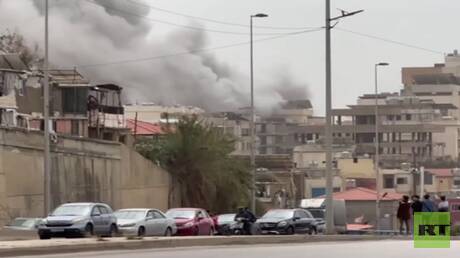
An Israeli airstrike targeted a building in the Ghobeiri area of southern Beirut today, Sunday. Exclusive footage from RT showed the moment of the attack, highlighting the intensity of the strike. This airstrike occurs within the context of rising tensions in the region, which raises alarms about the security situation in Lebanon.
The southern suburbs of Beirut are known as a stronghold for Hezbollah, which is frequently targeted by Israeli airstrikes. Images captured at the moment of the explosion showed smoke billowing from the targeted building, reflecting the strength of the attack and its impact on the surrounding area.
Details of the Incident
According to local sources, the airstrike targeted a building believed to contain military objectives. The strike resulted in significant material damage, but no casualties have been reported so far. This escalation comes at a sensitive time as tensions between Israel and Hezbollah are on the rise, increasing fears of a larger escalation in the region.
It is worth noting that Israeli airstrikes on Lebanon are not new; the past years have seen several similar attacks, reflecting the ongoing conflict in the area. These airstrikes have provoked angry reactions from Lebanese officials, who condemned the attack and deemed it a violation of Lebanese sovereignty.
Background & Context
Historically, relations between Lebanon and Israel have been extremely tense, with the region witnessing several wars and conflicts. Since the 33-day war in 2006, Israeli airstrikes on Lebanon have not ceased, primarily targeting Hezbollah positions. This dynamic reflects the ongoing conflict between the two sides, influenced by various regional and international factors.
In recent years, tensions have escalated due to disputes over maritime borders and natural resources. Additionally, Lebanon's economic situation, which is suffering from multiple crises, complicates matters further, as Hezbollah seeks to strengthen its position under these challenging circumstances.
Impact & Consequences
The recent airstrike underscores the escalation of tensions in the region, which may lead to military responses from Hezbollah. Should the party decide to retaliate, it could result in a larger escalation of the conflict, threatening regional security. This escalation may also affect the internal situation in Lebanon, which is already grappling with economic and political crises.
These events are likely to impact relations between Lebanon and other countries in the region, as regional and international powers may intervene to mediate or support one of the parties. Furthermore, the rise in violence could affect peace and stability efforts in the region, complicating the security situation even more.
Regional Significance
Israeli airstrikes on Lebanon are part of a broader strategy aimed at enhancing Israeli control in the region. This escalation could affect neighboring countries, such as Syria and Palestine, which may also experience heightened conflicts. The situation in Lebanon can influence regional security, necessitating greater international attention.
Ultimately, conditions in Lebanon remain under close observation, with analysts expecting tensions to increase in the coming days. The continuation of Israeli airstrikes could lead to serious repercussions for security and stability in the region, calling for urgent action from the international community.