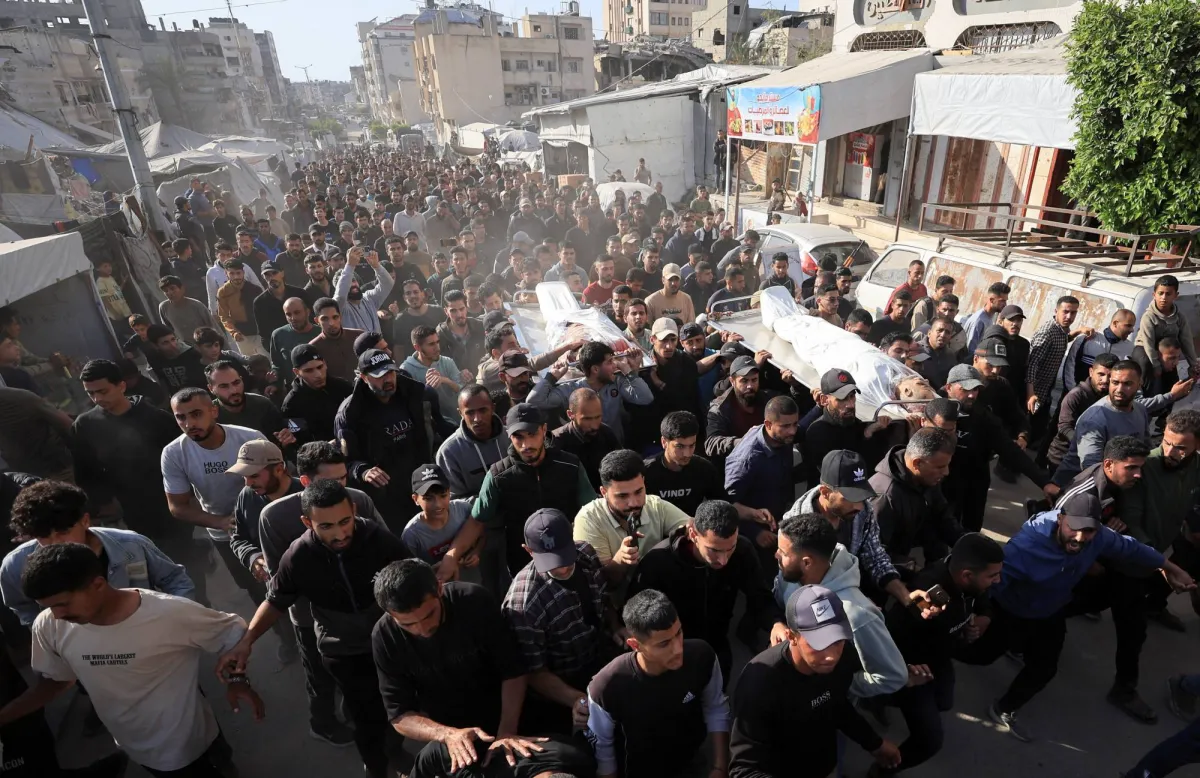
Israeli airstrikes have led to the deaths of five Palestinians in the cities of Gaza and Khan Younis, marking a breach of the ceasefire announced on October 10, 2023. The attacks, which occurred on Tuesday, targeted areas crowded with displaced individuals, intensifying fears regarding the rise in violence in the region.
Among the notable victims was Eiad Al-Shanbari, a senior commander in the Izz ad-Din al-Qassam Brigades, the military wing of Hamas. The strike that targeted his vehicle in the Al-Haidar Abdul Shafi roundabout area west of Gaza City also resulted in the death of his son and another activist from the brigades, according to field sources.
Details of the Incident
The Israeli attack came after several hours of relative calm in the area, with a drone targeting Al-Shanbari's vehicle with two missiles, completely destroying it. Al-Shanbari, who was responsible for the military intelligence apparatus of the Izz ad-Din al-Qassam Brigades in northern Gaza, played a significant role in restructuring the organization in the region.
Additionally, Na'im Abu Nahl, head of the internal security apparatus in Gaza, was critically injured during the attack, while his son was killed in the same strike. The attack occurred near the headquarters of the internal security apparatus, which had been destroyed during the war and was partially restored.
Background & Context
These airstrikes come at a sensitive time, as the number of Palestinian casualties has risen to over 820 since the ceasefire was declared, with more than 2,300 others injured. Israeli attacks have targeted several senior Hamas activists during this period, reflecting an escalation in Israeli military operations.
Earlier, a 12-year-old boy was killed in an Israeli bombardment in Khan Younis, further fueling anger and resentment among Palestinians. The Israeli attacks occur amid dire humanitarian conditions, as Gaza residents suffer from severe shortages of essential supplies due to the ongoing blockade.
Impact & Consequences
The Israeli military operations underscore the continued tensions in the region, with growing concerns about the escalation of violence and its impact on civilians. The recent attacks may exacerbate the humanitarian situation in Gaza, where residents live under harsh conditions, facing shortages of electricity and basic resources.
The killing of prominent Hamas leaders could also affect the organization’s structure and its ability to respond to Israeli attacks, increasing the likelihood of further violence in the coming days.
Regional Significance
The situation in Gaza highlights the ongoing challenges facing the Arab region, with rising fears that military escalation could destabilize neighboring countries. Additionally, the deteriorating humanitarian conditions in Gaza may lead to political and social repercussions in Arab countries hosting Palestinian refugees.
In conclusion, the situation in Gaza remains under international scrutiny, with the current circumstances demanding urgent responses from the international community to protect civilians and alleviate tensions.