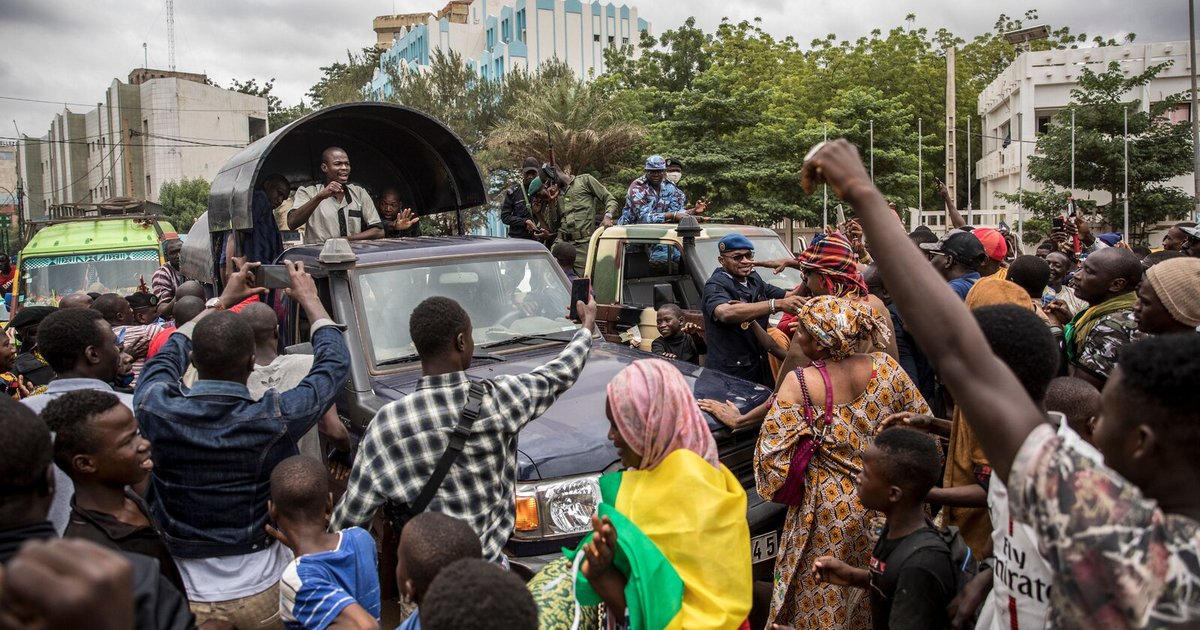
Colonel Assimi Goita, the leader of the Malian army, has made his first public appearance since the recent attacks that have struck the country, where he affirmed that the armed forces will continue their efforts in combating terrorism. This appearance comes at a sensitive time, as Mali is grappling with escalating violence and security threats.
Goita, who came to power following a military coup in 2020, spoke about the challenges facing the nation, indicating that the government is working to enhance security and stability. Recently, Mali has witnessed a series of attacks carried out by armed groups, which has heightened concerns among citizens.
Details of the Event
In his remarks, Goita noted that the Malian armed forces have achieved some successes in confronting extremist groups, but he acknowledged that challenges remain. He emphasized the importance of international cooperation in the fight against terrorism, urging the international community to support Mali in its security efforts.
Goita's statements come at a time when pressure is mounting on the Malian government, as many citizens are demanding improvements in security conditions and the provision of necessary protection. Reports indicate that the recent attacks have resulted in numerous casualties, sparking widespread discontent within the community.
Background & Context
Historically, Mali has experienced a series of political and security crises, with military coups and internal conflicts exacerbating the situation. Since 2012, the country has been suffering from rising violence led by armed groups linked to Al-Qaeda and ISIS.
It is noteworthy that Mali is considered one of the most affected countries by terrorism in the Sahel region, as armed groups seek to expand their influence. This situation has led to international interventions, including the presence of French and African forces to assist the government in regaining control over affected areas.
Impact & Consequences
Concerns are growing that the continuation of violence could lead to the disintegration of the Malian state, threatening stability in the Sahel region. Additionally, the deteriorating security situation negatively impacts the local economy, as citizens suffer from the repercussions of poverty and unemployment.
These events serve as a wake-up call for the international community, as the situation in Mali requires urgent attention. Instability in Mali could extend to neighboring countries, complicating security conditions in the region.
Regional Significance
Arab countries are indirectly affected by events in Mali, as the increase in violence and terrorism in the Sahel region could lead to security repercussions for neighboring nations. Furthermore, cooperation between Arab and African countries in combating terrorism has become an urgent necessity.
In conclusion, Goita's appearance represents an opportunity to highlight the challenges facing Mali and reflects the urgent need for effective international cooperation to achieve security and stability in the country.