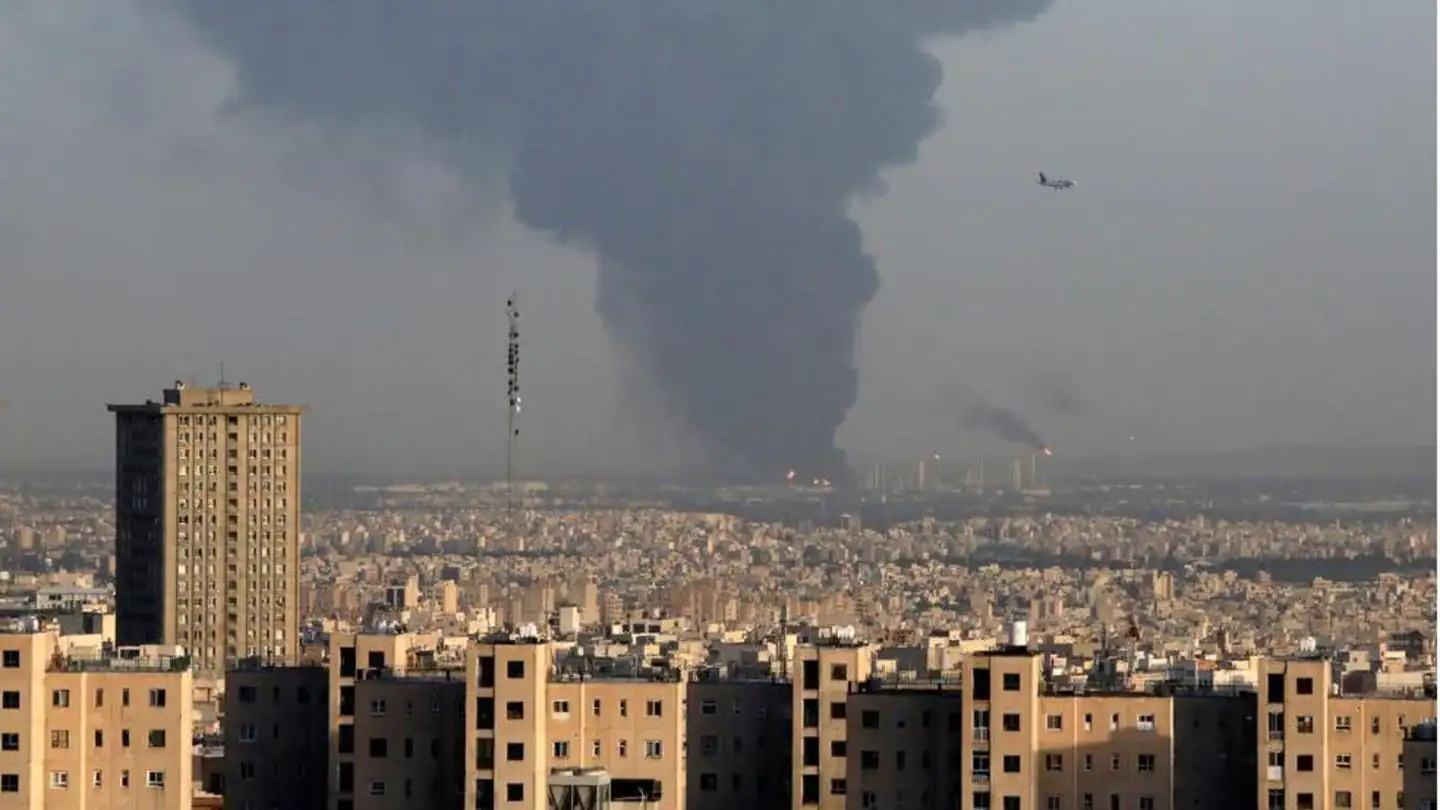
On March 7, 2026, Tehran was subjected to several airstrikes targeting four oil depots and refineries, resulting in massive fires that lasted for several days. These fires released plumes of thick smoke that covered the sky of the Iranian capital, prompting residents to describe the scene as 'a hellish land' and 'a black beast.'
While Israeli forces claimed responsibility for the attacks, the United States denied any involvement. Hours after the strikes, black acid rain laden with oil fell on the city, leading to contamination of streets and buildings.
Details of the Incident
The Conflict and Environment Observatory (CEOBS) in the UK reported that the fires resulting from the attacks lasted for five days, leaving approximately nine million residents of Tehran breathing harmful chemicals. Residents resorted to using cloth masks as a defensive measure against the pollution.
As the conflict between Israel and Iran escalates, CEOBS warned that the environmental and health costs in Iran and the region are increasing. The center noted that the rising attacks on industrial and military targets in densely populated urban areas pose the greatest threat to public health and the environment.
Background & Context
Historically, Iran has been vulnerable to economic sanctions imposed on it, leading to an increased reliance on low-quality fuel known as 'mazut,' which is highly polluting. Additionally, Tehran, located at the foot of the Alborz Mountains, suffers from air pollution issues due to its topography, which traps pollution.
The city has been grappling with air pollution for many years, and studies have shown that residential buildings in Tehran are incapable of preventing external pollution, thereby increasing the risk of exposure to harmful substances.
Impact & Consequences
Experts have warned that residents of Tehran may face long-term health risks due to pollution resulting from the attacks. The fine particles that enter the lungs can be carcinogenic, increasing the risk of diseases such as cancer in the long term.
Professor Shawqi Hassan, an environmental scientist, pointed out that pollution resulting from the attacks could lead to outbreaks of diseases in the future, including cancer, as these particles can accumulate in plants and water treatment facilities.
Regional Significance
These events serve as a reminder of the negative impacts of wars on public health and the environment, as the adverse effects may extend to neighboring countries, such as Iraq and the Gulf states. Regions like Basra in Iraq have seen a rise in cancer cases due to pollution resulting from previous wars.
In conclusion, these events highlight the urgent need to address the environmental and health issues arising from armed conflicts, as the negative impacts may persist for decades, threatening the lives of future generations.