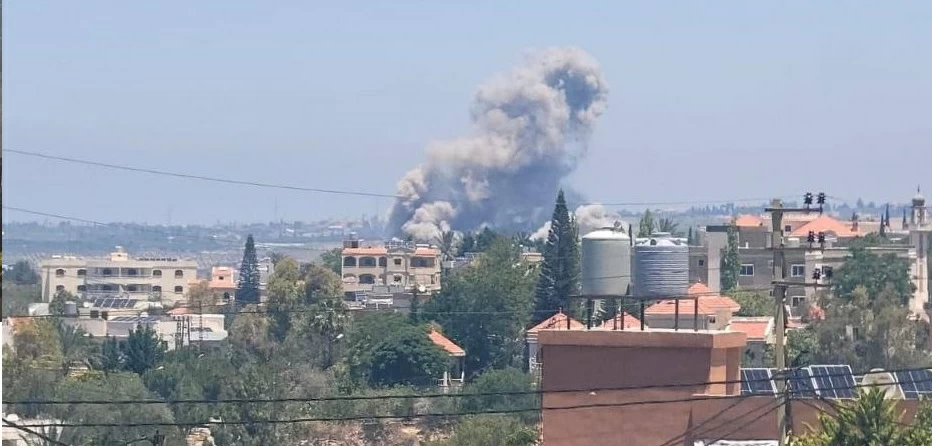
In a new military escalation, six individuals were killed in two airstrikes carried out by Israel today (Wednesday) near the city of Tyre in southern Lebanon. The Lebanese Ministry of Health reported that the strikes targeted the town of Al-Housh, resulting in the deaths of four Syrians and two Palestinians.
The National News Agency also reported another drone attack targeting a vehicle belonging to the Lebanese army, leading to injuries. This escalation comes at a sensitive time as talks between Lebanon and Israel are ongoing in the U.S. capital, Washington.
Details of the Incident
The Israeli attacks were not limited to the town of Al-Housh; they also included a strike on a vehicle in an area south of the capital Beirut. In light of these tense conditions, Israeli authorities issued evacuation orders for residents of several villages in southern Lebanon, including Jbaa, Houmine al-Fawqa, Warki, Arzi, and Mazraat Kauthari al-Raz and Al-Zarari, as well as a building in the town of Al-Kharayeb.
These developments come at a time when the region is experiencing increasing tension, with discussions in Washington focusing on mechanisms for implementing a ceasefire agreement, alongside reviewing the outcomes of military talks recently hosted by the U.S. Department of Defense.
Background & Context
Historically, relations between Lebanon and Israel have been marked by repeated tensions, especially amid ongoing conflicts in the region. Previous attempts to reach peace agreements have often been thwarted by security conditions. The current talks are taking place against a backdrop of international efforts to enhance stability in the region, with the United States seeking to play a mediating role.
It is noteworthy that the recent escalation follows a period of relative calm, raising concerns about the potential for renewed violence. Lebanese sources have expressed cautious optimism regarding the talks, indicating that they were "constructive" on their first day.
Impact & Consequences
The recent Israeli attacks could lead to a greater escalation of violence, threatening ongoing peace efforts. Additionally, the continuation of such attacks may weaken the position of the Lebanese government and increase internal tensions, particularly given the difficult economic conditions Lebanon is facing.
The potential impacts of these events may include an increase in the number of displaced persons and a worsening of humanitarian crises in the region, necessitating urgent international intervention. Furthermore, the escalation could affect relations between Lebanon and neighboring countries, complicating the regional landscape.
Regional Significance
The events in Lebanon are part of the larger picture of conflicts in the Middle East, where regional and international interests intersect. The escalation in Lebanon could impact security and stability in neighboring countries, such as Syria and Palestine.
Moreover, the situation in Lebanon highlights the challenges faced by Arab countries in dealing with security crises, calling for greater coordination among Arab nations to confront these challenges.
In conclusion, the situation in Lebanon remains under close observation, with growing fears of further escalation. The ongoing talks in Washington may represent a last opportunity to avoid more violence, but success depends on the political will of all parties involved.