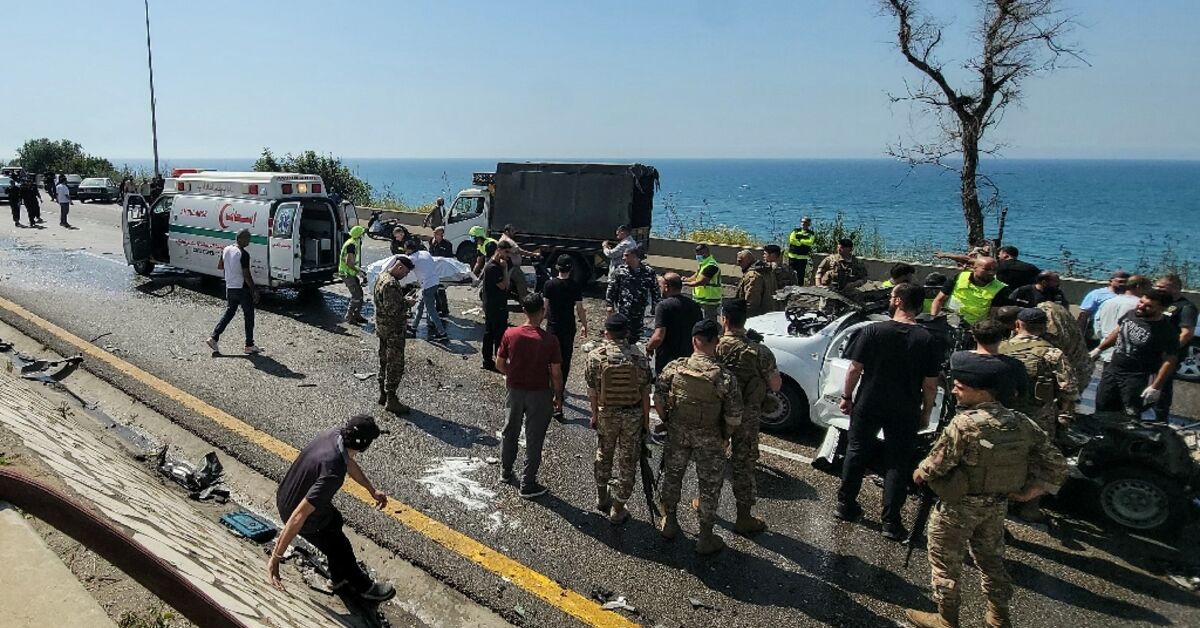
Lebanese authorities have reported the deaths of eight individuals due to Israeli airstrikes that targeted areas in southern Lebanon on Saturday, including a major road south of the capital Beirut, far from Hezbollah's traditional strongholds. These attacks come at a sensitive time, as daily clashes continue despite a ceasefire that has been in effect for three weeks between Israel and the Iran-backed Hezbollah.
Despite the ceasefire, exchanges of fire between the two sides have not ceased, with clashes primarily concentrated in southern Lebanon. Hezbollah has indicated that it targeted Israeli forces in northern Israel using a drone as a form of retaliation against the ongoing airstrikes.
Details of the Attacks
Israeli airstrikes on Lebanon continue to escalate tensions in the region. Reports indicate that the attacks targeted both civilian and military sites, resulting in civilian casualties. These events reflect a notable escalation in the ongoing conflict between Israel and Hezbollah, as each side seeks to assert its strength amid changing circumstances.
These developments come at a critical time, as the ceasefire was expected to reduce tensions, but the reality on the ground suggests otherwise. The recent airstrikes raise concerns about the potential for a broader conflict, which could impact the stability of the entire region.
Background & Context
Historically, the relationship between Lebanon and Israel has been marked by ongoing tensions, especially following the 2006 war that left deep scars on both sides. Hezbollah, considered one of the main factions in Lebanon, enjoys strong Iranian support, complicating the conflict further. Since then, there have been multiple attempts to reach ceasefire agreements, but the situation on the ground often reflects a continuous escalation.
The current ceasefire, announced three weeks ago, aimed to end hostilities but has failed to achieve that goal. The recent escalation reflects the ongoing instability in the region and indicates that peaceful solutions remain elusive.
Impact & Consequences
The recent Israeli airstrikes underscore that the situation in Lebanon remains fragile, and any escalation could lead to serious repercussions for regional security. Military escalation could drag the region into a wider conflict, threatening the stability of neighboring countries and increasing civilian suffering.
Moreover, the continuation of violence could affect international efforts aimed at achieving peace in the region. Major powers, including the United States and Russia, are closely monitoring the situation, as everyone seeks to avoid a larger escalation that could lead to a full-scale conflict.
Regional Significance
These events highlight the rising tensions in the Middle East and their impact on regional security. The ongoing conflict between Israel and Hezbollah not only affects Lebanon but also has broader implications for neighboring countries and international relations in the region.
In conclusion, the situation remains precarious, and the potential for further violence looms large, making it crucial for all parties involved to seek diplomatic solutions to prevent a larger crisis.