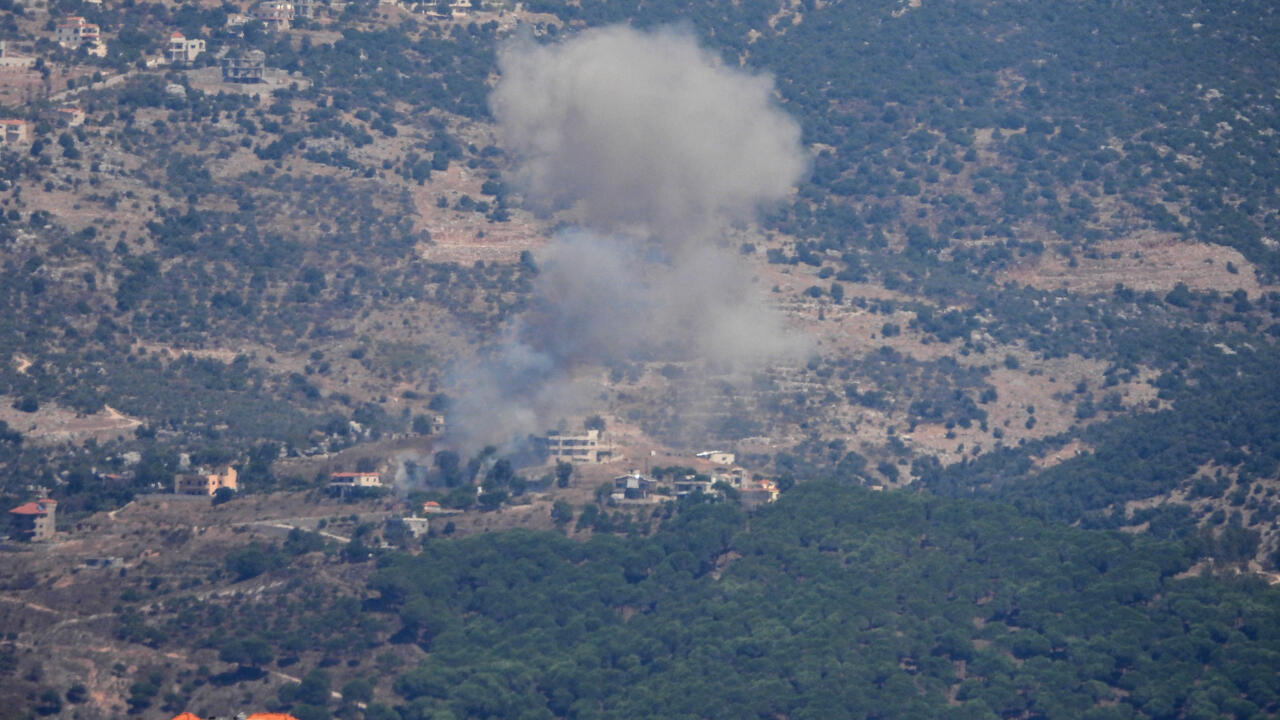
Southern Lebanon has witnessed a serious military escalation, with Israeli forces launching over 16 airstrikes since dawn on Saturday, resulting in the deaths of 8 individuals and injuries to at least 7 others. The Israeli army has also issued warnings to residents of 9 towns to evacuate their homes, raising concerns about a larger escalation in the region.
Among the victims, a woman was killed and 7 others were injured, including 3 women, due to an airstrike targeting the town of Ain Baal in the Tyre district. Additionally, two other citizens were killed, and several people were injured, including Hussein Ali Ahmad, the mayor of Shawkin, as a result of the strikes on the Nabatieh district. These airstrikes have led to the destruction of several residential buildings, exacerbating the suffering of civilian residents.
Details of the Incident
In the town of Al-Louiza, 3 people were killed in an airstrike that targeted a house, while two others died from an airstrike on a vehicle on the Kfarjjal-Nabatieh road. Al Jazeera's correspondent reported that the airstrikes also hit the towns of Zawtar al-Sharqiya, Burj Qalaouiyeh, and Majdal Zoun, in addition to an airstrike carried out by an Israeli drone on the road to Kfarjjal.
Furthermore, the Israeli army opened heavy machine gun fire towards the vicinity of the towns of Ramya and Qawzah in the Bint Jbeil district, and artillery shelling targeted the outskirts of the towns of Frun, Al-Ghandouriya, and Wadi Al-Salouqi. These military operations come at a sensitive time, as the Israeli army has warned residents of 9 towns in southern Lebanon to evacuate their homes, indicating a potential targeting of Hezbollah positions in those areas.
Background & Context
This escalation occurs amid increasing tensions between Hezbollah and Israel, with the party announcing the execution of 10 attacks on Israeli targets in southern Lebanon, targeting gatherings of soldiers and military vehicles. The Israeli army has acknowledged that military personnel were injured as a result of a drone attack carried out by Hezbollah, reflecting growing Israeli concerns over the party's use of drones.
Since the beginning of the Israeli aggression against Lebanon on March 2, thousands of casualties have been reported, along with the displacement of over 1.6 million people, which is about 20% of the population. These conditions have exacerbated the humanitarian crises in the country, where residents are suffering from severe shortages of basic resources.
Impact & Consequences
The recent military escalation raises fears of serious repercussions for stability in Lebanon and the region. With the increasing number of casualties and the destruction of homes, pressure is mounting on the Lebanese government and the international community to intervene and halt hostilities. The continuation of these operations could worsen the humanitarian situation, further increasing civilian suffering.
These events serve as a reminder of the fragility of the security situation in the region, where any escalation could lead to unforeseen consequences. Additionally, targeting civilians and residential areas raises international concerns regarding human rights violations in armed conflicts.
Regional Significance
Events in Lebanon directly affect stability in the Arab region, as rising tensions between Israel and Hezbollah could have repercussions for neighboring countries. The ongoing conflict reflects the challenges faced by Arab countries in achieving security and stability, necessitating regional and international efforts to resolve disputes.
In conclusion, the situation in Lebanon remains concerning, with fears of a larger military escalation, prompting the international community to take urgent steps to stop the violence and protect civilians.