The Lebanese Ministry of Health reported that 10 people, including women and children, were killed and over 20 others injured due to consecutive Israeli airstrikes targeting multiple areas in southern Lebanon on Sunday.
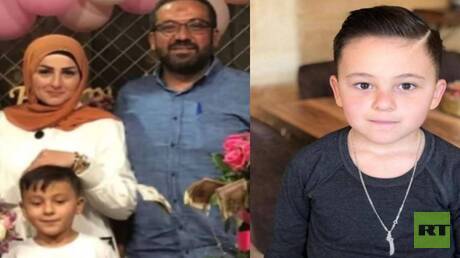
These airstrikes are part of an ongoing military escalation between Israel and Hezbollah, where Israeli aircraft targeted a number of sites in the south, resulting in civilian casualties, including an entire family, raising concerns about the worsening humanitarian situation in the region.
Details of the Incident
The Israeli airstrikes targeted residential areas in several towns in southern Lebanon, causing widespread destruction of property. Reports indicate that the airstrikes followed escalating tensions along the Lebanese-Israeli border, where both sides exchanged shelling in recent days.
Images circulated on social media depict horrific scenes of the destruction caused by the airstrikes, with many homes destroyed and residents displaced. Emergency response teams quickly mobilized to transport the injured to nearby hospitals amid panic and anxiety among the population.
Background & Context
Historically, the Lebanese-Israeli border has witnessed recurring tensions, especially after the 2006 war between Hezbollah and Israel. Since then, sporadic clashes have continued, but the recent escalation suggests the possibility of a wider conflict. Furthermore, the situation in Lebanon is suffering from severe economic and political crises, complicating the humanitarian conditions in the country.
In recent years, Israeli airstrikes on Lebanon have increased, justified by Tel Aviv as targeting Hezbollah positions. However, civilian casualties are raising growing international concern regarding the humanitarian impact of these operations.
Impact & Consequences
Reports indicate that the military escalation may exacerbate humanitarian crises in Lebanon, where many residents are suffering from acute shortages of essential resources. Additionally, international pressure on Israel may increase to halt military operations that lead to civilian casualties.
On the other hand, this escalation could heighten tensions in the region, as regional and international powers may intervene to mediate or support one of the parties. The continuation of these military operations could threaten stability in Lebanon and complicate the security situation in the Middle East.
Regional Significance
The events in Lebanon are part of a larger picture of conflict in the region, where neighboring Arab countries are directly affected by the repercussions of the Israeli-Lebanese conflict. The rise in violence could lead to new waves of refugees, increasing pressure on host countries.
Moreover, the situation in Lebanon may impact relations between Arab countries and Israel, potentially leading to a reassessment of regional policies towards the Israeli-Palestinian conflict. The international community's response to these events will be crucial in determining the course of future developments.