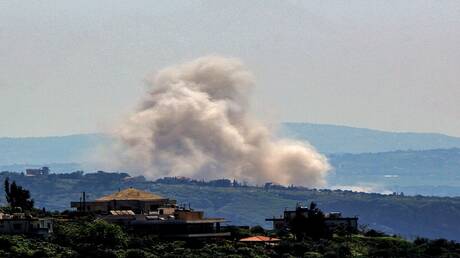
On Saturday evening, the Israeli military conducted a series of airstrikes and artillery attacks in southern Lebanon, responding to Prime Minister Benjamin Netanyahu's directives to increase pressure on Hezbollah. The strikes targeted a wide geographical area of border towns, leading to heightened tensions in the region.
These military operations come at a sensitive time, as the Lebanese-Israeli border is experiencing increasing tensions. Local sources reported that the shelling hit residential areas and sites believed to belong to Hezbollah, raising fears of a larger escalation in the ongoing conflict.
Details of the Incident
Reports indicate that the airstrikes involved the use of Israeli warplanes, in addition to artillery shelling targeting several sites in southern Lebanon. The strikes focused on areas close to the border, reflecting an Israeli strategy aimed at weakening Hezbollah's capacity to carry out any military operations against it.
Images circulated on social media showed the destruction caused by the airstrikes, with many homes and infrastructure damaged. Eyewitnesses noted that the strikes caused panic among civilians, who were forced to seek safe shelters.
Background & Context
Historically, the Lebanese-Israeli border has witnessed numerous armed conflicts, with Hezbollah being one of the most prominent armed factions in the region. Tensions between the two sides have escalated since the outbreak of the Syrian conflict, with Israel accusing Hezbollah of intervening in the war on behalf of the Syrian regime.
In recent years, Israel has taken increasing steps to counter what it perceives as threats from Hezbollah, including military operations and strikes on sites believed to be used for weapon storage. Recent statements from Israeli officials indicate a clear intention to confront any potential threats from the group.
Impact & Consequences
These airstrikes represent a serious escalation in the ongoing conflict and may provoke a response from Hezbollah, increasing the likelihood of a new round of violence. This escalation could also impact stability in Lebanon, which is already grappling with economic and political crises.
The rising tensions may also lead to international interventions, as major powers are closely monitoring the situation. These events could raise concerns about a larger escalation that could affect regional security, especially given the tense conditions in the Middle East.
Regional Significance
The current events in southern Lebanon are of significant importance to Arab countries, reflecting the ongoing conflict between Israel and armed factions. This escalation may affect relations between Arab nations and Israel, particularly amid normalization attempts by some countries.
Moreover, the situation in Lebanon could have repercussions on neighboring countries, potentially leading to an influx of refugees or increased border tensions. Under these circumstances, there remains hope that the international community can intervene to calm the situation and prevent the conflict from worsening.