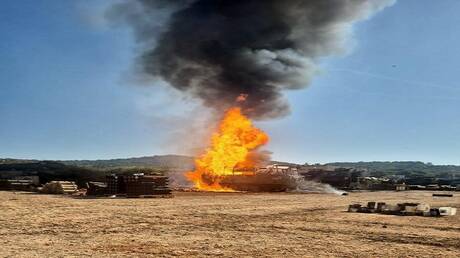
The Israeli army conducted a series of airstrikes targeting Hezbollah infrastructure in southern Lebanon, including weapon depots and a drone launch platform. These operations are part of the ongoing escalation between the two sides, with Israel asserting that these facilities were used to launch attacks against its forces.
These airstrikes coincide with increasing tensions in the region, as the Israeli army seeks to bolster its security along the northern border with Lebanon. An official statement from the army indicated that these operations are part of its strategy to limit Hezbollah's military capabilities.
Details of the Incident
The Israeli army reported that the airstrikes targeted several sites in different areas of southern Lebanon, resulting in the destruction of weapon depots containing missiles and ammunition. Additionally, the drone launch platform, considered part of Hezbollah's military arsenal, was destroyed, which had been used in previous operations against Israeli forces.
These operations follow a series of escalating tensions along the border, where the region has witnessed repeated clashes between Israeli forces and Hezbollah elements. Observers have noted that these airstrikes could lead to further escalation in the conflict between the two sides, especially with ongoing mutual threats.
Background & Context
Historically, the Lebanese-Israeli border has seen numerous armed conflicts, with Hezbollah being one of the most prominent armed factions in Lebanon. The party was established in the 1980s during the Lebanese Civil War and has since become a key player in the conflict with Israel. Hezbollah has utilized drones as part of its military strategy, complicating the conflict in the region.
In recent years, tensions between Israel and Hezbollah have intensified, particularly following the Syrian Civil War, where Hezbollah intervened directly to support the Syrian regime. This intervention has enhanced the party's military capabilities, raising concerns in Israel and prompting it to take preemptive actions.
Impact & Consequences
These airstrikes serve as a clear message from Israel to Hezbollah, indicating that it will not hesitate to use military force to protect its borders. Such operations could lead to greater military escalation, increasing the risk of a full-scale war in the region.
Moreover, these developments may impact the security situation in Lebanon, where civilians could face increased risks due to military escalation. Many fear that these operations could exacerbate the humanitarian situation in a country already suffering from multiple crises.
Regional Significance
These events indicate that the conflict between Israel and Hezbollah continues to pose a threat to regional security. These airstrikes could affect relations between Arab countries and Israel, especially amid some Arab nations' attempts to normalize relations with Israel.
Additionally, these events may provoke reactions from other Arab countries, which might feel concerned about the rising tensions in the region. This could lead to new calls for de-escalation and dialogue among the involved parties, in an effort to avoid further escalation.
As the situation along the Lebanese-Israeli border remains tense, with ongoing military operations from both sides, the hope for a peaceful resolution seems distant amid rising threats.