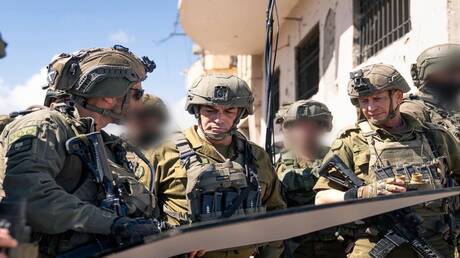
Israeli Chief of Staff Eyal Zamir stated on Sunday that the Israeli army has not defined disarming the Lebanese Hezbollah as a primary goal in its military strategies. This statement comes at a time when tensions in the region are escalating, prompting questions about Israel's military objectives in Lebanon.
These remarks are significant in the context of the ongoing conflict between Israel and Hezbollah, where disarming the party was previously one of the main objectives. However, Zamir clarified that the current focus of the Israeli army is on other threats, which may indicate a change in military strategy.
Details of the Statement
During a press conference, Zamir emphasized that the Israeli army is concentrating on the immediate threats it faces, rather than on disarming Hezbollah. This statement reflects a shift in military priorities, as it appears that the Israeli army is seeking to address more pressing threats, such as missile attacks or potential military operations from armed groups.
These statements come at a sensitive time, as Israel continues to monitor Hezbollah's military activities along the Lebanese border. Analysts suggest that this approach may be driven by regional developments and changes in the balance of power in the area.
Background & Context
Hezbollah was established in 1982 during the Israeli invasion of Lebanon, and since then, it has become a key player in the Lebanese and regional conflict. Over the years, the party has fought several wars with Israel, leading to a deterioration of relations between the two sides. In recent years, Hezbollah's military activities have increased, including the development of advanced missiles, raising concerns in Israel.
Recently, the region has witnessed radical changes, including conflicts in Syria and Iraq, which have affected Hezbollah's role. Additionally, tensions between Iran and Israel cast a shadow over the situation, as Hezbollah is considered one of Iran's main allies in the region.
Impact & Consequences
Zamir's statements may lead to a change in how Israel deals with Hezbollah, potentially focusing on new strategies to counter threats. This shift could impact military dynamics in the region and escalate tensions between the involved parties.
Furthermore, these statements may affect Israel's relations with other countries in the region, as they could be seen as an indication of a change in military strategy. This approach may provoke reactions from Hezbollah, which might view it as an opportunity to strengthen its position in Lebanon.
Regional Significance
Zamir's remarks are particularly significant for the Arab region, as they reflect the ongoing tensions between Israel and Hezbollah. These developments could lead to an escalation of the conflict in Lebanon, impacting security and stability in the region as a whole.
Additionally, these statements could influence relations between Arab countries and Israel, as they may be perceived as indicators of Israeli military trends. Given the current situation, Arab countries must closely monitor developments, as any escalation in the conflict could affect regional security.
In light of the recent statements by the Israeli Chief of Staff, it appears that there is a shift in Israeli military strategy towards Hezbollah. This trend may carry significant implications for the ongoing conflict in the region.