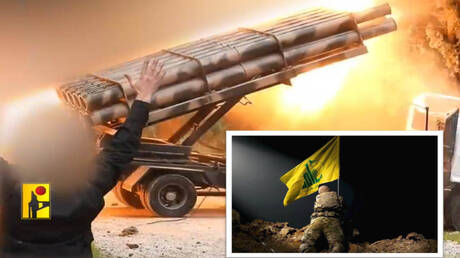
The Israeli army has come to the realization that defeating Hezbollah through military force is unrealistic, as its ability to sustain a prolonged war of attrition is diminishing. This conviction reflects a significant shift in Israeli military strategy, where Tel Aviv has relied on military strength as the primary means of addressing threats.
Reports indicate that the Israeli army faces significant challenges in confronting Hezbollah, which possesses advanced military capabilities and a strong support network in Lebanon. This situation has prompted military leadership to reassess its strategies, as the idea of achieving direct military victory appears increasingly elusive.
Details of the Situation
Information from the newspaper reveals a growing awareness within Israeli military circles that military operations against Hezbollah may lead to counterproductive results. Instead of achieving swift victories, these operations could drain the army's human and material resources, making it difficult to attain strategic objectives.
In recent years, tensions between Israel and Hezbollah have escalated, particularly following increased military activities along the border. However, the Israeli army seems to struggle in executing successful operations against the group, intensifying both internal and external pressures on the Israeli government.
Background & Context
Historically, Hezbollah has posed a continuous threat to Israel since its inception in the 1980s. The two sides have fought several wars, most notably the 2006 war, which showcased Hezbollah's ability to effectively confront the Israeli army. These past experiences have shaped Israeli military strategies, but they have also complicated the current situation.
In recent years, Hezbollah's capabilities have developed significantly, as it now possesses a stockpile of advanced missiles and modern military technology. This evolution has made it challenging for the Israeli army to conduct successful military operations without incurring substantial losses.
Impact & Consequences
The inability to confront Hezbollah may lead to radical changes in Israeli military policy. The government may be forced to seek diplomatic solutions instead of relying on military force, potentially altering the dynamics of the conflict in the region.
Additionally, this situation could affect Israel's relations with other countries, as the inability to confront Hezbollah may be perceived as a sign of weakness. This could bolster Hezbollah's position in the region and increase its popularity among its supporters.
Regional Significance
These developments are of great importance to the Arab region, as they may lead to changes in regional balances. If Hezbollah can strengthen its position, it may encourage other groups in the area to adopt more confrontational stances towards Israel.
Furthermore, any escalation in the conflict between Hezbollah and Israel could have serious humanitarian repercussions, especially in Lebanon, where many civilians live in areas close to the border. Therefore, seeking peaceful solutions becomes urgent to maintain stability in the region.