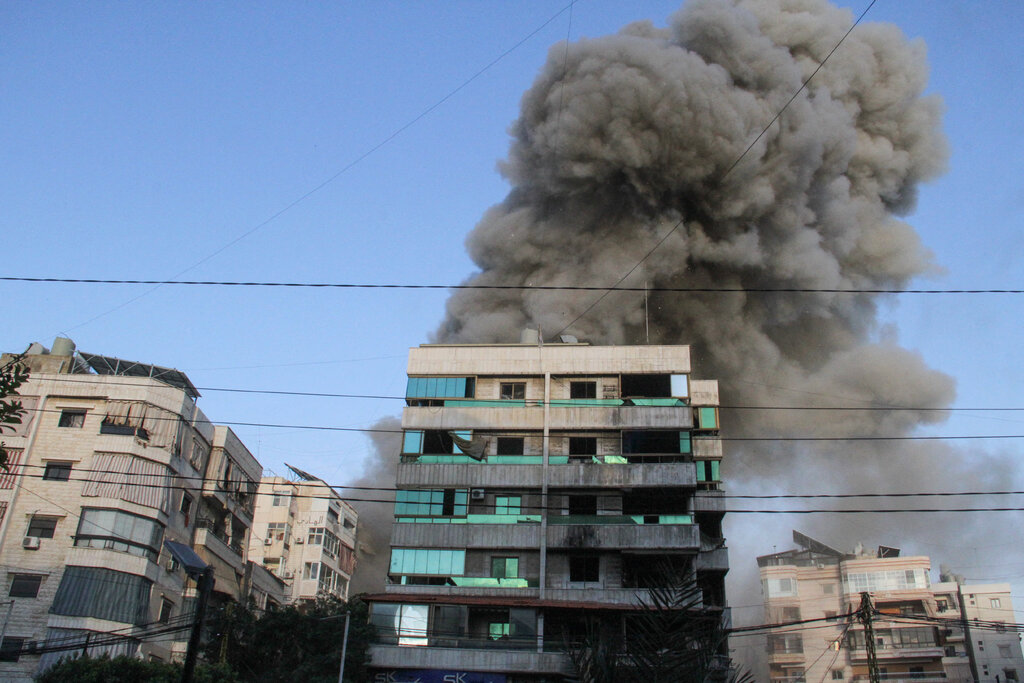
The Israeli army has executed airstrikes targeting sites affiliated with Hezbollah in the Lebanese capital, Beirut, highlighting the rising security tensions in the region. This attack occurs at a time when relations between Israel and Hezbollah are increasingly strained, with each side seeking to bolster its military and political position.
This operation is part of a broader Israeli strategy aimed at undermining Hezbollah's military capabilities, particularly in light of the growing threats posed by the group along Israel's northern border. The Israeli army has confirmed that these strikes are conducted in the framework of self-defense and national security protection.
Details of the Event
According to Israeli military sources, several sites believed to be used for storing weapons and training Hezbollah operatives were targeted. The attack was carried out using drones and precision missiles, reflecting the advancement of Israeli military capabilities in executing precise operations.
In contrast, Hezbollah has not yet issued an official statement regarding the attack, but it is expected that the group will respond to these strikes, increasing the likelihood of escalating the conflict in the region. This attack follows a series of increasing tensions between the two sides, with recent weeks witnessing exchanges of gunfire along the Lebanon-Israel border.
Background & Context
Historically, relations between Israel and Hezbollah have been tense for a long time, with the region experiencing several military conflicts since the outbreak of the Lebanese Civil War in 1975. Hezbollah, which was established in the 1980s with Iranian support, is one of the prominent armed factions in Lebanon, known for its resistance to Israeli occupation.
In recent years, concerns have grown regarding the escalation of Hezbollah's military activities, especially following the group's involvement in the Syrian conflict alongside Bashar al-Assad's regime. This intervention has enhanced the group's military capabilities, prompting Israel to take preemptive measures to ensure its security.
Impact & Consequences
These strikes could lead to a significant escalation in the conflict between Israel and Hezbollah, threatening the stability of Lebanon and the entire region. If Hezbollah responds to the attack, we may witness military escalation that transcends Lebanese borders, impacting regional security.
Moreover, these developments could affect relations between Lebanon and other Arab countries, as some nations may find themselves compelled to side with one of the parties, further increasing political divisions in the region.
Regional Significance
These events signal a rise in tensions in the Middle East, where fears of new conflicts that could affect the security and stability of neighboring countries are increasing. Additionally, these developments may impact peace efforts in the region, as some countries strive for lasting stability.
In conclusion, the situation in Lebanon and Israel remains under observation, with analysts expecting tensions to continue escalating, necessitating international community intervention to mitigate the escalation and ensure regional stability.