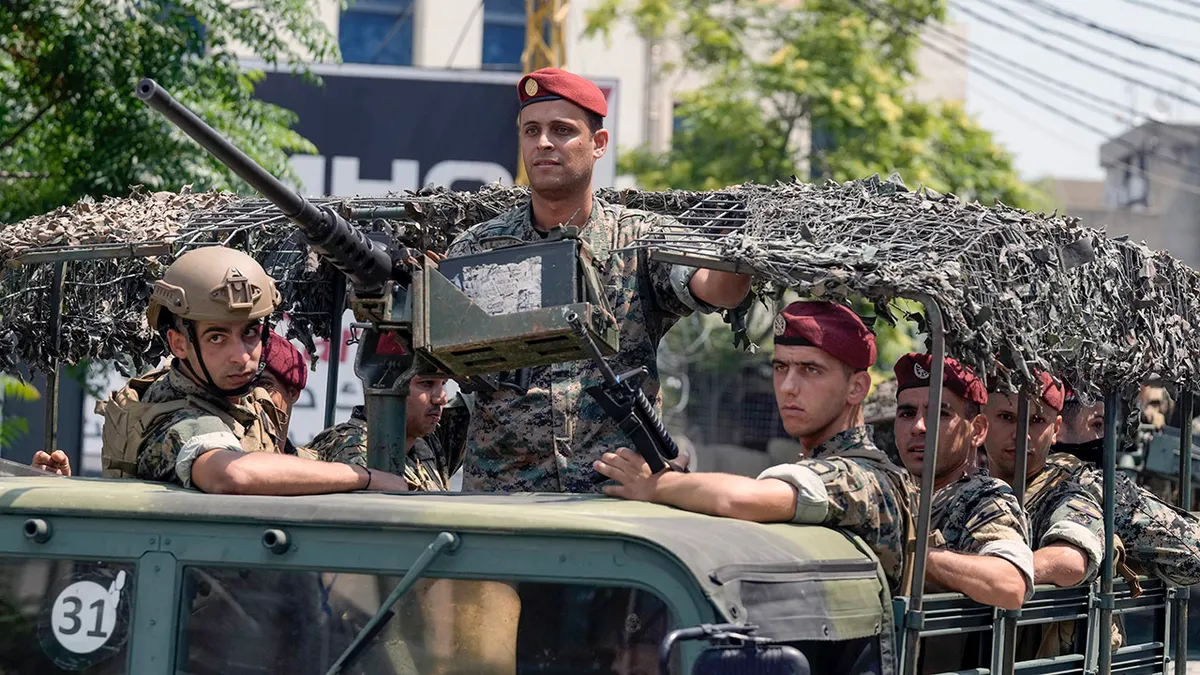
In a new escalation of the ongoing conflict, Israeli forces launched an attack on a Lebanese army checkpoint, resulting in the death of one soldier and injuries to five others. The incident occurred amid rising tensions between Israel and Iran, further deteriorating the situation in the region.
The attack, which took place yesterday, marks the thirty-first day of the ongoing war between Israel and Iran, which began earlier last month. Lebanese military sources confirmed that the attack targeted a checkpoint belonging to the Lebanese army in the border area, provoking angry reactions from Lebanese officials.
Details of the Incident
According to reports, the Israeli attack resulted in the death of a Lebanese soldier and injuries to five others with varying degrees of severity. The injured were transferred to the hospital for treatment, while a state of emergency was declared in the area. Lebanese authorities condemned the attack, deeming it a blatant violation of Lebanese sovereignty.
This attack comes at a highly sensitive time, as the region witnesses escalating tensions between Israel and Iran, alongside fears of a broader escalation that could affect regional stability. Some observers have indicated that this attack may be part of a broader Israeli strategy to counter Iranian influence in the region.
Background & Context
Historically, the Lebanese-Israeli border has been a theater of tensions and conflicts, having witnessed numerous wars and armed disputes over the decades. With the rise of Iranian influence in the region, concerns have increased that these tensions could lead to a wider conflict involving other countries in the area.
In recent years, relations between Lebanon and Israel have significantly deteriorated, especially following the increase in Israeli military activities in the region. Additionally, the presence of Hezbollah in Lebanon, backed by Iran, has complicated the situation, as the party is considered one of the prominent military forces in the area.
Impact & Consequences
The recent Israeli attack could have serious repercussions on the situation in Lebanon and the region as a whole. It may lead to heightened tensions between the Lebanese army and Israeli forces, potentially opening the door to a new armed conflict.
Furthermore, the continuation of Israeli attacks could negatively impact internal stability in Lebanon, leading to increased political and social divisions within the country. These events may also affect Lebanon's relations with other Arab countries, especially amid ongoing tensions with Israel.
Regional Significance
The recent events in Lebanon are part of a larger picture concerning the regional conflict between Iran and Israel. The escalation of tensions in Lebanon could impact neighboring countries, such as Syria and Palestine, increasing the risk of new conflicts in the region.
Moreover, the situation in Lebanon may reflect on the relationships between Arab countries and Iran, as these events could prompt some nations to reassess their policies towards Iran and their support for Hezbollah. Ultimately, there remains hope that the international community can intervene to calm the situation and prevent further escalation of the conflict.