In a move reflecting rising religious and political tensions, Israeli authorities barred the Catholic Patriarch of Jerusalem from entering the Church of the Holy Sepulchre during Palm Sunday celebrations, a day symbolizing Christ's entry into Jerusalem. This incident was not merely an administrative inconvenience but a clear message regarding control and authority, as barriers and delays were imposed on worshippers.
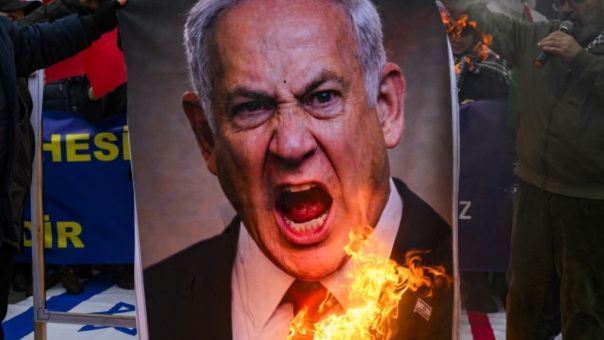
In a recent speech, Israeli Prime Minister Benjamin Netanyahu referenced historian Will Durant, stating, "Christ has no advantage over Genghis Khan." This statement reflects Netanyahu's worldview that favors power and conquest over mercy and principles.
Details of the Incident
As Christians worldwide celebrated Palm Sunday, the atmosphere in Jerusalem was charged with tension. The Church of the Holy Sepulchre was closed to the Catholic Patriarch, causing discontent among many worshippers. This action highlights the increasing tensions between Israeli authorities and various religious communities in the holy city.
Netanyahu's remarks indicate a shift in Israeli political discourse, seemingly favoring historical models based on military power, like Genghis Khan, rather than the spiritual values represented by Christ. This shift raises concerns among observers who see it as a threat to fundamental humanitarian principles.
Background & Context
Historically, Jerusalem has been a center of religious and political conflicts. Since its occupation in 1967, the city has witnessed numerous tensions between Israelis and Palestinians, particularly at holy sites. The closure of the Church of the Holy Sepulchre is part of a broader pattern of actions taken by Israeli authorities against Palestinian worshippers, exacerbating the conflict.
In this context, Netanyahu's statements reinforce a political vision that prioritizes power over dialogue. This philosophy, rooted in the writings of Ze'ev Jabotinsky, emphasizes the use of force as a means to achieve political goals, reflecting a long history of conflicts in the region.
Impact & Consequences
Netanyahu's statements and the actions of the Israeli government may exacerbate the situation in Jerusalem, where Palestinians feel their religious and cultural rights are under attack. This could lead to escalated protests and confrontations, threatening stability in the holy city.
Furthermore, this rhetoric may affect Israel's relations with Western countries, which might view these policies as a threat to democratic values and human rights. As Israel seeks to strengthen its ties with Western nations, these statements could lead to negative consequences on the international stage.
Regional Significance
In the broader context, events in Jerusalem directly impact Arab countries. The Israeli-Palestinian conflict is a central issue in the Arab world, and any escalation in this conflict could provoke strong reactions from Arab nations. The closure of holy sites and the disregard for Palestinian rights may increase popular support for the Palestinian cause in Arab countries.
In conclusion, Netanyahu's statements and the actions of the Israeli government reflect a dangerous shift in political discourse, raising concerns about the future of peace in the region. The continuation of these policies could escalate the conflict, threatening stability in Jerusalem and affecting Israeli relations with the Arab world.