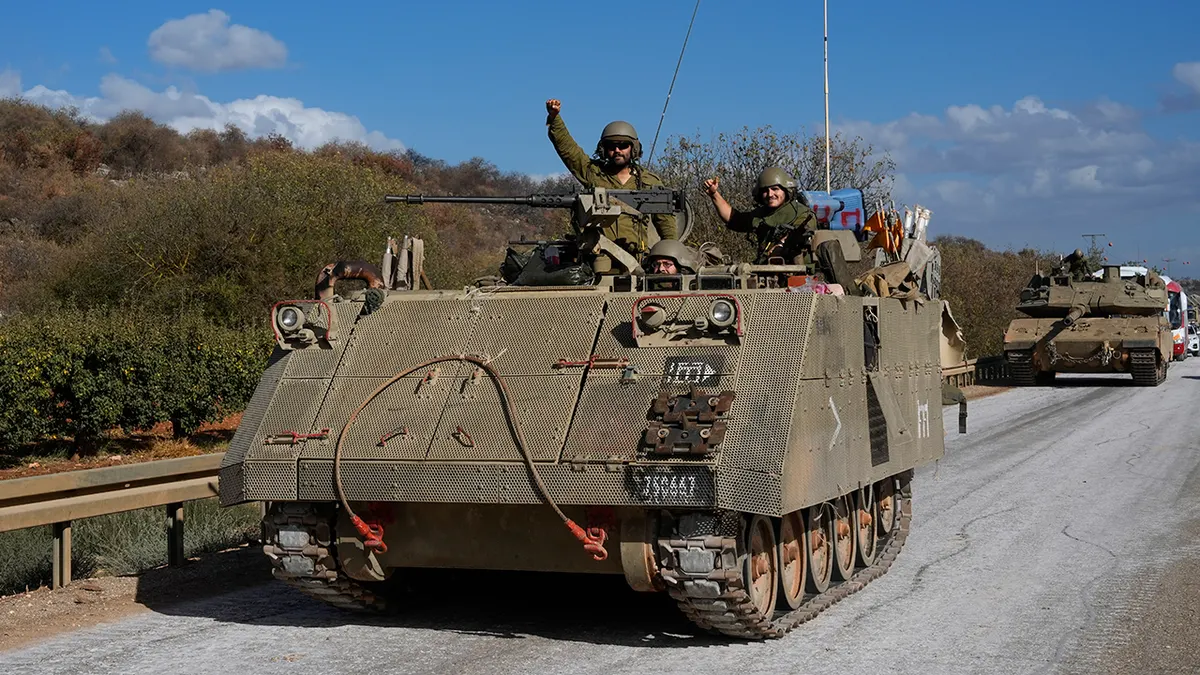
Israeli Defense Minister Yoav Gallant has made controversial remarks threatening to burn Lebanon, asserting that his country will not agree to a ceasefire while Hezbollah's attacks persist. These statements emerge during a period of escalating tensions between the two sides, intensifying the situation in the region.
Amid increasing mutual attacks, Gallant emphasized that the Israeli army is prepared to confront any threats, stressing that military operations will continue until the specified objectives are achieved. He noted that Hezbollah poses a significant danger to Israeli security, and responses will be harsh and direct.
Details of the Incident
Gallant's statements coincide with a growing military escalation along the Lebanese-Israeli border, where recent days have witnessed exchanges of shelling between the two parties. Reports indicate that Hezbollah has intensified its attacks, prompting Israel to bolster its forces along the border.
On the other hand, military sources have reported that Israel has conducted several airstrikes on Hezbollah positions, aiming to undermine its military capabilities. Simultaneously, Hezbollah continues to target Israeli sites with rockets, complicating the security situation in the area.
Background & Context
Historically, Lebanese-Israeli relations have been marked by ongoing tensions, especially following previous wars that erupted between the two sides. Hezbollah, established in the 1980s, is one of the most prominent armed factions in Lebanon and has engaged in several confrontations with Israel, making it a constant threat to Israeli security.
These statements occur within a complex regional context, where political and military dimensions intertwine, making it difficult to predict the course of events. Additionally, the situation in Lebanon suffers from economic and political crises, further exacerbating internal tensions.
Impact & Consequences
The current statements and military operations could lead to a greater escalation in the conflict, threatening regional security. If military operations continue, we may witness severe humanitarian repercussions for civilians in Lebanon, who are already suffering from multiple crises.
Furthermore, the military escalation may impact relations between Arab countries and Israel, as some nations may adopt harsher stances towards Israel, complicating the political landscape in the region.
Regional Significance
These events serve as a wake-up call for Arab nations, reflecting the fragility of security conditions in the region. Hostile statements could increase tensions between Arab countries and Israel, hindering peace and stability efforts.
In conclusion, the situations in Lebanon and Israel remain under close observation, with analysts expecting these statements and military operations to influence the future of relations in the region.