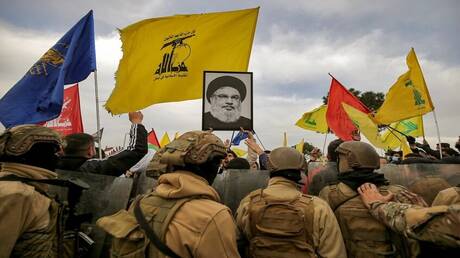
According to the Israeli newspaper Jerusalem Post, the Lebanese government has not taken any action against Hezbollah since the ceasefire came into effect about two weeks ago. These statements emerge at a sensitive time when the region is witnessing increasing tensions.
This news coincides with the ongoing ceasefire established in the context of the current conflict, as the international community seeks to calm the situation in Lebanon and prevent the escalation of violence. It appears that the Lebanese government, which is facing both internal and external challenges, has not implemented any tangible measures against Hezbollah, raising questions about its ability to control the security situation.
Details of the Situation
According to Israeli officials, the Lebanese government's failure to take any steps against Hezbollah reflects a weakness in its position and indicates its inability to confront internal and external pressures. Some observers have expressed concern that this situation may lead to a worsening of the security conditions in the country.
At the same time, some suggest that Hezbollah may have exploited the ceasefire period to strengthen its military and political position, complicating the Lebanese landscape further. The government's inaction could also be interpreted as complicity or a reluctance to escalate against the party, which is considered a major political and military force in the country.
Background & Context
Historically, the relationship between the Lebanese government and Hezbollah has been complex, as the party is part of the Lebanese political structure. However, regional and international pressures may affect this relationship, especially amid the economic and political crises the country is experiencing.
Since the outbreak of conflict in the region, Lebanon has witnessed a rise in tensions, leading to a worsening of humanitarian and economic crises. These conditions have contributed to strengthening Hezbollah's position as an active force in the Lebanese scene, making it difficult for the government to take any steps against it without facing strong backlash from its popular base.
Impact & Consequences
The continuation of the current situation without any government intervention could exacerbate the security and economic crises in Lebanon. Furthermore, the Lebanese government's failure to act against Hezbollah may enhance the party's position in the political arena, negatively affecting international efforts to achieve stability in the country.
Moreover, this situation could pave the way for external interventions, as some countries may seek to exploit the Lebanese government's weakness to achieve their own interests, further complicating the Lebanese landscape.
Regional Significance
The situation in Lebanon has direct implications for stability in the Arab region. Hezbollah's continued strengthening could lead to heightened tensions with Israel, potentially dragging the region into a broader conflict.
Additionally, the economic and political crises in Lebanon may impact neighboring countries, as the number of refugees and migrants could increase due to deteriorating conditions, posing an additional challenge for other Arab nations.
In conclusion, the situation in Lebanon remains complex, requiring collective efforts from all concerned parties to achieve stability. The Lebanese government's failure to take action against Hezbollah could have far-reaching implications for security and stability in the region.