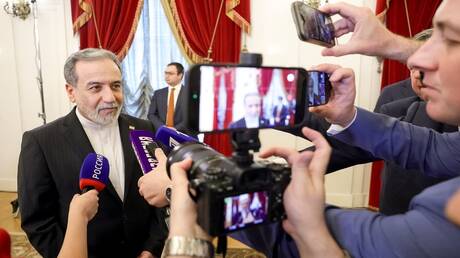
Iranian Foreign Minister Abbas Araghchi announced that Iran welcomes Russian support for diplomatic efforts in the current crisis with the United States. Araghchi confirmed that this support reflects Iran's commitment to enhancing dialogue and negotiation as a means to resolve outstanding issues, noting that interaction with Moscow will continue in this context.
Amid rising tensions between Iran and the United States, this announcement reflects Tehran's desire to seek peaceful solutions through diplomacy. Araghchi pointed out that Iran considers Russia a strategic partner at this stage, as Moscow plays an important role in supporting negotiations.
Details of the Announcement
Araghchi's statements come at a sensitive time, as Iran seeks to strengthen its position in nuclear negotiations with major powers. Iranian-American relations have seen increasing tension since Washington's withdrawal from the nuclear agreement in 2018, leading to the imposition of strict economic sanctions on Tehran.
In this context, Araghchi asserted that Russian support is a positive step towards achieving balance in negotiations, highlighting the importance of cooperation between the two countries in facing common challenges. He also clarified that Iran hopes this support will lead to tangible results in talks with Washington.
Background & Context
Historically, relations between Iran and Russia have been characterized by cooperation in various fields, including energy and security. Russia has supported Iran on many regional issues, making it an important ally for Tehran in facing Western pressures.
It is noteworthy that Iran and Russia have signed several agreements in the fields of energy and trade, reflecting the depth of relations between the two countries. Under current circumstances, it seems that Iran is seeking to enhance this cooperation as a means to confront economic and political challenges.
Impact & Consequences
Russia's support for Iran in the diplomatic process could significantly affect international relations, especially amid existing tensions in the region. This cooperation may strengthen Iran's position in negotiations, potentially altering political dynamics in the Middle East.
Additionally, this support could contribute to strengthening regional alliances, as other countries in the region may feel concerned about the growing collaboration between Tehran and Moscow. This could reflect on the policies of neighboring countries, complicating the political landscape in the region.
Regional Significance
In the Arab context, this cooperation may have multiple implications. Increased Iranian influence in the region could raise concerns among some Arab states, particularly those experiencing tensions with Tehran. This may lead to heightened regional tensions, necessitating a diplomatic response from Arab nations.
On the other hand, some may view this cooperation as an opportunity to enhance regional dialogue, as diplomacy could help alleviate tensions and achieve stability in the region. The balance between regional and international powers will significantly impact the future of relations in the Middle East.
In conclusion, Russia's support for Iran represents an important step in the context of international relations, reflecting Tehran's desire to strengthen its position through diplomacy. As tensions with the United States continue, the question remains about how this cooperation will affect the future of negotiations and regional security.