Lebanese President Joseph Aoun stated that "negotiation is the only solution" to stop the war and restore stability in Lebanon, noting that Tel Aviv "still refuses to respond" to calls for a ceasefire and to initiate negotiations. This comes as Israeli threats escalate, with Israeli Prime Minister Benjamin Netanyahu declaring that "a ceasefire will only be decided independently by Israel," while Israeli Defense Minister Israel Katz spoke of plans to create a "buffer zone" within Lebanese territory up to the Litani River.
Chances for a near-term cessation of hostilities are dwindling amid increasing military escalation and political pressures. Ministerial sources reported that "nothing can be relied upon" in light of Israel's refusal to discuss any initiatives, a stance that enjoys clear American support.
Details of the Event
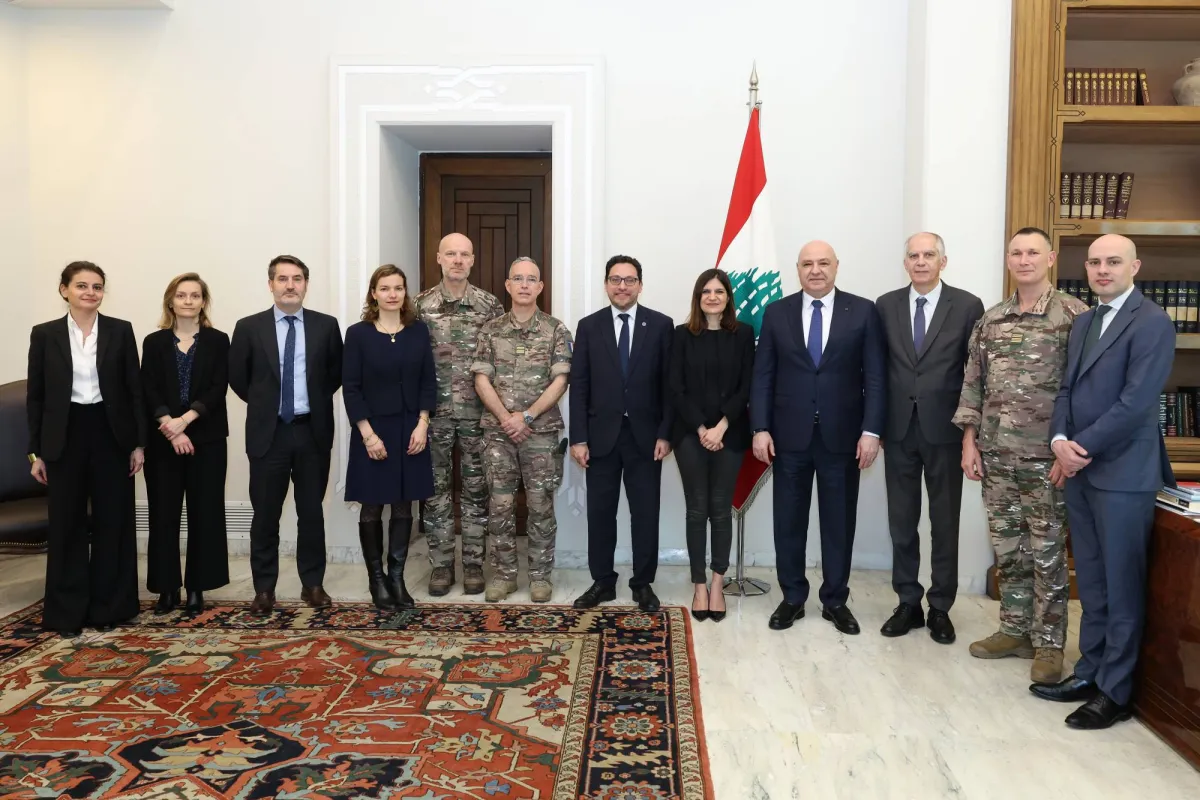
During a meeting with the French Minister Delegate to the Ministry of Armed Forces, Alix Roufaux, President Aoun stressed the importance of French support to help Lebanon confront the ongoing Israeli escalation. He asserted that "the war will not lead to any practical outcome but will only increase the suffering of the Lebanese people," reiterating that "negotiation is the only solution" to restore security and stability in the region.
Aoun presented to the French delegation the scale of the humanitarian disaster caused by the Israeli bombardment, noting that the number of displaced persons has exceeded one million, resulting in a significant social and humanitarian crisis. He confirmed that Lebanon is working to address this crisis in cooperation with brotherly and friendly countries.
Context and Background
These statements come at a time when Lebanon is witnessing military escalation from Israel, which is adopting an aggressive field approach aimed at establishing extensive security belts. Recent days have seen intensive airstrikes on various areas in Lebanon, leading to casualties and injuries, including military personnel and journalists.
In contrast, the Lebanese President affirmed that the goal is to achieve sovereignty over all southern territories and enable the Lebanese army to redeploy and assert state authority. He also welcomed the interest expressed by European and non-European countries to maintain their forces in the south after the UN Interim Force in Lebanon (UNIFIL) completes its mission.
Impact and Consequences
Retired Brigadier General Bassam Yassin asserts that the Israeli escalation reflects an attempt to reshape the engagement map in Lebanon, as the Israeli army seeks to control the commanding heights that separate the Western Bekaa from southern Lebanon. He believes that controlling these hills gives Israel a military advantage that redraws its deployment map to what it was before 2000.
Yassin also indicates that the battle in Bint Jbeil could be a focal point in the upcoming phase, as Israeli forces attempt to encircle the city from multiple directions. Should the battle be resolved, the likely direction would be towards expansion into the Western Bekaa.
Impact on the Arab Region
The ramifications of the Israeli escalation extend beyond Lebanon, raising fears of heightened tensions in the region as a whole. The situation in Lebanon serves as an indicator of regional stability, and any escalation could affect neighboring countries and exacerbate existing conflicts.
In light of these circumstances, hope remains pinned on international and local diplomatic efforts to reach peaceful solutions, as negotiation is considered the only way to halt humanitarian suffering and restore security and stability to the region.