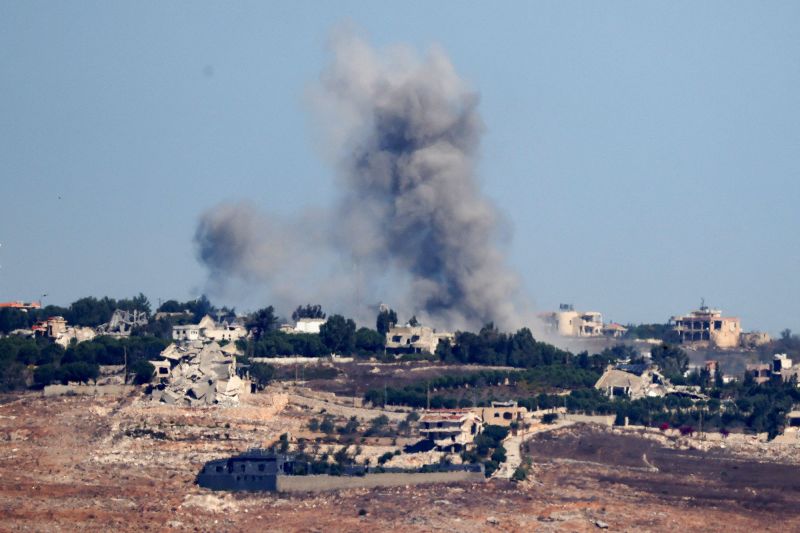
Over the weekend, a significant Israeli escalation occurred in southern Lebanon, where Israeli warplanes targeted several areas, resulting in multiple casualties, including three journalists on the road to Jezzine.
This escalation came at a sensitive time, as Lebanese airspace witnessed Israeli warplanes breaking the sound barrier, creating a loud noise over the capital Beirut and Mount Lebanon. These operations coincided with a series of airstrikes that hit many villages in the south, including Nabatieh, raising significant concerns in local and international circles.
Details of the Incident
According to local sources, Israeli aircraft directly targeted journalists from the "Al-Manar" and "Al-Mayadeen" channels, as well as the paramedic teams operating in the area. These attacks resulted in the deaths of three journalists, raising questions about the respect for international laws regarding the protection of journalists in conflict zones.
The journalists who lost their lives were covering events in the region, reflecting the significant risks faced by media personnel amid escalating military tensions. Additionally, reports indicated that several civilians were injured, further complicating the humanitarian situation in the area.
Background & Context
Historically, the Lebanese-Israeli border has always been a theater of military tensions, witnessing numerous armed conflicts over the years. Since 2006, Israeli military operations in Lebanon have intensified, leading to a deterioration of humanitarian conditions in border areas.
In recent years, the escalation has increased, especially with the growing military activities of Hezbollah in the south, prompting repeated Israeli responses. This latest escalation is part of an Israeli policy aimed at undermining Hezbollah's capabilities, but it comes at the expense of civilian and journalist lives.
Impact & Consequences
The repercussions of this escalation extend beyond the Lebanese borders, raising international concerns about human rights violations. Targeting journalists and paramedics is a clear breach of international law, necessitating international community intervention to pressure Israel to halt these violations.
Moreover, this escalation could exacerbate the humanitarian situation in Lebanon, where residents are already suffering from economic and social crises. The continuation of these military operations may lead to new waves of displacement and migration, further complicating the humanitarian landscape.
Regional Significance
This Israeli escalation highlights the ongoing tensions in the region, where many Arab countries are facing similar crises. Targeting journalists and paramedics poses a threat to press freedom and increases the risks faced by humanitarian teams in conflict areas.
Furthermore, the situation in Lebanon could impact regional stability, potentially leading to escalated conflicts in neighboring countries, prompting Arab nations and human rights organizations to take a firm stance against these violations.
In conclusion, the situation in Lebanon remains complex and requires genuine international efforts to achieve peaceful solutions that ensure the protection of civilians and journalists in conflict zones.