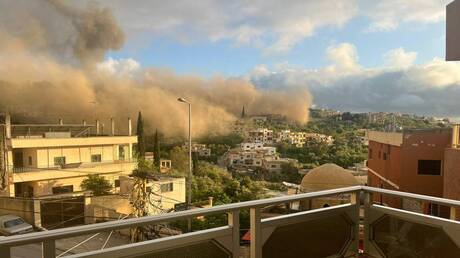
On Tuesday evening, the town of Qantara in southern Lebanon witnessed a violent Israeli explosion, leading to ground tremors that were felt by residents in the surrounding area. Local sources indicated that the explosion was powerful enough to raise concerns among the residents, who felt it within their homes.
This explosion comes at a sensitive time marked by increasing tensions in the region, as Israel continues its military operations in southern Lebanon. These operations have raised widespread anxiety among Lebanese citizens, who are already suffering from the repercussions of the ongoing conflict in the area.
Details of the Incident
The explosion in Qantara, a town near the Lebanese-Israeli border, is considered part of a series of military operations carried out by Israel in the region. Local sources confirmed that the explosion aimed to destroy specific targets, but no precise details about the targeted objectives have been disclosed.
In recent years, the area has seen a rise in military operations, with an increase in Israeli attacks on sites believed to be affiliated with Hezbollah. This military escalation raises fears of a new armed conflict in the region, especially amid existing political tensions.
Background & Context
Historically, Qantara has been a sensitive area due to its proximity to the Israeli border. The region has witnessed numerous armed conflicts over the past decades, making it a hotspot in the Arab-Israeli conflict. Tensions between Israel and Hezbollah, which is considered the main military force in Lebanon, contribute to the escalation of the situation in the area.
Israeli military operations in Lebanon are not new, dating back several decades, during which the country has experienced multiple wars. However, the current explosions occur within a broader context of regional conflict, involving interventions from external powers and changes in political alliances.
Impact & Consequences
The recent explosion in Qantara could lead to heightened tensions between Lebanon and Israel, increasing the likelihood of a new armed conflict. This escalation may affect regional security and exacerbate the suffering of civilians in Lebanon, who are already dealing with the effects of the ongoing conflict.
Moreover, military tensions could impact relations between Lebanon and neighboring countries, complicating the political landscape in the region. Under the current circumstances, reaching peaceful solutions to the conflict may prove difficult, heightening the risk of worsening conditions.
Regional Significance
The events in Qantara reflect the ongoing tensions in the Arab region, where local issues intersect with regional conflicts. These events could affect stability in neighboring countries, raising concerns about the spread of conflict to other areas.
Furthermore, the military escalation in Lebanon may impact peace efforts in the region, as many countries strive for lasting stability. In light of these circumstances, the hope for achieving peaceful solutions remains elusive, increasing anxiety among Arab populations.
In conclusion, the situation in Qantara and Lebanon as a whole remains under close observation, as citizens look forward to lasting stability away from armed conflicts.