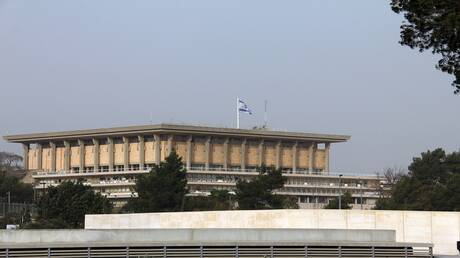
The Israeli government session held on Sunday witnessed intense clashes over imposing economic sanctions on Haredim who refuse military service. These discussions heightened tensions between the government, the Attorney General, and the Supreme Court, turning the session into a real battleground.
These developments come at a sensitive time as the Israeli Prime Minister seeks to bolster his position amid increasing criticism regarding recruitment policies. Several ministers emphasized the need for strict measures against Haredim who do not comply with military service, viewing this as a challenge to the foundations of the state.
Details of the Event
During the session, multiple proposals were raised regarding the imposition of economic sanctions on Haredi communities that refuse military service. These proposals faced strong opposition from some ministers who argued that such measures could exacerbate social conditions in the country.
The legal implications of these sanctions were also reviewed, with the Attorney General noting that imposing penalties on a specific group of citizens could conflict with Israel's basic laws. Consequently, a state of tension arose between the government and judicial authorities, complicating the situation further.
Background & Context
Historically, the issue of Haredi recruitment has been a contentious topic within Israeli society. While some consider military service a national duty, others believe that Haredi communities should be exempt for religious and cultural reasons. These divisions have led to ongoing tensions among various segments of society.
In recent years, pressure has increased on the Israeli government to implement a more inclusive recruitment policy, resulting in heightened protests from Haredim. The country has witnessed several demonstrations in this context, reflecting the deep social divide surrounding this issue.
Impact & Consequences
If economic sanctions are implemented, they could worsen economic and social conditions within Haredi communities. This may negatively impact social stability in Israel, as protests and demonstrations could escalate further.
Moreover, these policies could affect the relationships between the government and Haredi communities, increasing polarization and division. This, in turn, could influence the political landscape in Israel, potentially leading to the formation of new alliances or the dissolution of existing ones.
Regional Significance
The issue of Haredi recruitment is part of the larger picture of the Israeli-Palestinian conflict and relations between Israel and Arab countries. Internal tensions in Israel may affect its stance in negotiations with Palestinians and could also reflect how Arab nations engage with Israel in the future.
Ultimately, the Haredi recruitment issue remains a sensitive and complex matter that requires a comprehensive solution considering all parties involved. The ongoing conflict over this issue could exacerbate conditions in the region as a whole.