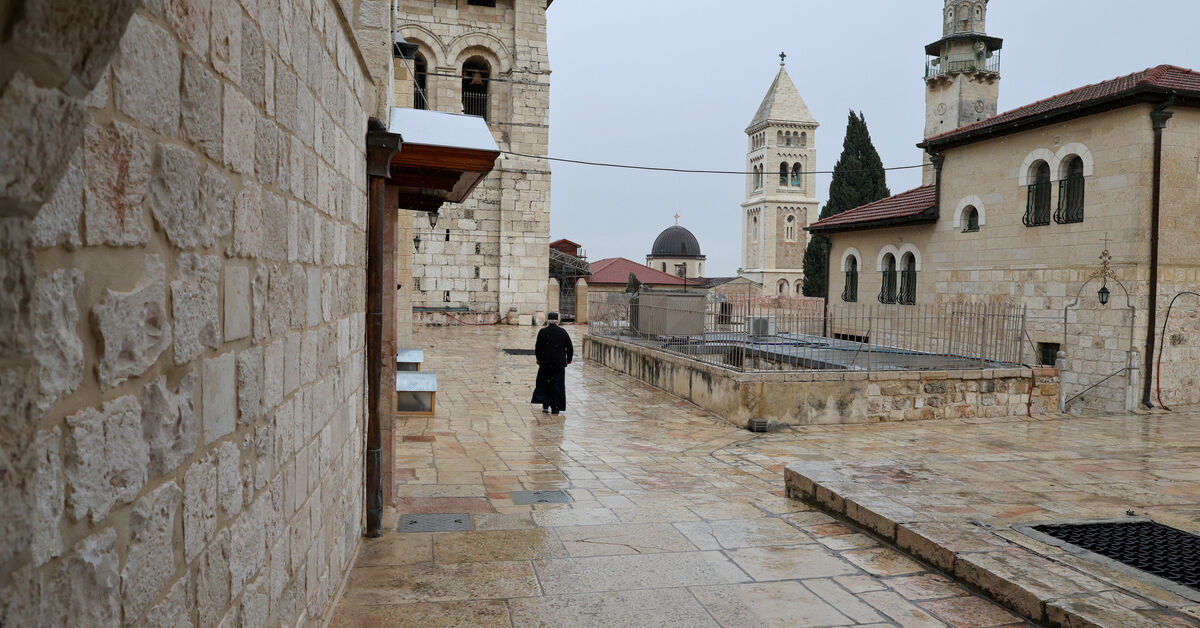
Israeli police prevented Cardinal Pierbattista Pizzaballa, the Latin Patriarch of Jerusalem, from celebrating Palm Sunday at the Holy Sepulchre last Sunday, an unprecedented event in centuries. Sources from the Latin Patriarchate reported that police stopped the cardinal and his companion, Father Francisco Ilbo, as they were heading to the church, indicating that this action was part of heightened security concerns related to regional tensions stemming from the war in Iran.
The Holy Sepulchre is considered one of the holiest sites in Christianity, believed to be built on the location of Christ's crucifixion and resurrection. This decision has sparked widespread condemnation among religious and community circles, with many viewing the prevention of the cardinal from celebrating on this sacred day as a violation of religious freedom.
Details of the Incident
Reports indicate that Cardinal Pizzaballa intended to celebrate Palm Sunday, one of the most significant Christian holidays symbolizing Christ's entry into Jerusalem. However, Israeli police halted them before they could reach the church, provoking angry reactions from clergy and worshippers. The Latin Patriarchate confirmed that this incident is the first of its kind in centuries, raising questions about religious freedom in Jerusalem.
Meanwhile, Israeli police stated that the decision to prevent the celebration was part of strict security measures due to increasing tensions in the region. Officials noted that these measures aim to maintain public safety, especially given the volatile conditions in the Middle East.
Background & Context
Historically, Jerusalem has witnessed numerous tensions among different religions, particularly between Muslims and Christians. As regional conflicts escalate, the issue of religious freedom in the holy city has become a sensitive topic. In recent years, there have been several incidents affecting Christians' ability to practice their religious rituals freely, leading to widespread concern within Christian communities.
The Holy Sepulchre is seen as a symbol of religious tolerance, uniting various Christian denominations. However, recent events suggest that the situation may be heading towards increased tension, threatening to undermine this historical tolerance. In recent years, the holy city has experienced a rise in violence and tensions, impacting both local residents and visitors alike.
Impact & Consequences
The prevention of the cardinal from celebrating Palm Sunday at the Holy Sepulchre serves as a wake-up call regarding security and religious freedom in Jerusalem. This incident could affect relations between Christian denominations and Israeli authorities, potentially escalating tensions in the city. Additionally, this event may provoke reactions from the international community, particularly from countries concerned with human rights and religious freedom.
Furthermore, this incident could impact religious tourism in Jerusalem, as the city is a major destination for both Muslims and Christians. Any decline in religious freedom may negatively affect visitor numbers, impacting the local economy, which heavily relies on tourism.
Regional Significance
This event represents a part of the broader picture of tensions in the region, with growing fears of escalating sectarian and ethnic conflicts. The prevention of religious celebrations in Jerusalem may have negative repercussions on relations between Arab states and Israel, potentially intensifying positions on issues related to Jerusalem.
Ultimately, the question remains about how the international community will address these potential violations of religious freedom. The events in Jerusalem are not merely a local issue but are part of the larger conflict in the Middle East, necessitating a coordinated response from Arab states and the international community to protect the rights of all religions.