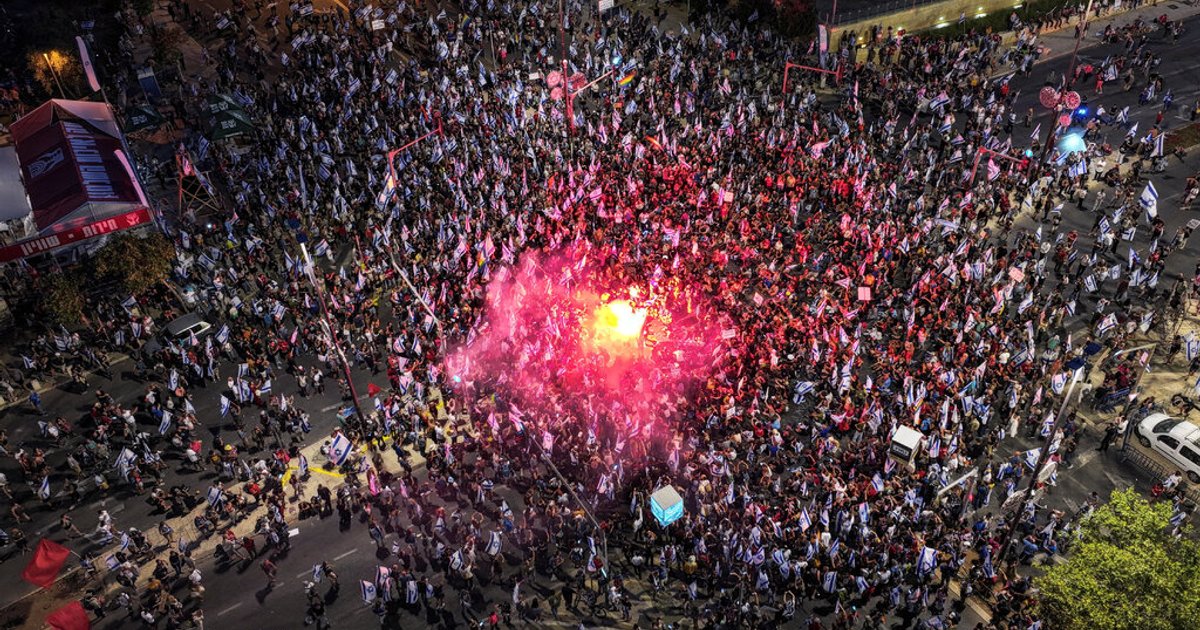
Israel has recently experienced a notable increase in popular protests against the government, as police forcefully dispersed an anti-war demonstration, sparking widespread reactions regarding the decline of democracy in the country.
These events come at a sensitive time, as the Israeli army faces growing criticism for its role in suppressing protests, raising questions about the independence of security institutions in the country.
Details of the Incident
On Saturday, March 28, Israeli police broke up a peaceful demonstration in Tel Aviv, where protesters gathered to express their rejection of government policies related to the war. The police used force to disperse the protesters, resulting in injuries and arrests.
This incident is not the first of its kind, as the country has witnessed several demonstrations in recent months; however, what distinguishes this event is the escalation of violence by security forces, raising concerns about freedom of expression and the right to assemble in Israel.
Background & Context
Historically, Israel has been considered a model of democracy in the Middle East, but recent years have seen a decline in civil liberties. The current government, which adopts hardline policies, faces criticism from various parties, including human rights organizations.
These events coincide with rising regional tensions, as conflicts intensify in various parts of the Middle East, increasing pressure on the Israeli government to handle protests more cautiously.
Impact & Consequences
The use of force against protesters could exacerbate the situation in the country, potentially provoking violent reactions from demonstrators and increasing political polarization. This could also affect Israel's international image, as human rights and civil liberties are sensitive issues in foreign relations.
Furthermore, continued repression may lead to increased public discontent, which could result in more protests and confrontations in the future, threatening internal stability.
Regional Significance
The events in Israel are of great importance to the Arab region, as Arab countries closely monitor the developments. The deterioration of democracy in Israel could impact relations between Israel and Arab states, especially amid normalization attempts.
Moreover, ongoing repression may encourage protest movements in other Arab countries, where they could be seen as a model for challenging oppressive regimes.
In conclusion, these events represent a turning point in modern Israeli history, highlighting the challenges facing democracy and human rights in the country.