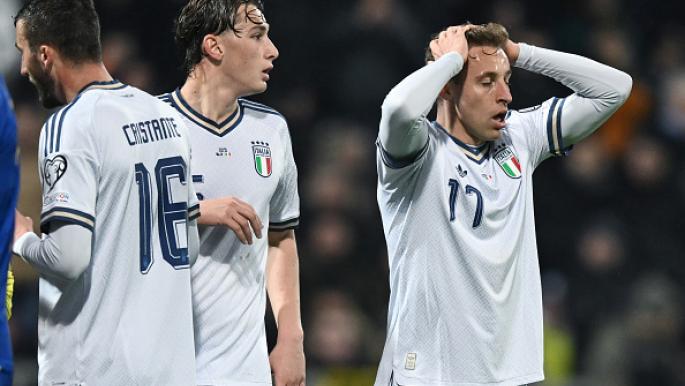
Italy's absence from the World Cup has turned into a continuous nightmare, marking a significant moment in the history of Italian football. Once a dominant force in the sport, Italy's failure to qualify for the global tournament raises deep questions about the future of football in the country.
Historically, the Italian national team is considered one of the most successful in World Cup history, having won the title five times, with the last victory in 2006. However, recent years have seen a noticeable decline in the team's performance, leading to its failure to qualify for the tournament in two consecutive editions, a first in the history of the Azzurri.
Event Details
In the qualifiers for the 2022 World Cup, Italy faced significant challenges, failing to advance from the final qualifying stage, which resulted in their absence from the tournament. This failure was not merely a result of poor performance but stemmed from several factors, including changes in team management, injuries to key players, and intense competition from other teams.
This absence follows a period of decline in Italian football, as Italian clubs have also seen a drop in performance at the European level, raising concerns about the future of the sport in the country. Will Italy be able to regain its status as a global football power?
Background & Context
The history of the Italian national team is filled with achievements, being one of the few teams to have won titles in all major tournaments. However, recent years have seen a shift in the football landscape, with other teams emerging strongly, impacting the dominance of the Azzurri.
A return to the top requires a comprehensive reassessment of the administrative and technical structure, along with the development of young talents. Some Italian clubs have already begun investing in academies and developing young players, which may contribute to improving the national team's level in the future.
Impact & Consequences
The impact of Italy's absence from the World Cup extends beyond mere match results. This absence has evoked feelings of sadness and frustration among fans, who are accustomed to seeing their team in major tournaments. Additionally, this failure may affect investments in Italian football, as investors may hesitate to pump money into clubs if there is no hope for success.
Furthermore, Italy's absence from the tournament may open the door for other teams to shine, increasing competition in the European arena. This situation could lead to changes in strategies for other clubs and national teams, which may seize the opportunity to strengthen their positions.
Regional Significance
Although Italy's absence from the World Cup may seem distant from the Arab region, it has indirect effects. Many Arab fans consider Italy one of their favorite teams and follow their matches passionately. Therefore, the absence of the Azzurri may impact Arab fans' interest in the World Cup.
This situation may also provide an opportunity for Arab national teams to highlight themselves in major tournaments, potentially enhancing their status on the international stage. Thus, Arab teams should seize this opportunity to achieve positive results in upcoming tournaments.
In conclusion, Italy's absence from the World Cup represents a turning point in the history of Italian football. It requires significant efforts to rebuild the team and regain its status. Fans eagerly await the return of the Azzurri to the global stage, but this necessitates a clear vision and a long-term strategy.