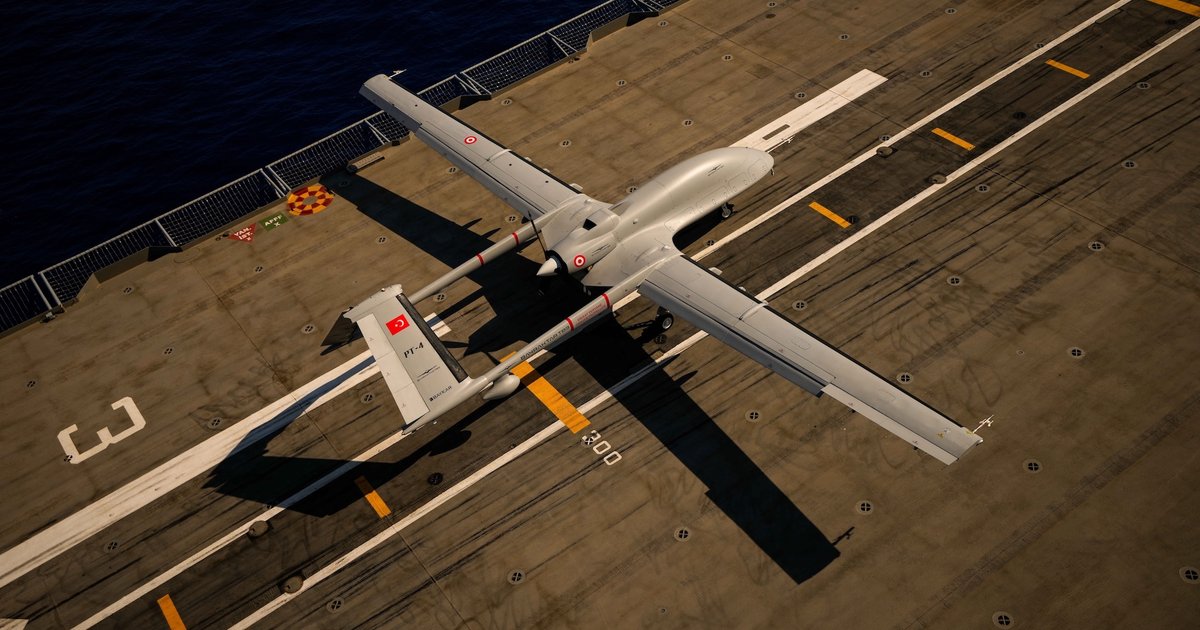
The Italian Navy has expressed its interest in acquiring the Turkish drone Bayraktar TB3 during a parliamentary hearing last week. Admiral Giuseppe Berutti Bergotto, Chief of Staff of the Italian Navy, confirmed that Italy is particularly focused on unmanned systems, including drones.
During the session, Bergotto showcased videos of the Bayraktar TB3 taking off from the Turkish aircraft carrier TCG Anadolu, indicating that the Italian Navy is keen on obtaining this sophisticated system. He explained that Baykar, the manufacturer of the drone, has signed a cooperation agreement with the Italian company Leonardo, meaning that the purchase will be made through Leonardo, with the possibility of integrating the drone onto the aircraft carrier Cavour.
Details of the Event
The aircraft carrier Cavour, which is the flagship of the Italian Navy, is capable of carrying fifth-generation F-35 fighter jets, in addition to military helicopters. While the Turkish aircraft carrier TCG Anadolu was originally designed to carry F-35 fighters, it has started hosting the TB3 drones after Ankara was excluded from the program.
Both vessels are classified as Landing Helicopter Docks (LHDs) and have been adapted to carry aerial assets. Informed sources have indicated that the performance of the TB3 during NATO exercises Steadfast Dart 2026 impressed European allies, including the Italians.
Background & Context
The Bayraktar TB3 is an upgraded version of the renowned TB2 drone, which has demonstrated high effectiveness during conflicts in Ukraine, Libya, and Syria. The TB3 drone can carry a payload of up to 280 kilograms and is designed to carry more than six laser-guided munitions, in addition to smart missiles and other weapons.
Last February, Indonesia became the first foreign buyer of the TB3. Admiral Bergotto noted during the session that the Navy views systems like the TB3 as force multipliers, enhancing operational effectiveness and surveillance capabilities.
Impact & Consequences
If the deal goes through, it will enhance the credibility of the TB3 drone's capabilities, as another NATO ally of Turkey will purchase and operate this system. This development reflects the increasing trend towards the use of drones in military operations, which could lead to a shift in the balance of power in the region.
This move is also part of Italy's strategy to bolster its defense capabilities in the face of rising security challenges in the Mediterranean, where tensions between the countries bordering the sea are escalating.
Regional Significance
The spotlight on military cooperation between Turkey and Italy may pique the interest of Arab countries, especially those seeking to enhance their defense capabilities. The use of drones in military operations could also influence the strategies of Arab nations in addressing security threats.
In conclusion, this development in military relations between Turkey and Italy represents an important step towards strengthening defense cooperation in the region and may open new avenues for Arab countries in the field of military technology.