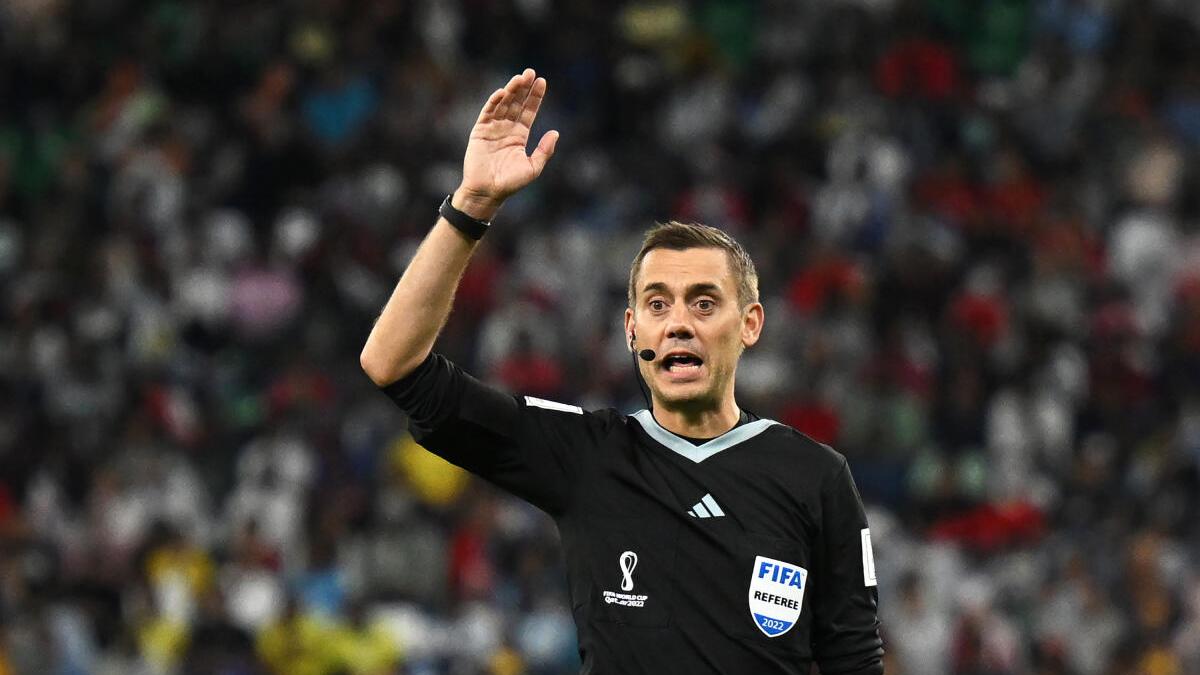
The appointment of French referee Clément Turpin to officiate the World Cup 2026 playoff match between Italy and Bosnia and Herzegovina, scheduled for Tuesday in Zenica, has sparked considerable controversy and anxiety in the Italian sports community. This decision comes at a sensitive time, as the Italian national team seeks to avoid missing the World Cup for the third consecutive time, a nightmare that even the most pessimistic fans in Rome could not have imagined.
Memories of painful moments for the "Azzurri" fans date back to March 24, 2022, when they witnessed their team being eliminated from the semi-finals of the playoff for the 2022 World Cup by North Macedonia, with Turpin as the referee for that match. The game ended with a last-minute goal scored by Alexander Trajkovski, depriving Italy, a four-time world champion, of participating in the global tournament for the second consecutive time.
Match Details and Stakes
Italy qualified for this stage after defeating Northern Ireland (2-0) in Bergamo, with goals from players Tonali and Moise Kean. Meanwhile, Bosnia, led by Edin Džeko, managed to overcome Wales in a penalty shootout. This match, to be held at the Bilino Polje Stadium, represents a true test of nerves for the Italian team, as they face a stubborn opponent with an experienced striker like Džeko.
The appointment of Turpin as the match referee may increase the pressure on coach Luciano Spalletti's squad, as Italians fear that this decision could be a new omen of doom. Everyone remembers how the French referee witnessed the "Night of the Fall," making this encounter even more complicated.
Historical Context and Background
Italy's history in global tournaments is filled with successes and failures. After winning the World Cup four times, recent years have seen a decline in performance, as they missed the 2018 World Cup in Russia. This absence was a significant shock for Italian fans, who are accustomed to seeing their team in major competitions. Now, four years later, the Italians are striving to correct their course and return to the global stage.
Historically, Italy has been among the major powers in football, but the decline in performance in recent years has increased pressure on players and coaching staff. Therefore, this match represents an opportunity to rebuild confidence and regain lost prestige.
Potential Impact and Consequences
If Italy manages to win this match, it will boost the team's morale and restore confidence among fans. Conversely, a loss could lead to negative repercussions on both psychological and technical levels, raising questions about the future of coach Spalletti and the players. Additionally, Italy's absence from the World Cup for the third consecutive time would have a significant impact on Italian football as a whole.
This match also presents an opportunity for Bosnia to prove its competitiveness on the European stage, as it seeks to establish itself as an emerging force in football. A victory over Italy would be a historic achievement for the Bosnian national team.
Significance for the Arab Region
Football is one of the most popular sports in the Arab world, with millions of fans following major matches. Therefore, the results of this match will affect football fans in the region, who passionately track developments in global tournaments. The success of either Italy or Bosnia in qualifying for the World Cup could open new avenues for sports cooperation between Arab countries and Europe.
In conclusion, the match between Italy and Bosnia remains a crucial moment in football history, intertwining hopes and ambitions, as everyone eagerly awaits the outcome of this exciting encounter.