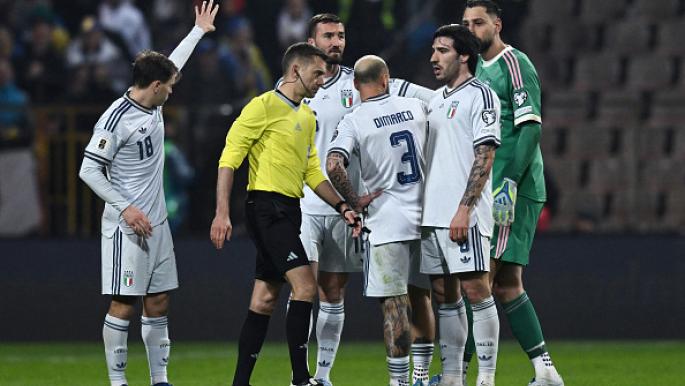
Italy has suffered a significant disappointment after its national team, known as the 'Azzurri', failed to qualify for the World Cup for the third consecutive time. This failure came after the team fell short in the qualifying playoff, provoking angry reactions within the Italian sports community.
The Italian Minister of Sports, Andrea Abodi, did not hesitate to express his dissatisfaction with the team's performance, calling for the resignation of the President of the Italian Football Federation, Gabriele Gravina. These calls come at a sensitive time, as the Azzurri were expected to perform at a level befitting their rich history in football.
Details of the Event
The year 2023 has seen numerous challenges for the Italian national team, which has faced difficulties in qualifying for major tournaments. After losing in the playoff for the World Cup, it became clear that there is an urgent need to reassess the team's strategy. The modest performance in the qualifiers has raised questions about the future of the coach and the administrative structure of the Italian Federation.
The Italian national team, considered one of the greatest teams in football history, has been unable to replicate its past achievements, having won the World Cup four times, the last being in 2006. This repeated failure places significant pressure on the officials of the Italian Federation, who are facing increasing criticism from the media and fans.
Background & Context
The history of Italian football is filled with successes, but recent years have seen a noticeable decline in the team's performance. After winning the European Championship in 2020, it was believed that the Azzurri were on their way to regaining their former glory, but negative results in the qualifiers have shown otherwise. The failure to qualify for the World Cup has become a painful reality, raising questions about the future of the sport in the country.
Furthermore, the economic and political crises that Italy is experiencing have also impacted sports, as budgets allocated to sports federations have been reduced, affecting the development of young talents. These combined factors make it difficult for the Italian national team to return to its previous level.
Impact & Consequences
The failure to qualify for the World Cup is not just a sports disappointment; it also has social and cultural repercussions. Football in Italy is not merely a game; it is part of the national identity. The failure to achieve success in major tournaments could lead to widespread public frustration, affecting the morale of the country.
This failure may also negatively impact Italian clubs in European competitions, as the national team's results can influence the attraction of players and investors. Clubs may find it challenging to compete at a high level if the national team's performance continues to decline.
Regional Significance
Although Italy's failure may seem distant from the Arab region, football remains a universal language. Many Arab fans follow European leagues, including the Italian league. The failure of the Azzurri to qualify may affect Arab fans' sentiments towards Italian teams, potentially leading to a decline in interest.
Moreover, the Italian experiences in managing sports crises could provide important lessons for Arab countries seeking to develop their sports. Failure can be an opportunity for learning and rebuilding, which sports officials in the region could benefit from.
In conclusion, the Italian disappointment in failing to qualify for the World Cup reflects larger challenges facing football in the country. A comprehensive reassessment of training and management strategies is required to ensure the Azzurri's return to the global stage.