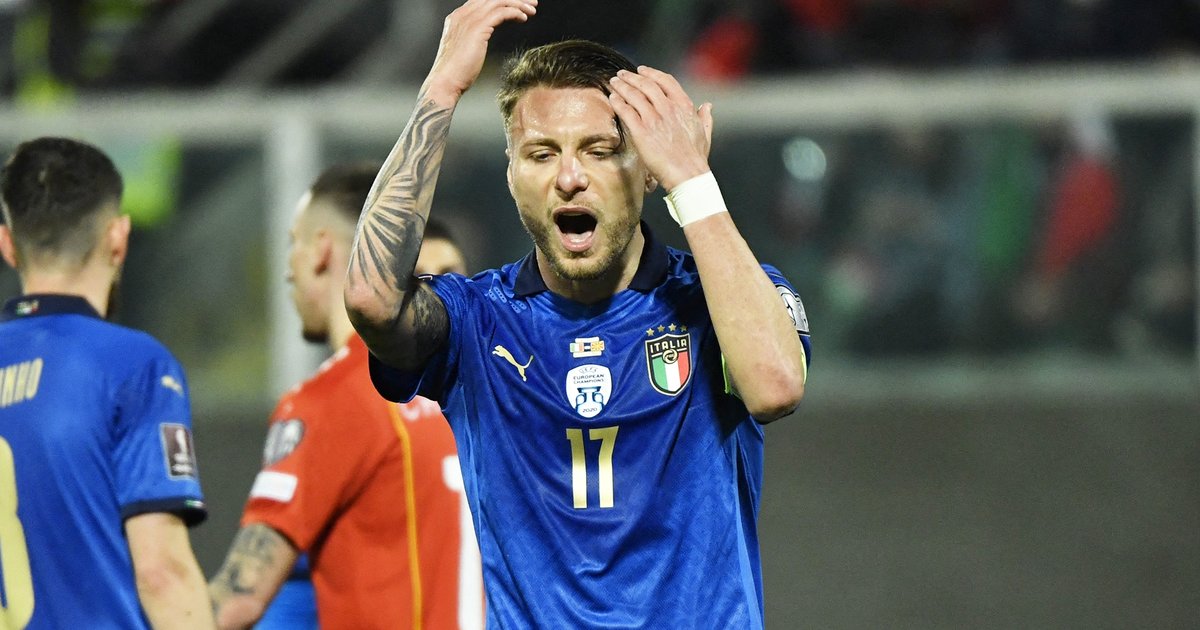
Italy, a four-time world champion, faces ongoing disappointments in the World Cup, with its latest failure deemed a 'third world end' for Italian football. This setback reflects a new reality for a team once considered among the strongest in football history.
In the recent qualifiers, Italy struggled with modest performance, leading to its failure to qualify for the global tournament. Despite its rich history, the Italian national team finds itself in a real crisis, as failing to reach the World Cup has become a regular occurrence.
Event Details
In the World Cup qualifying matches, Italy was unable to achieve the required results, causing it to miss the tournament for the second consecutive time. This is a significant shock for Italian football fans, who are accustomed to seeing their team in the later stages of competitions.
Criticism is mounting against the coaching staff and players, as the performance is deemed unacceptable given the team's illustrious history. Many sports analysts have pointed out that Italy needs a comprehensive rebuild, including the development of young talents and a change in playing strategies.
Background & Context
Italy's football history is filled with achievements, having won the World Cup four times in 1934, 1938, 1982, and 2006. However, recent years have seen a noticeable decline in the team's performance, as it missed the 2018 World Cup in Russia, an unprecedented event in its history.
This decline reflects changes in global football, where other teams are rapidly evolving and achieving impressive results, making it difficult for traditional teams to maintain their status. Italy needs new strategies to keep pace with these changes.
Impact & Consequences
This repeated failure may negatively impact Italian football as a whole, potentially leading to a decline in fan and financial support. Moreover, failing to qualify for major tournaments could affect the attraction of young talents to play in the Italian league, making it harder to return to the top.
On the international level, Italy's failure presents an opportunity for other national teams to assert their dominance. This situation also opens the discussion about the necessity of radical reforms in Italian football, including the development of academies and updating training methods.
Regional Significance
Italy's failure may have indirect effects on the Arab region, as many Arab countries seek to strengthen their relationships with European football. The Italian failure could lead to changes in cooperation strategies between Italian clubs and their Arab counterparts, which may impact the recruitment of Arab players.
In conclusion, hope remains that Italy can regain its status in the football world and rebuild a strong team capable of competing in upcoming tournaments.