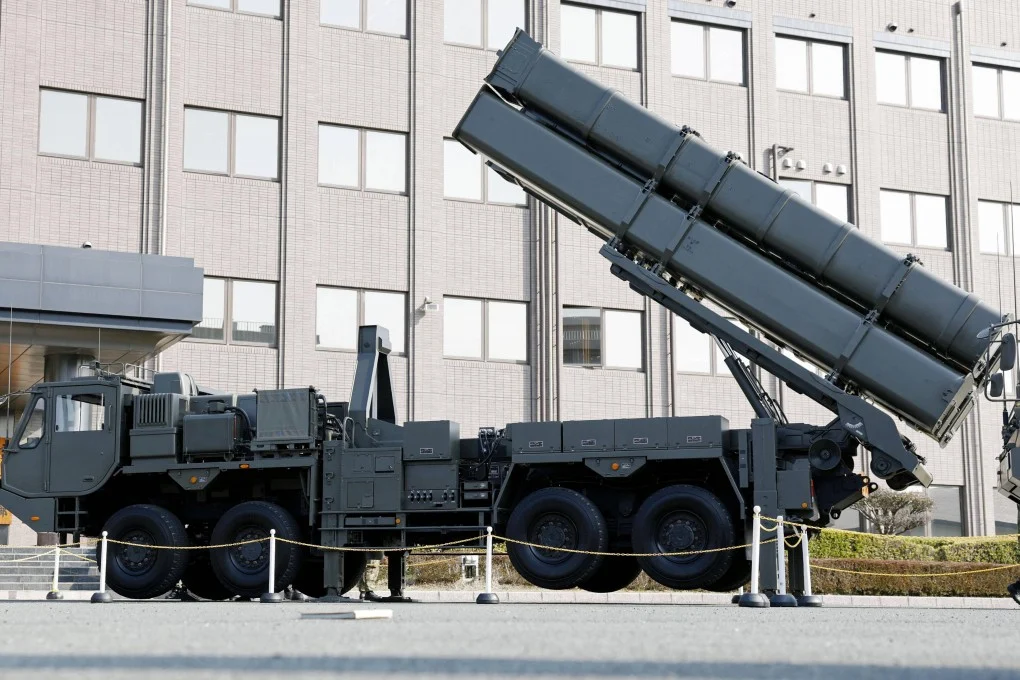
On Tuesday, Japan's Ministry of Defense announced the deployment of long-range missiles with strike capabilities at two bases of the Ground Self-Defense Forces: Camp Kinugon in Kumamoto Prefecture and Camp Fuji in Shizuoka Prefecture. This shift is considered a significant step in Japan's defense policy, marking a radical change from its traditional stance that focused solely on defense under its constitution, which prohibits engaging in wars.
This move is part of Japan's efforts to enhance its defensive capabilities amid rising regional tensions, particularly with China, which continues to expand its military influence in the area. This action is the first of its kind, involving Japan's acquisition of strike capabilities, reflecting a shift in its defense strategy.
Details of the Deployment
The missiles have been deployed at two strategic bases, with Camp Kinugon located in southwestern Japan and Camp Fuji situated in the central part of the country. This deployment aims to enhance Japan's ability to respond quickly in the event of any threats from neighboring countries. The ministry has confirmed that these missiles will bolster Japan's capacity to protect its territory and national interests.
This initiative comes at a critical time, as the region is witnessing an increase in Chinese military activities, including naval and aerial maneuvers near Japanese territorial waters. This situation has raised concerns within the Japanese government, prompting it to take proactive steps to enhance its national security.
Background & Context
Historically, Japan has adopted a defense policy focused on avoiding involvement in any military conflicts outside its borders, as stipulated by its post-World War II constitution. However, in recent years, the Japanese government has begun to reassess this policy in light of geopolitical changes in the region, particularly with the rise of China's military power.
In 2014, Prime Minister Shinzo Abe made changes to defense laws, allowing Japan to expand the role of its armed forces. Since then, the government has taken additional steps to enhance its defense capabilities, including increasing military spending and developing new technologies.
Impact & Consequences
The deployment of these missiles is a significant step in strengthening Japan's defense capabilities and may elicit mixed reactions from neighboring countries. On one hand, this action may be seen as necessary for protecting Japan's national security; on the other hand, it could be perceived as an escalation of regional tensions.
Moreover, this shift in Japan's defense policy may impact its relations with the United States, which is a key ally in defense matters. Washington is expected to closely monitor these developments as it seeks to enhance security cooperation with Tokyo in facing shared challenges.
Regional Significance
Although events in Japan may seem distant from the Arab region, regional tensions in Asia could have indirect effects on global stability. Increased tensions in any region could lead to repercussions on global markets, including energy markets that are vital for Arab countries.
Furthermore, the enhancement of military capabilities by major powers may reflect on the strategies of Arab nations in bolstering their national security, necessitating a reassessment of defense policies in the region.
In conclusion, Japan's deployment of long-range missiles represents a significant shift in its defense policy, reflecting the increasing challenges it faces amid regional tensions. It is crucial to monitor these developments and understand their implications for regional and international security.