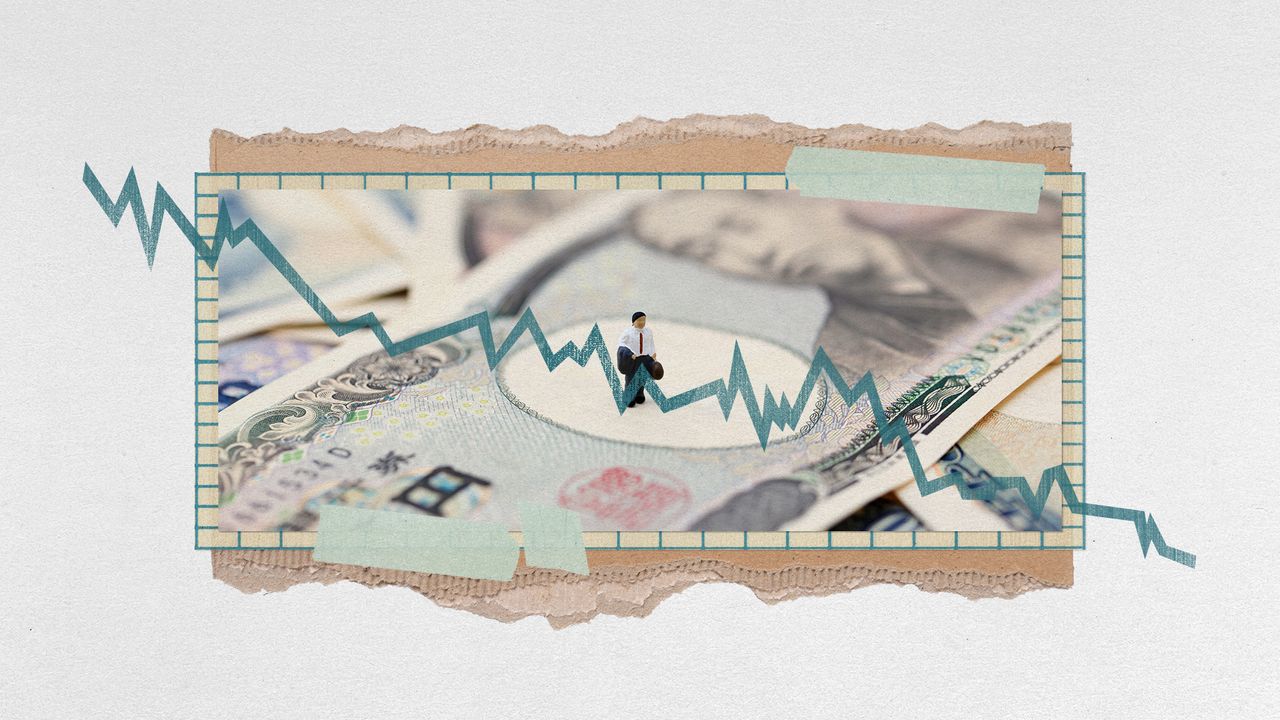
Kazuo Ueda, the Governor of the Bank of Japan, stated that the central bank will closely monitor yen movements due to their significant impact on the economy and prices. Ueda noted that the depreciation of the yen could lead to increased import costs, which may necessitate raising interest rates in the coming months.
These remarks come at a time when the yen has sharply declined, surpassing 160 yen against the dollar, marking its lowest level since July 2024. This drop has raised concerns about potential government intervention in the currency market, with the diplomat responsible for monetary policy warning of the repercussions of this decline.
Details of the Event
During a parliamentary hearing, Ueda confirmed that the Bank of Japan does not directly aim its monetary policy at controlling exchange rate movements, but he indicated that these movements significantly affect economic developments and prices. He explained that yen fluctuations currently have a greater impact on inflation compared to the past, as companies have become more active in raising prices and wages.
Ueda added that monetary policy will be appropriately directed by monitoring how currency movements affect the likelihood of achieving growth and price expectations, along with the associated risks. He pointed out that the central bank may raise interest rates to counteract the yen's weakness, which leads to higher import costs.
Background & Context
Historically, the Japanese yen has experienced significant fluctuations in value, impacting the Japanese economy, which heavily relies on imports. In recent years, there has been increasing pressure on the Bank of Japan to change its monetary policy, especially with rising oil prices due to conflicts in the Middle East, which further exacerbates inflationary pressures.
Last March, the Bank of Japan maintained the short-term interest rate at 0.75%, while keeping a tendency towards a more stringent monetary policy. Concerns have been raised that the bank may delay addressing high inflation risks, leading to an increase in Japanese government bond yields.
Impact & Consequences
Analyses suggest that raising interest rates could have widespread effects on the Japanese economy. If interest rates are raised inappropriately, it could lead to excessive inflation, unexpectedly increasing long-term bond yields. This could create an unstable economic environment, negatively affecting investments and economic growth.
On the other hand, if the Bank of Japan can gradually and thoughtfully raise interest rates, it may help stabilize the financial market and reduce inflationary pressures. However, the challenge remains in achieving this balance without adversely affecting economic growth.
Regional Significance
The Arab region is significantly affected by currency fluctuations, especially with a heavy reliance on imports. An increase in the value of the dollar against the yen could lead to higher import costs from Japan, impacting prices in Arab markets. Additionally, rising oil prices due to conflicts in the Middle East may increase inflationary pressures in Arab countries.
Under these circumstances, Arab countries must closely monitor the movements of the Bank of Japan, as any changes in monetary policy could affect the stability of financial markets in the region.