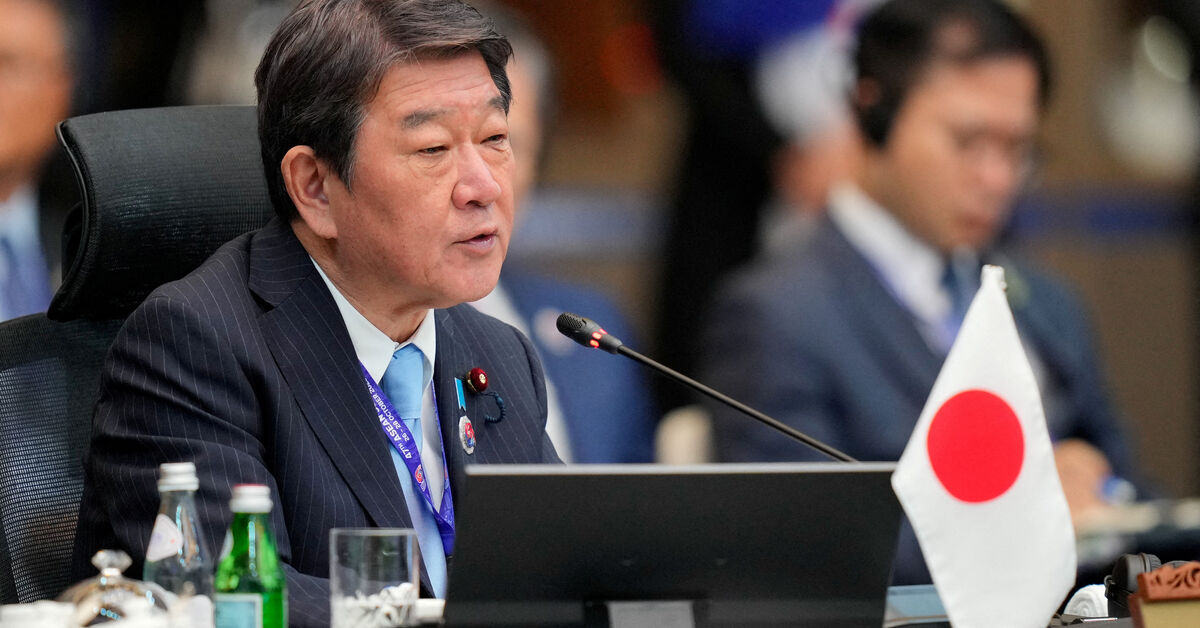
Japanese Foreign Minister Toshimitsu Motegi revealed in statements made during a program on Fuji TV that his government might consider deploying military units to combat mines in the Strait of Hormuz, a vital passage for global oil shipments, if a complete ceasefire is achieved in the ongoing conflict between the United States and Israel on one side, and Iran on the other.
Motegi stated, “If there were a complete ceasefire, in a hypothetical context, an issue like mine counteraction could be raised.” He clarified that it is unreasonable to consider deploying forces now, but if there is a possibility to overcome the obstacles presented by maritime mines, such an option could be contemplated.
The Strait of Hormuz is a crucial hub for global oil movement, through which about 20% of the world's oil supplies flow. In recent years, the region has witnessed escalating tensions due to hostile policies between Iran and the United States, with Tehran repeatedly accused of seizing vessels and oil shipments belonging to opposing nations.
Historically, the Strait of Hormuz has been a theater for numerous military and political crises, witnessing multiple conflicts throughout the decades as regional and international powers compete to secure their interests in this vital passage. Since 2010, tensions have risen following U.S. military campaigns in Iraq and Syria, which have increased Iran's involvement in regional affairs.
If the situation heads in a positive direction and the intensity of conflict decreases, any potential deployment of Japanese military units could signify a pragmatic shift in Japan's defense policy. Japan is known for maintaining a cautious defensive policy and a non-military intervention stance outside its territory since the end of World War II, making these statements an unusual step in Japanese policy.
The ramifications of this statement could be significant, not only for maritime security in the region but also for Japanese-Iranian relations. Iran considers any foreign presence in its waters a threat to its security. Therefore, this step could pose a new challenge to Tehran and may lead to further escalation.
Given the regional challenges at hand, reactions from Arab countries, especially those affected by the conflict in the region, will be closely monitored. Furthermore, these moves could impact the stability of the oil market, which is sensitive to any military escalation in the area.
Although the prospect of a ceasefire may seem far-fetched under the current circumstances, Motegi's remarks indicate Japan's intention to be part of security solutions in the region. This reflects that the world, including major powers like Japan, is beginning to reassess their roles in such conflicts, especially concerning vital economic interests like oil transportation.
As tensions in the Strait of Hormuz persist, it becomes essential for oil-exporting Arab states, such as Saudi Arabia and the UAE, to have clear strategies to address the potential repercussions of any military movements.
Thus, Japan's emergence as a potential actor in this crisis reflects the complexity of the security landscape in the Middle East and suggests that global powers are reevaluating their strategies and presence in a region considered vital to the global economy.